February Sees Unprecedented Foreign Net Outflow from S. Korean Stocks: BOK Report
Synopsis
In February, foreign investments in South Korean stocks witnessed a historic net outflow of $13.5 billion, driven by caution over AI investments and profit-taking. This surpasses previous records, raising concerns among market analysts.
Key Takeaways
Record foreign net outflow of $13.5 billion in February.
Previous record was $11.04 billion in March 2020.
Foreign investors bought $5.74 billion in bonds.
Second-largest monthly net outflow since July 2008.
Government funding of 643 billion won for science projects.
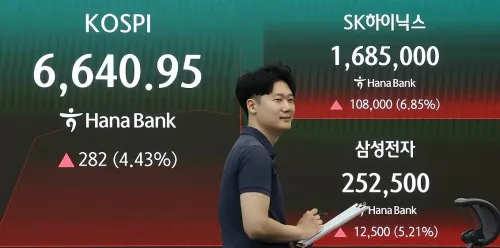
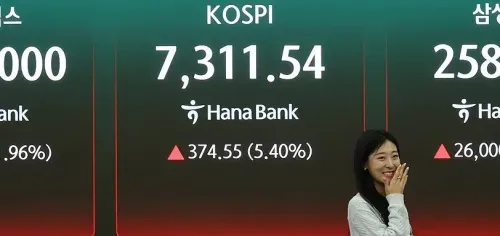
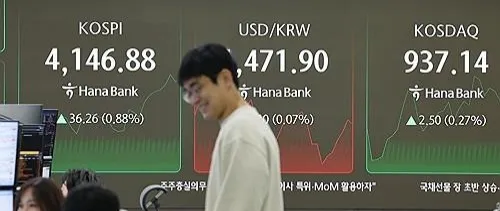
Seoul, March 12 (NationPress) In February, foreign investments in the South Korean stock market experienced a record-breaking monthly net outflow, largely due to rising concerns about a potential artificial intelligence (AI) bubble and profit-taking activities, according to central bank data released on Thursday.
Overseas investors divested a net total of $13.5 billion worth of local equities last month, following a mere $500 million in net selling in January, as reported by the Bank of Korea (BOK), according to Yonhap news agency.
This February figure not only sets a new all-time monthly high but also exceeds the prior record of $11.04 billion established in March 2020.
In the bond sector, foreign investors acquired $5.74 billion in bonds during February, a significant increase from $2.44 billion in the previous month.
Overall, foreign entities sold a net of $7.76 billion in local securities last month, marking a reversal from a net purchase of $2.39 billion in January.
This net outflow in February stands as the second-largest monthly figure since July 2008, when it reached a peak of $8.97 billion.
“The equity sector faced the largest monthly net outflow as investor caution regarding AI-related ventures grew, coupled with profit-taking following recent stock price increases,” stated Kim Bo-seok, head of the BOK's international financial trends team.
“Conversely, bond funds saw increased net inflows driven by bargain hunting amidst rising market interest rates and solid investment interest, particularly from the private sector.”
On another note, the South Korean science ministry announced on Thursday that it has chosen approximately 4,600 individual researchers to rejuvenate basic science research efforts, which had significantly diminished under the prior administration.
The Ministry of Science and ICT has selected 4,628 researchers to undertake individual projects under a government funding initiative for the first half of 2026, which reflects a 25 percent increase compared to the previous year.
For these new projects, the ministry is set to allocate 643 billion won (equivalent to $435 million).
Point of View
The recent record-setting net outflow of foreign investments from the South Korean stock market raises significant questions about market stability. While some attribute this trend to profit-taking and concerns over AI, it is crucial to monitor the ongoing implications for both local and international investors.
NationPress
30 Sept 2026
Frequently Asked Questions
What caused the record outflow of foreign investments from South Korean stocks in February?
The record outflow was primarily driven by growing concerns over a potential AI bubble and profit-taking after recent stock price increases.
How much was the net outflow from foreign investors in February?
Foreign investors recorded a net outflow of $13.5 billion in February, marking the highest monthly figure ever.
What trend was observed in the bond market during the same period?
In contrast to the stock market, foreign investors purchased $5.74 billion worth of bonds in February, indicating a shift in investment focus.
How does this outflow compare to historical data?
The February outflow is the second largest since July 2008, when it peaked at $8.97 billion.
What is the South Korean government's response to science research funding?
The South Korean government has selected 4,628 individual researchers to enhance basic science research, reflecting a 25% increase in funding initiatives.