CM Sukhu Reaffirms Self-Reliant Himachal Vision

Synopsis
Chief Minister Sukhvinder Singh Sukhu on 14 July 2026 reaffirmed his government's resolve to protect Himachal Pradesh's interests and rights of future generations, pledging to advance systemic governance reform toward a self-reliant state.
Key Takeaways
CM Thakur Sukhvinder Singh Sukhu reaffirmed on 14 July 2026 the government's commitment to protecting state interests and future generations' rights.
The statement was shared via the Chief Minister's Office of Himachal Pradesh's official X account.
CM Sukhu cited 'courage and determination' in facing every challenge since taking office in December 2022 .
The government is pursuing Aatmanirbhar Himachal — a self-reliant Himachal Pradesh — through 'systemic change' rather than piecemeal interventions.
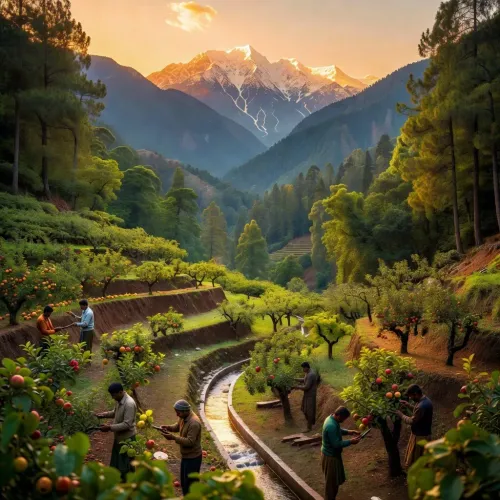
Himachal Pradesh's economy depends on hydropower, tourism, horticulture , and remittances, sectors under growing climate and fiscal pressure.
Concrete policy measures are expected to emerge in upcoming state assembly sessions and budget documents .
The Chief Minister's Office of Himachal Pradesh on Tuesday, 14 July 2026, shared a statement from Chief Minister Thakur Sukhvinder Singh Sukhu reaffirming his government's commitment to protecting the state's interests and the rights of future generations through systemic governance reform aimed at building a self-reliant Himachal Pradesh.
Context
Speaking through the official CMO handle, CM Sukhu stated — 'प्रदेश के हितों और आने वाली पीढ़ियों के अधिकारों की रक्षा करना हमारा संकल्प है' ['Our resolve is to protect the interests of the state and the rights of generations to come']. He added that the government has faced every challenge with courage and determination, and is moving toward an Aatmanirbhar Himachal [self-reliant Himachal] through systemic change.
The statement underscores the Congress-led government's broader governance narrative since CM Sukhu took office in December 2022. It signals a continued emphasis on administrative restructuring and long-term resource stewardship as defining pillars of the current dispensation.
Policy Backdrop
The phrase Aatmanirbhar Himachal draws directly from the national Atmanirbhar Bharat Abhiyan, launched in 2020, which encouraged states to pursue self-reliance through local economic and administrative reforms. Himachal Pradesh, a northern Himalayan state, relies heavily on hydropower, tourism, horticulture, and remittances — sectors that are increasingly exposed to climate variability and demographic shifts.
Indian Himalayan states face a structurally constrained revenue base, making systemic governance reform a recurring policy priority. Statements of this nature typically surface around state budget cycles or legislative sessions, when governments seek to frame their fiscal and administrative agenda in broader developmental terms.
Stakeholders and Impact
The primary beneficiaries of such a governance orientation are Himachal Pradesh's approximately 73 lakh residents, with an explicit reference to future generations signalling a long-horizon policy intent. Sectors such as hydropower revenue management, climate-resilient agriculture, and public service delivery stand to be directly shaped by the direction of systemic reform.
Civil society groups, local panchayati raj institutions, and state government employees are key stakeholders in any administrative restructuring. The emphasis on 'systemic change' suggests the government is positioning institutional reform — rather than one-off schemes — as its primary instrument.
What's Next
Observers will look to upcoming Himachal Pradesh Legislative Assembly sessions and the state's annual budget documents for concrete scheme announcements or administrative restructuring proposals that give operational form to CM Sukhu's stated vision. The government's ability to translate this resolve into measurable policy milestones will determine whether the Aatmanirbhar Himachal framework gains substantive traction beyond political messaging.
Point of View
Lending the Congress-led government a developmental vocabulary that transcends partisan lines. The explicit reference to 'future generations' is notable — it frames current fiscal and administrative decisions as intergenerational obligations rather than routine governance, a rhetorical posture often used ahead of budget cycles or assembly sessions to build political capital. For a Himalayan state structurally dependent on central transfers and vulnerable to climate shocks, 'systemic change' is a high-stakes promise that will be tested against concrete budget allocations and institutional reforms. The statement's timing and tone suggest the Sukhu government is consolidating its mid-term narrative ahead of what is likely to be an intensified political contest in the state.
NationPress
14 Jul 2026
Frequently Asked Questions
Who is CM Sukhu and when did he become Chief Minister of Himachal Pradesh?
Thakur Sukhvinder Singh Sukhu is the Chief Minister of Himachal Pradesh , heading the Congress-led state government since December 2022 .
What is Aatmanirbhar Himachal?
Aatmanirbhar Himachal refers to the Himachal Pradesh government's vision of building a self-reliant state through systemic governance and administrative reform, drawing inspiration from the national Atmanirbhar Bharat Abhiyan launched in 2020 .
What did CM Sukhu say on 14 July 2026?
CM Sukhu stated that protecting the state's interests and the rights of future generations is his government's resolve, that every challenge has been faced with courage and determination, and that the government is advancing toward a self-reliant Himachal Pradesh through systemic change.
What are the main sectors of Himachal Pradesh's economy?
Himachal Pradesh's economy is primarily driven by hydropower, tourism, horticulture , and remittances from residents working outside the state.
What should citizens watch for following CM Sukhu's statement?
Citizens and policy observers should watch upcoming Himachal Pradesh Legislative Assembly sessions and the state's annual budget documents for specific schemes or administrative restructuring proposals that operationalise the Aatmanirbhar Himachal vision.