HP CM Office: State Will Not Let Its Resources Be Plundered

Synopsis
The Chief Minister's Office of Himachal Pradesh declared on 14 July 2026 that the state will not allow its wealth to be plundered, pointing to past victories on Wild Flower Hall, Kishau Dam, and the 1,000 MW Karcham-Wangtoo project as proof that its resource rights can be won through sustained struggle.
Key Takeaways
The CMO Himachal Pradesh posted on 14 July 2026 asserting the state is fighting for its rightful share of resources.
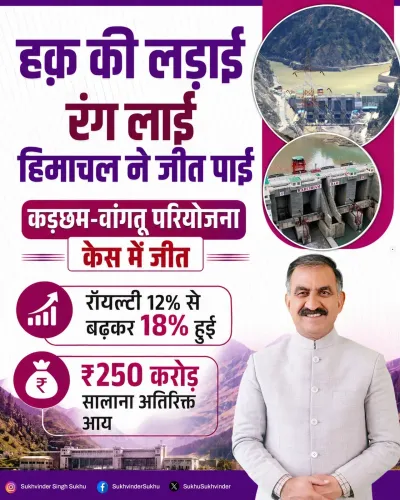
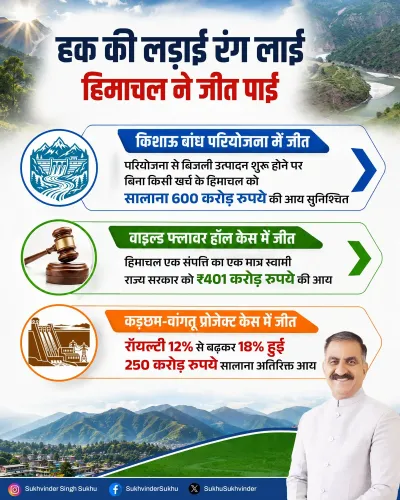
Three past victories cited: Wild Flower Hall (Shimla), the Kishau Dam (Yamuna basin), and the Karcham-Wangtoo Hydroelectric Project ( 1,000 MW , Kinnaur).
The CMO warned the state 'will not allow Himachal's wealth to be plundered.' Inter-state negotiations on Kishau Dam between Himachal Pradesh and Uttarakhand remain unresolved.
The statement reflects a broader pattern of Himalayan hill states pressing for greater hydropower royalties and project control within India's federal structure.
The Chief Minister's Office of Himachal Pradesh declared on Tuesday, 14 July 2026 that the state is fighting for its rightful share of resources, citing past victories over Wild Flower Hall, the Kishau Dam, and the Karcham-Wangtoo Hydroelectric Project as proof that sustained struggle yields results.
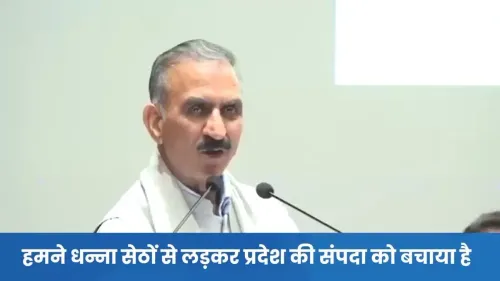
The post, shared on the official CMO account, stated in Hindi: 'हिमाचल प्रदेश अपने हक की लड़ाई लड़ रहा है' ('Himachal Pradesh is fighting for its rights'), adding that the state 'will not allow Himachal's wealth to be plundered.'
Context
The statement invokes three specific cases as emblems of Himachal Pradesh's assertiveness within India's federal structure. Wild Flower Hall, a heritage property in Shimla, was secured by the state after extended administrative and legal efforts. The Karcham-Wangtoo Hydroelectric Project, a 1,000 MW run-of-river plant in Kinnaur district, saw the state negotiate its share of power and revenue with the developer.
The Kishau Dam, a multi-purpose project on the Yamuna river, has long been a flashpoint between Himachal Pradesh and Uttarakhand over water and power allocation. Inter-state agreements dating to the 1990s set the framework for Himachal's claims on Yamuna basin projects, and those negotiations remain a live issue.
Policy Backdrop
Himachal Pradesh's assertion fits a broader pattern of hill states pressing for greater control over Himalayan river resources, hydropower royalties, and associated assets. These disputes typically play out across inter-state compacts, central agency negotiations, and NITI Aayog forums where royalty rates and project control are contested.
The state's leverage rests on its position as the geographic source of several major river systems, giving it a constitutional and political basis to demand a proportionate share of revenues generated by projects on its territory. Resource federalism of this kind has intensified across multiple Himalayan states in recent years.
Stakeholders and Impact
The most direct beneficiaries of a stronger Himachal position are the state's residents, who stand to gain from higher royalty receipts, improved power supply, and revenue that can be directed toward public services in one of India's more fiscally constrained hill states. Hydropower project developers and neighbouring states with competing claims are the primary parties affected on the other side.
For Kinnaur and other project-hosting districts, the outcome of these negotiations shapes local employment, environmental oversight, and the share of power allocated for domestic consumption within Himachal Pradesh.
What's Next
Pending inter-state talks on the full implementation of the Kishau Dam project remain the most consequential near-term process to watch. Any revision of hydropower royalty policy at the central level or in NITI Aayog discussions could either strengthen or complicate Himachal's bargaining position.
The CMO's public framing of these issues as an ongoing 'struggle' signals that the state government intends to keep resource rights at the centre of its political and administrative agenda, likely raising the stakes for upcoming inter-governmental negotiations.
Point of View
Legitimate struggle rather than partisan posturing. By anchoring the message in concrete precedents — Wild Flower Hall, Kishau Dam, Karcham-Wangtoo — the government signals to both voters and negotiating counterparts that it has institutional memory and political will on its side. This fits a wider arc of resource federalism assertiveness among hill states, where control over hydropower revenue has become a defining governance issue. The public tone suggests inter-governmental negotiations on at least one of these fronts may be at a sensitive juncture.
NationPress
12 Oct 2026
Frequently Asked Questions
What is the Kishau Dam dispute between Himachal Pradesh and Uttarakhand?
The Kishau Dam is a multi-purpose project on the Yamuna river whose water and power allocation between Himachal Pradesh and Uttarakhand has been contested since inter-state agreements were framed in the 1990s. The project's full implementation remains pending as both states negotiate their respective shares.
What is the Karcham-Wangtoo Hydroelectric Project?
The Karcham-Wangtoo Hydroelectric Project is a 1,000 MW run-of-river plant located in Kinnaur district of Himachal Pradesh. The state negotiated its share of power and revenue from the project, which the CMO cited as an example of rights secured through sustained effort.
Why did the Himachal Pradesh CMO post about resource rights in July 2026?
The CMO's post on 14 July 2026 declared that Himachal Pradesh is fighting for its rightful resources and will not allow its wealth to be taken away. The specific trigger for the statement has not been officially confirmed, but it signals active inter-governmental negotiations on resource and hydropower issues.
What is Wild Flower Hall and why is it significant for Himachal Pradesh?
Wild Flower Hall is a historic heritage property in Shimla whose ownership and control Himachal Pradesh secured after extended administrative and legal efforts. The CMO cited it as evidence that the state can win resource battles through persistence.
How does Himachal Pradesh assert rights over hydropower projects?
Himachal Pradesh uses its constitutional position as the geographic source of major Himalayan rivers to claim royalties, power allocation, and project control. These claims are pursued through inter-state agreements, central agency negotiations, and policy forums such as NITI Aayog.