CM Sukhu secures 18% royalty on Karcham-Wangtoo hydro project
Synopsis
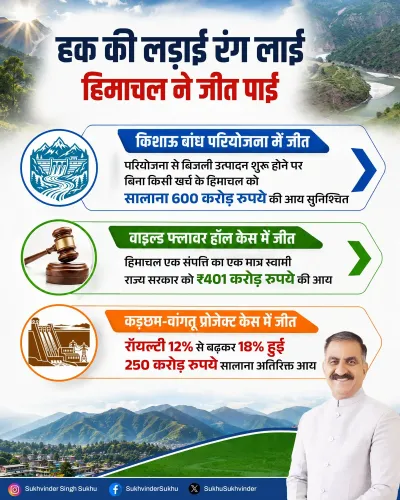
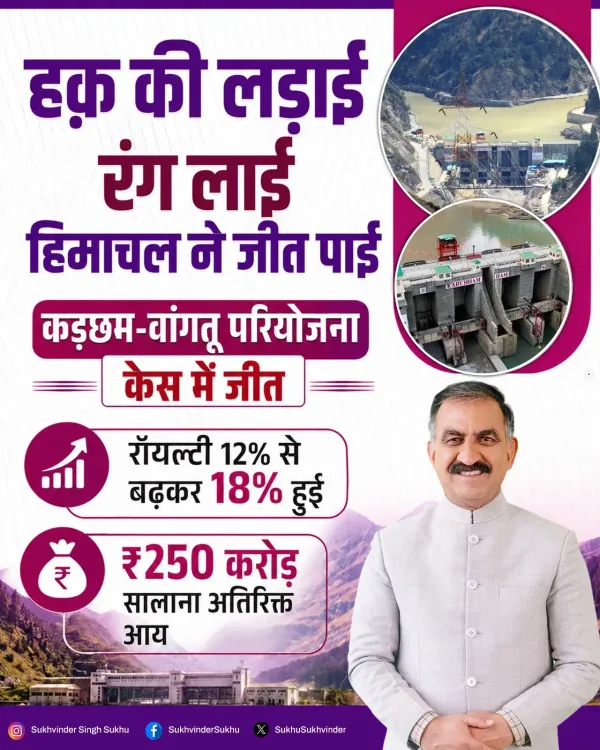
Chief Minister Sukhvinder Singh Sukhu announced that Himachal Pradesh has renegotiated the royalty on the Karcham-Wangtoo hydroelectric project from 12 percent to 18 percent, securing an estimated Rs 250 crore in additional annual revenue and framing the move as an unprecedented assertion of state resource rights.
Key Takeaways
Himachal Pradesh CM Sukhvinder Singh Sukhu announced the royalty revision on 13 July 2026 .
The state royalty on the Karcham-Wangtoo hydroelectric project has been raised from 12 percent to 18 percent .
The revision is projected to yield approximately Rs 250 crore in additional revenue per year for the state.
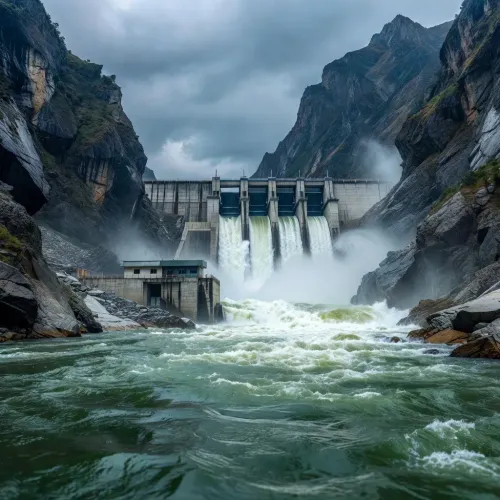
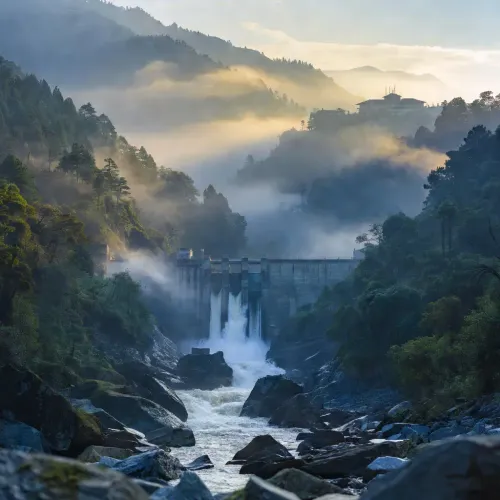
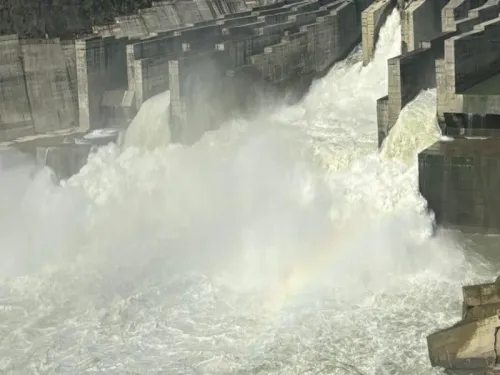
The Karcham-Wangtoo project is an approximately 1,000 MW facility in Kinnaur district .
CM Sukhu described this as the first time in the state's history that such a decisive step has been taken to protect resource rights.
The move sets a precedent that could trigger similar renegotiations for other hydropower projects in Himachal Pradesh .
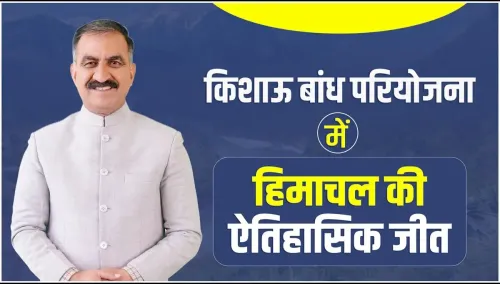
Himachal Pradesh Chief Minister Sukhvinder Singh Sukhu announced on Monday, 13 July 2026 that the state has successfully renegotiated its royalty share on the Karcham-Wangtoo hydroelectric project, raising it from 12 percent to 18 percent — a revision he described as the first decisive assertion of the state's rights over its own natural resources.
Context
Posting in Hindi on X, CM Sukhu stated: 'प्रदेश की संपदा और संसाधनों पर हिमाचल प्रदेश के लोगों का अधिकार सर्वोपरि है' ['The right of the people of Himachal Pradesh over the state's wealth and resources is paramount']. He framed the royalty revision as the outcome of a sustained campaign his government has waged since taking office, calling it a 'decisive fight' being waged 'for the first time in the history of the state.'
The revised royalty rate is projected to generate approximately Rs 250 crore in additional annual revenue for the state, according to the Chief Minister's post.
Policy Backdrop
The Karcham-Wangtoo hydroelectric project, located in Kinnaur district of Himachal Pradesh, is an approximately 1,000 MW facility developed under agreements that have historically pegged state royalty at around 12 percent for private developers. Hydropower project agreements signed across Himalayan states since the 2000s have largely followed this template, with free-power and royalty clauses negotiated at the time of project sanction.
Himachal Pradesh, endowed with some of the densest hydroelectric potential in the country, has long sought to maximise revenue from these river-basin projects. The tension between locked-in legacy agreements and a state's evolving resource claims has been a persistent feature of centre-state and state-developer relations across the Himalayas.
Stakeholders and Impact
The immediate beneficiary of the revision is the Himachal Pradesh state exchequer, which stands to receive the additional Rs 250 crore per year cited by CM Sukhu. For the state's roughly 73 lakh residents, the funds could translate into expanded social spending or infrastructure investment, depending on budgetary priorities.
Private hydro developers operating in the state are the principal counterparties to such royalty agreements. An upward revision of this scale sets a precedent that could affect negotiations on other commissioned or under-construction projects in Himachal Pradesh, making the outcome closely watched by the broader hydropower sector.
What's Next
CM Sukhu's government has signalled that the Karcham-Wangtoo revision is part of a wider effort to reassert state rights over natural resources. The key question going forward is whether similar royalty renegotiations will be pursued for other hydropower projects across the state, and whether any of those efforts result in legal disputes or arbitration proceedings with developers. The political messaging also positions resource sovereignty as a central plank of the Congress government's identity ahead of the next state electoral cycle.
Point of View
' CM Sukhu is drawing a sharp contrast with previous administrations and positioning resource nationalism as a Congress differentiator in Himachal Pradesh. The Rs 250 crore annual gain, while significant for a hill state with a constrained budget, also signals to developers across the Himalayan belt that legacy royalty rates are no longer sacrosanct. If the Sukhu government pursues similar revisions on other projects, it could reshape the risk calculus for private hydropower investment in the state — a tension that will test the limits of renegotiation versus contractual sanctity.
NationPress
12 Oct 2026
Frequently Asked Questions
What is the new royalty rate for the Karcham-Wangtoo hydroelectric project?
The royalty rate has been revised upward from 12 percent to 18 percent, as announced by Himachal Pradesh Chief Minister Sukhvinder Singh Sukhu on 13 July 2026.
How much extra revenue will Himachal Pradesh earn from the Karcham-Wangtoo royalty revision?
CM Sukhu stated that the revised royalty will generate approximately Rs 250 crore in additional annual revenue for the state.
Where is the Karcham-Wangtoo hydroelectric project located?
The Karcham-Wangtoo project is located in Kinnaur district of Himachal Pradesh and has a capacity of approximately 1,000 MW.
Why is CM Sukhu's royalty revision considered significant for Himachal Pradesh?
CM Sukhu described it as the first time in the state's history that a government has taken such a decisive step to protect the rights of Himachal Pradesh residents over the state's natural resources and wealth.
Will other hydropower projects in Himachal Pradesh also see royalty revisions?
CM Sukhu has framed the Karcham-Wangtoo revision as part of a broader effort to assert state resource rights, suggesting similar renegotiations for other projects are possible, though no specific announcements have been made yet.