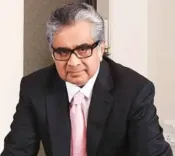
CM Samrat Choudhary Hails India's IPhO 2026 Gold Medallists
Synopsis
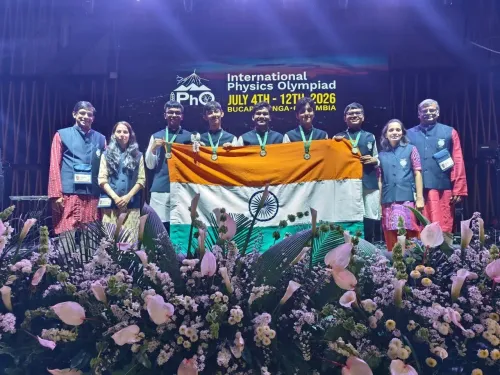
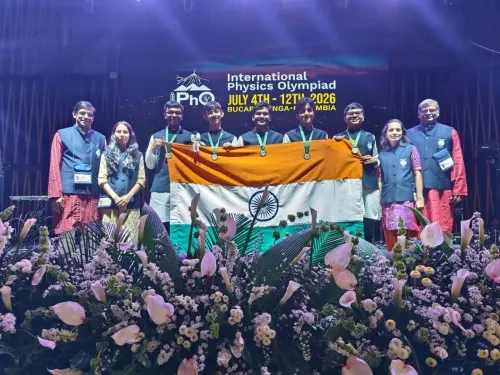
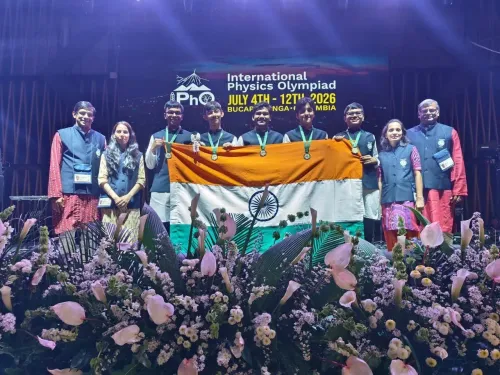
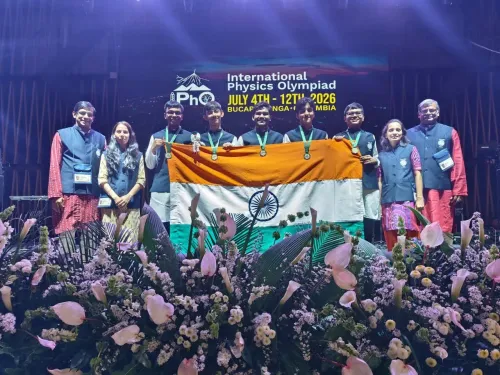
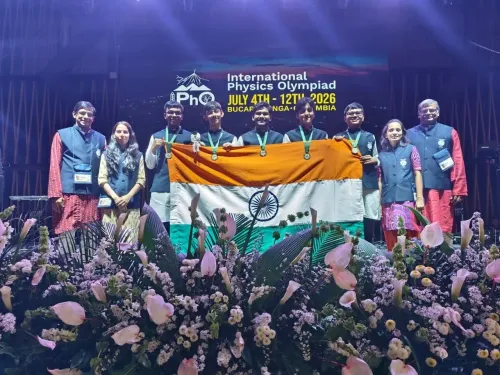
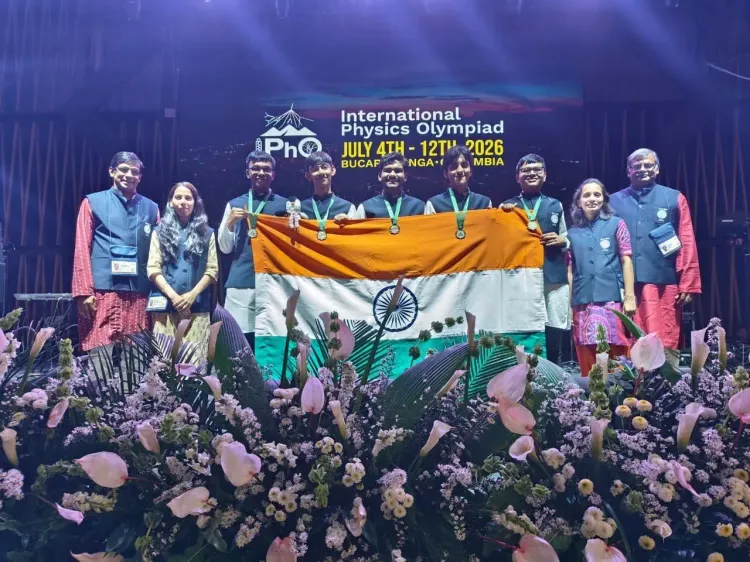
Bihar CM Samrat Choudhary praised five Indian students — Kanishk Jain, Riddhesh Anant Bendale, Rishit Garg, Shreshth Suraiya, and Swarit Joshi — for winning gold medals at the 56th International Physics Olympiad 2026, calling their feat proof of India's scientific potential and a source of inspiration for millions of students.
Key Takeaways
Bihar CM Samrat Choudhary congratulated India's five gold medallists at the 56th International Physics Olympiad (IPhO) 2026 on 13 July 2026 .
The five winners are Kanishk Jain , Riddhesh Anant Bendale , Rishit Garg , Shreshth Suraiya , and Swarit Joshi .
India has participated in the IPhO continuously since 1998 and has a growing record of medals.
The National Education Policy 2020 prioritises STEM talent identification and early-stage research orientation, within which olympiad programmes are a key mechanism.
CM Choudhary said the achievement would inspire 'lakhs of students' to pursue science and research.
Bihar Chief Minister Samrat Choudhary on Monday, 13 July 2026 congratulated five Indian students who won gold medals at the 56th International Physics Olympiad (IPhO) 2026, calling their achievement a powerful testament to India's scientific capacity and the boundless potential of its youth.
What the Chief Minister Said
Posting in Hindi on X, CM Choudhary extended his heartfelt congratulations to Kanishk Jain, Riddhesh Anant Bendale, Rishit Garg, Shreshth Suraiya, and Swarit Joshi — the five students who brought home gold medals for India. He wrote: 'भारत की युवा प्रतिभा ने एक बार फिर विश्व मंच पर तिरंगे का गौरव बढ़ाया है' ['India's young talent has once again raised the glory of the tricolour on the world stage']. He added that their outstanding performance would inspire millions of students across the country to set new benchmarks in science and research.
Context
The International Physics Olympiad is an annual global competition for high-school students, first held in 1967, featuring both theoretical and experimental rounds. India has participated continuously since 1998 and has built a steady record of medals across editions. Winning all-gold — with all five team members claiming the top honour — marks a significant collective performance for the Indian contingent at the 56th edition.
Senior political leaders across party lines routinely acknowledge such results publicly, reinforcing the national narrative around educational achievement and scientific ambition. CM Choudhary's post follows this established pattern while also reflecting Bihar's own aspirations in the STEM space.
Policy Backdrop
India's sustained performance at international science olympiads has been supported by specialised training centres and a rigorous multi-stage national selection process. The National Education Policy 2020 explicitly prioritises early-stage research orientation and stronger mechanisms for identifying STEM talent at the school level. Olympiad programmes sit squarely within this policy vision, serving as a primary pipeline for nurturing future scientists and researchers.
Over two decades, the country's results at competitions such as the IPhO have shown gradual improvement, a trend attributed to structured coaching infrastructure and growing institutional support for science education beyond the standard curriculum.
Stakeholders and Impact
The five gold medallists — Kanishk Jain, Riddhesh Anant Bendale, Rishit Garg, Shreshth Suraiya, and Swarit Joshi — represent the apex of India's school-level physics talent. Their success is directly relevant to STEM educators, school students preparing for competitive science examinations, and policymakers tracking outcomes of talent-development programmes. Public acknowledgements from state leaders like CM Choudhary amplify these achievements to regional audiences, potentially encouraging greater participation in olympiad training at the state level.
What's Next
Attention will now turn to the selection and training cycle for the 57th IPhO, as well as any state-level initiatives — particularly in Bihar — aimed at expanding olympiad coaching infrastructure and broadening access to competitive science education. India's back-to-back strong performances at international olympiads are likely to intensify calls for dedicated state-funded training programmes to sustain and build on this momentum.
Point of View
Lending it a degree of specificity beyond routine ceremonial acknowledgement. In the context of the NEP 2020's emphasis on STEM and research, such high-profile political endorsements can translate into tangible policy momentum — particularly pressure on state governments to invest in olympiad coaching infrastructure. For Bihar, a state historically associated with competitive examination culture, the signal carries additional resonance as the state seeks to position itself as a contributor to India's scientific talent pipeline.
NationPress
12 Oct 2026
Frequently Asked Questions
Who are the five Indians who won gold at IPhO 2026?
The five Indian students who won gold medals at the 56th International Physics Olympiad 2026 are Kanishk Jain, Riddhesh Anant Bendale, Rishit Garg, Shreshth Suraiya, and Swarit Joshi, as named by Bihar CM Samrat Choudhary in his congratulatory post.
What is the International Physics Olympiad (IPhO)?
The International Physics Olympiad is an annual global competition for high-school students in physics, first held in 1967. It features theoretical and experimental rounds, and India has participated continuously since 1998.
What did Bihar CM Samrat Choudhary say about IPhO 2026?
Bihar CM Samrat Choudhary said India's young talent had 'once again raised the glory of the tricolour on the world stage' and that the students' achievement was proof of India's scientific capacity, innovation, and the limitless potential of its youth.
How has India performed at the International Physics Olympiad historically?
India has participated in the IPhO since 1998 and has built a steady record of medals. Performance has shown gradual improvement over two decades, supported by specialised training centres and a structured national selection process.
How does the National Education Policy 2020 relate to science olympiads?
The National Education Policy 2020 prioritises early-stage research orientation and stronger STEM talent identification mechanisms. Olympiad programmes like the IPhO are a key part of this pipeline, helping identify and nurture India's top young science talent.