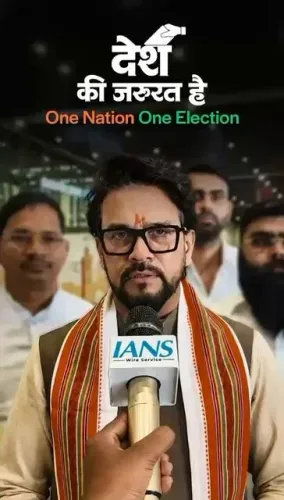
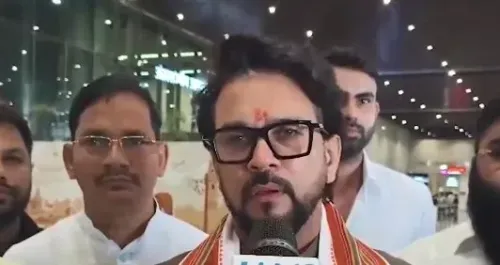
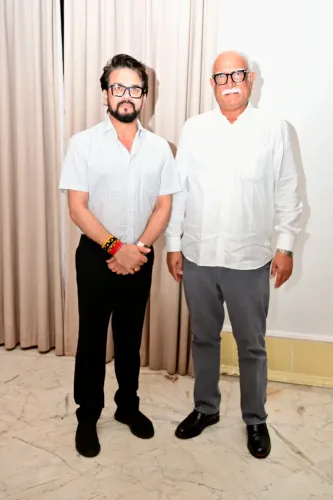
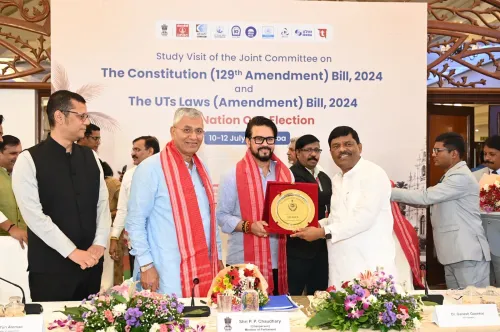
Anurag Thakur leads JPC study tour on One Nation One Election in Lucknow
Synopsis
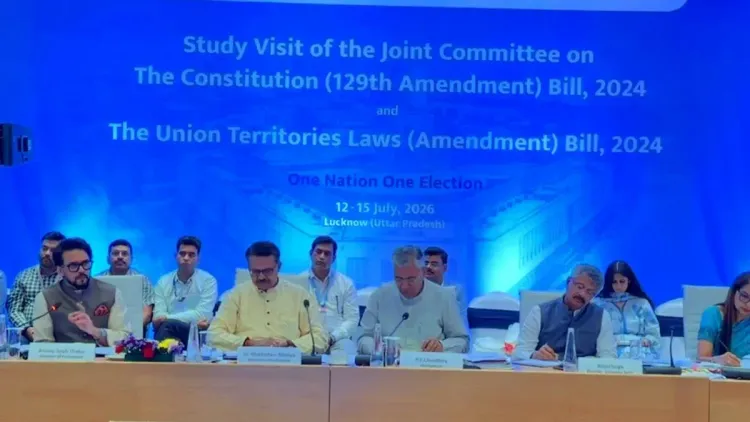
BJP MP Anurag Thakur led a Joint Parliamentary Committee study tour in Lucknow on 13 July 2026, holding consultations with UP's top bureaucrats, major PSUs, and the legal fraternity on implementing One Nation One Election, emphasising resource savings and governance continuity.
Key Takeaways
BJP MP Anurag Thakur conducted a JPC study tour in Lucknow on 13 July 2026 as part of the One Nation One Election consultative process.
Discussions were held with Chief Secretary S.P.
Goyal , DGP Rajeev Krishna , and senior officers from Finance, Home, Education, Tourism, and Agriculture departments of Uttar Pradesh .
Representatives from eight PSUs — including FCI, Coal India, NAFED, Northern Railway, and PGCIL — participated to assess operational implications.
Senior Advocates and members of the Bar Council of UP and Avadh Bar Association provided legal inputs at the Lucknow Bench.
Thakur argued simultaneous elections would save resources, reduce Model Code of Conduct-related policy paralysis, and improve governance continuity.
The JPC's final report to Parliament and potential constitutional amendment bills remain the key milestones to watch.
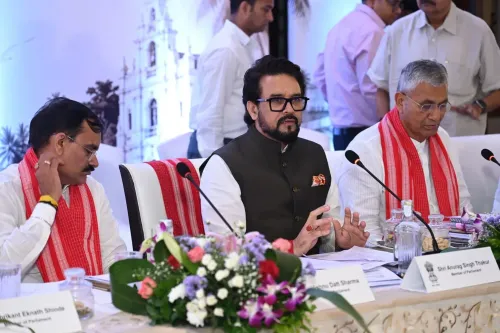
BJP MP Anurag Thakur on Monday, 13 July 2026, concluded a study tour in Lucknow as part of the Joint Parliamentary Committee (JPC) examining the One Nation One Election proposal, holding structured consultations with senior Uttar Pradesh government officials, public sector undertakings, and members of the legal fraternity.
Context
The Lucknow visit formed part of the JPC's ongoing state-level outreach to assess ground-level readiness and stakeholder views on holding simultaneous elections to the Lok Sabha and all state assemblies. Thakur, a Lok Sabha MP from Hamirpur, Himachal Pradesh and former Union Minister, is among the members steering this consultative exercise across states.
In his post, Thakur described the day as 'productive and insightful,' noting in-depth discussions with senior officers including Chief Secretary S.P. Goyal, DGP Rajeev Krishna, the Chief Electoral Officer of Uttar Pradesh, and key officials from the Finance, Home, Education, Tourism, and Agriculture departments.
Policy Backdrop
The idea of simultaneous elections has been part of the BJP's election manifestos since 2014. The Law Commission of India submitted a draft report recommending simultaneous polls in August 2018, and a high-level committee chaired by former President Ram Nath Kovind was constituted in September 2023 to examine the proposal's constitutional and logistical feasibility.
The JPC's current study-tour series is the most recent phase of this multi-year consultative process, designed to gather inputs from state administrations, central organisations, and constitutional experts before the committee tables its final report in Parliament.
Thakur reiterated the central arguments for the reform during the Lucknow consultations, stating that simultaneous elections 'will result in huge savings of resources, minimise policy paralysis caused by frequent Model Code of Conduct periods, and ensure greater governance continuity.'
Stakeholders and Impact
Beyond the bureaucracy, the JPC engaged with representatives from several major public sector undertakings, including National Fertilizers Limited (NFL), Central Bank of India, the Food Corporation of India (FCI), NAFED, Northern Railway, Rail Vikas Nigam, Coal India, and Power Grid Corporation of India (PGCIL). Their participation signals the committee's intent to map the operational disruptions that PSUs face during prolonged election cycles.
The session concluded with legal inputs from Senior Advocates and members of the Bar Council of Uttar Pradesh and the Avadh Bar Association at the Lucknow Bench, addressing the constitutional amendments that any simultaneous-election framework would require.
Uttar Pradesh, as India's most populous state with the largest number of Lok Sabha constituencies, carries particular weight in any national electoral reform calculation. Its administrative machinery and legal community offer a high-stakes test case for the proposal's viability.
What's Next
The JPC is expected to compile findings from multiple state study tours before submitting its final report to Parliament. Any subsequent legislative action would require constitutional amendments, making the breadth of stakeholder consensus — including from state governments and the judiciary — a critical variable. The committee's report and the government's response to it are being closely watched ahead of the next parliamentary session.
Point of View
State-level evidence-gathering — a necessary step before any constitutional amendment bill can be tabled. By engaging PSUs alongside bureaucrats and lawyers, the committee is building a multi-dimensional record that addresses not just electoral logistics but the economic costs borne by central organisations during prolonged election cycles. Uttar Pradesh's inclusion is strategically significant: as the state with the highest Lok Sabha seat count, its administrative buy-in would be essential for the proposal's credibility. The breadth of outreach suggests the government is preparing a comprehensive legislative dossier, though converting that into a constitutional majority remains the decisive political challenge.
NationPress
13 Jul 2026
Frequently Asked Questions
What is the One Nation One Election proposal?
One Nation One Election is a proposal to synchronise elections to the Lok Sabha and all state assemblies so they are held simultaneously, aiming to reduce the cost of frequent elections and limit repeated impositions of the Model Code of Conduct that can stall governance.
What did Anurag Thakur do in Lucknow on 13 July 2026?
Anurag Thakur led a Joint Parliamentary Committee study tour in Lucknow, consulting Uttar Pradesh's Chief Secretary, DGP, senior departmental officers, representatives of major PSUs, and members of the Bar Council of UP on the feasibility and impact of One Nation One Election.
Why is the JPC visiting states for One Nation One Election consultations?
The JPC is conducting state-level study tours to gather ground-level inputs from state governments, public sector undertakings, and legal experts before finalising its report to Parliament, as nationwide simultaneous elections would require constitutional amendments and broad administrative consensus.
Which PSUs were part of the Lucknow JPC consultation on One Nation One Election?
Representatives from National Fertilizers Limited, Central Bank of India, Food Corporation of India, NAFED, Northern Railway, Rail Vikas Nigam, Coal India, and Power Grid Corporation of India participated in the Lucknow consultation.
What are the main arguments for One Nation One Election?
Proponents argue that simultaneous elections would generate large savings in public expenditure, reduce the frequency of Model Code of Conduct periods that restrict policy announcements and development work, and provide greater continuity in governance at both central and state levels.