Puri: India turned Hormuz crisis into energy opportunity
Synopsis
Union Petroleum Minister Hardeep Singh Puri says India's pre-emptive energy policies — expanding LPG output to 55,000 MT per day and diversifying crude sourcing to 41 countries — prevented any cooking-gas shortage during the Strait of Hormuz closure, with Ujjwala families still receiving cylinders at ₹900 below market price.
Key Takeaways
Union Petroleum Minister Hardeep Singh Puri credited PM Modi 's long-term decisions for India's resilience during the Strait of Hormuz closure.
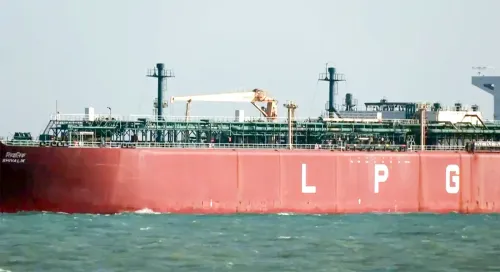
Domestic LPG production was scaled from 34,000 metric tonnes per day to 55,000 metric tonnes per day .
India diversified crude oil sourcing from 27 countries to 41 countries , reducing corridor dependency.
No gas shortage, no rationing, and no disruption to household cooking fuel was reported during the crisis.
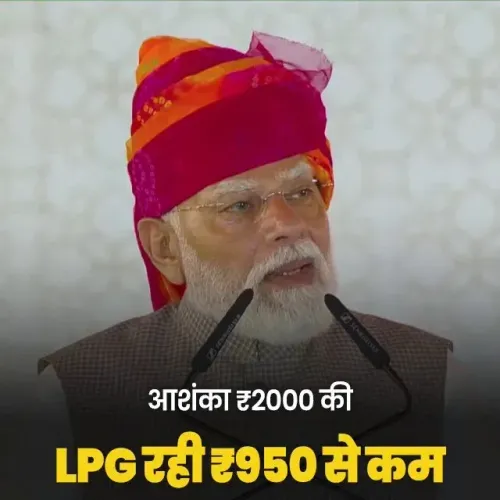
Regular LPG consumers receive cylinders at ₹600 below market price; over 10.56 crore Ujjwala families receive them at ₹900 below market price.
The episode is expected to anchor future government arguments for continued investment in strategic petroleum reserves and domestic refining capacity.
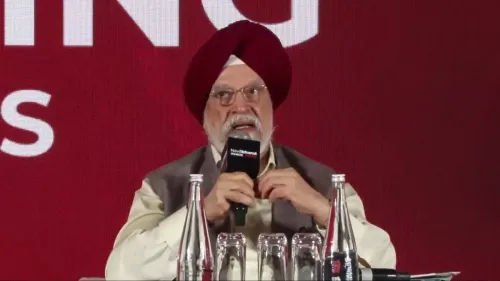
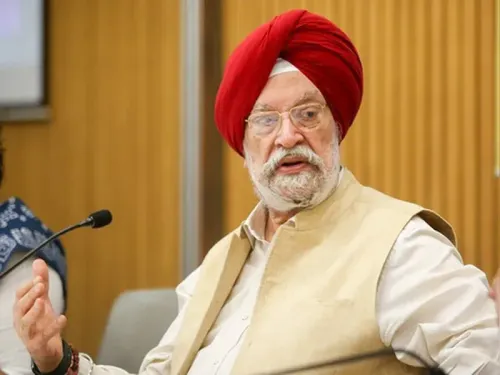
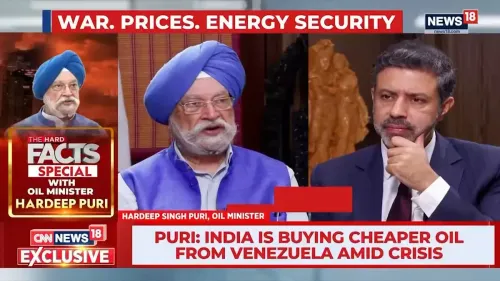
Union Petroleum Minister Hardeep Singh Puri on Monday, 13 July 2026 credited Prime Minister Narendra Modi's long-term energy policy decisions for shielding Indian households from the global energy disruption triggered by the closure of the Strait of Hormuz, asserting that India faced no gas shortage, no rationing, and no disruption to cooking fuel supplies across crores of families.
Context
Posting in Hindi on X, Puri declared: 'यह नया भारत है, जो संकट से विचलित नहीं होता' ('This is the new India, which is not rattled by crisis') — framing the episode as proof that India's preparedness, diplomacy, and decisive leadership can convert challenges into opportunities. The post came against the backdrop of the Strait of Hormuz closure, a critical maritime chokepoint through which a significant share of the world's crude oil and LPG shipments pass, triggering anxiety across energy-importing nations.
Puri described the biggest domestic challenge as ensuring the continued availability of LPG for households, noting that crores of Indian families depend on cooking gas for their daily needs. He credited decisions taken 'years ago' under Modi's leadership for making India resilient enough to weather the disruption.
Policy Backdrop
The minister pointed to a cluster of structural measures as the pillars of India's energy resilience. He cited the expansion of India's crude oil sourcing from 27 countries to 41 countries, a significant diversification of import origins that reduced dependence on any single supply corridor. Alongside this, he highlighted the expansion of domestic refining capacity.
Crucially, Puri stated that domestic LPG production was scaled up from 34,000 metric tonnes per day to 55,000 metric tonnes per day — a jump he described as India's 'greatest strength' during the crisis. These measures, he argued, were the result of forward-looking policy choices and not reactive responses to the immediate disruption. The Pradhan Mantri Ujjwala Yojana, launched in May 2016, had already extended LPG connections to below-poverty-line households, deepening the government's stake in uninterrupted cooking-gas supply.
Stakeholders and Impact
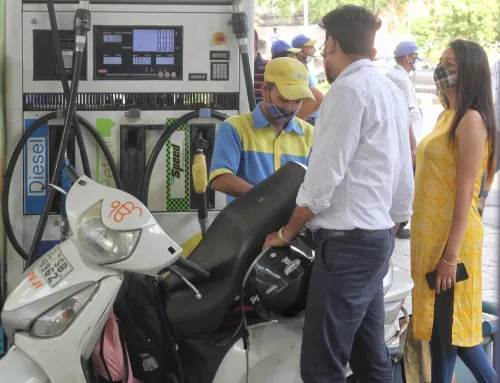
Puri highlighted the direct consumer benefit: ordinary LPG subscribers are currently receiving cylinders at approximately ₹600 below the actual market price, while more than 10.56 crore Ujjwala beneficiary families are receiving cylinders at ₹900 below the prevailing price. This subsidy architecture, he implied, held firm even as global energy prices came under pressure from the Hormuz disruption.
The scale of the Ujjwala programme — covering over 10.56 crore households — means the government's ability to sustain uninterrupted supply and subsidised pricing during a global supply shock carries significant social and political weight, particularly for rural and low-income families who have limited alternatives to piped or bottled cooking gas.
What's Next
The minister's post signals that the government is likely to lean on this episode as a validation of its decade-long energy security architecture, including import diversification, domestic production expansion, and targeted subsidies. Parliamentary discussions on petroleum subsidy allocations and updates to strategic petroleum reserve infrastructure are expected to reference this period as a stress-test that India successfully passed. As global energy supply chains remain volatile, the government's ability to sustain both the production ramp-up and the subsidy differential for Ujjwala households will be the defining metric of whether this resilience holds over the longer term.
Point of View
Particularly import diversification and domestic production scaling. By anchoring the narrative around household LPG continuity — a deeply personal concern for crores of voters — the minister connects macro energy policy to kitchen-table reality, a proven BJP communication strategy. The explicit subsidy figures for both general consumers and Ujjwala beneficiaries signal that the government intends to defend its fiscal commitment to cooking-gas affordability even under pressure. Longer term, the episode strengthens the case for further investment in strategic reserves and domestic refining, areas where policy momentum had been building since the post-2022 global energy volatility.
NationPress
13 Jul 2026
Frequently Asked Questions
What happened to LPG supply in India during the Strait of Hormuz closure?
According to Union Petroleum Minister Hardeep Singh Puri, India faced no LPG shortage, no rationing, and no disruption to household cooking gas during the Strait of Hormuz closure, owing to pre-built domestic production capacity and diversified import sources.
How much is the LPG subsidy for Ujjwala Yojana families in 2026?
Puri stated that over 10.56 crore Ujjwala beneficiary families are receiving LPG cylinders at ₹900 below the actual market price, while regular consumers receive them at approximately ₹600 below market price.
How many countries does India source crude oil from?
India has expanded its crude oil sourcing from 27 countries to 41 countries, according to Hardeep Singh Puri, as part of a diversification strategy to reduce dependence on any single supply corridor.
What is India's current domestic LPG production capacity?
Puri stated that domestic LPG production has been scaled up to 55,000 metric tonnes per day, up from an earlier level of 34,000 metric tonnes per day, under decisions taken during PM Modi's tenure.
What is the Pradhan Mantri Ujjwala Yojana?
Pradhan Mantri Ujjwala Yojana is a central government scheme launched in May 2016 that provides LPG connections and subsidised cylinders to below-poverty-line households, and currently covers over 10.56 crore families across India.