Piyush Goyal Hails India's IPhO 2026 Gold Medallists
Synopsis
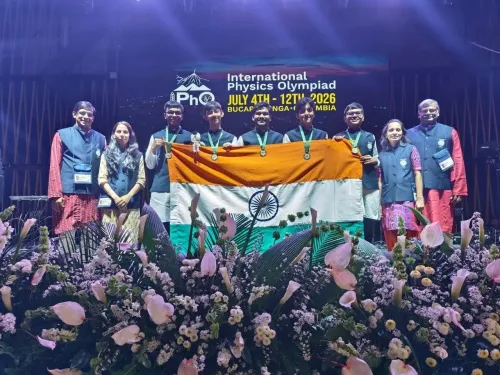
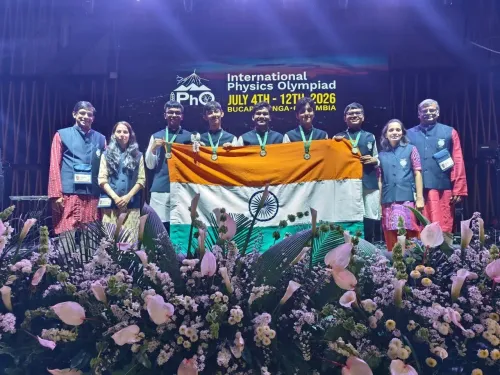
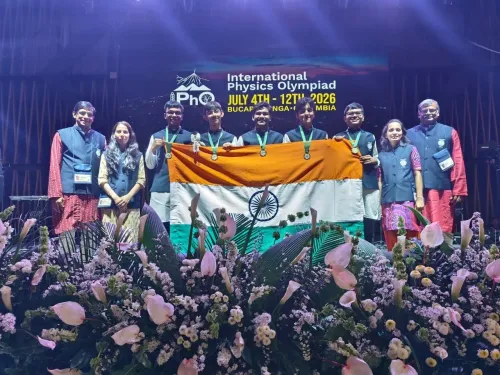
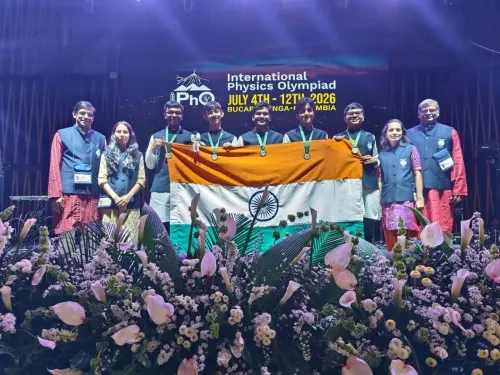
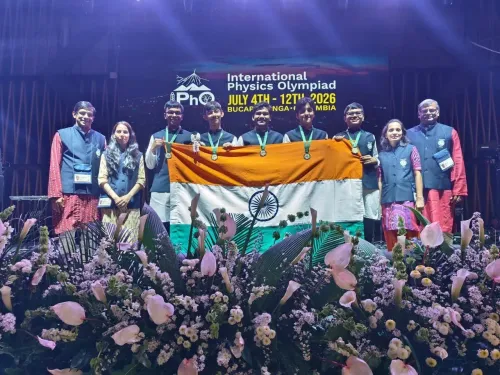
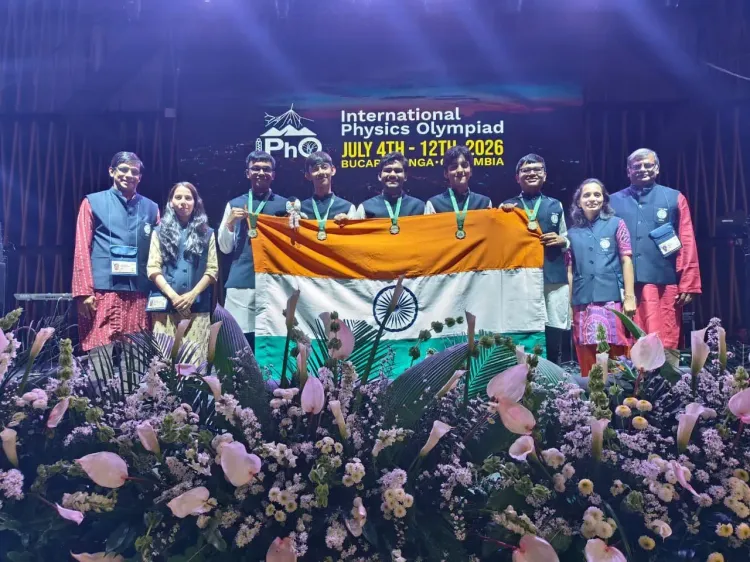
Five Indian students — Kanishk Jain, Riddhesh Anant Bendale, Rishit Garg, Shresth Suraiya, and Svarit Joshi — won gold medals at the 56th International Physics Olympiad 2026. Commerce Minister Piyush Goyal hailed the feat as proof of India's rising scientific talent and called it a shining example of Bharat's Yuva Shakti.
Key Takeaways
Five gold medals for India at the 56th International Physics Olympiad (IPhO) 2026 .
Medallists are Kanishk Jain , Riddhesh Anant Bendale , Rishit Garg , Shresth Suraiya , and Svarit Joshi .
Union Minister Piyush Goyal congratulated the students on 13 July 2026 , calling the feat a testament to India's scientific temperament.
India has participated in the IPhO since 1989 and has recorded improving results in recent years.
The achievement aligns with the National Education Policy 2020 's emphasis on scientific temper and STEM development at the school level.
Union Commerce and Industry Minister Piyush Goyal on Monday, 13 July 2026 congratulated five Indian students who won gold medals at the 56th International Physics Olympiad (IPhO) 2026, calling their feat a testament to the brilliance and scientific temperament of India's young minds.
Context
The five gold medallists — Kanishk Jain, Riddhesh Anant Bendale, Rishit Garg, Shresth Suraiya, and Svarit Joshi — secured top honours at the 56th IPhO, one of the most competitive science olympiads for high-school students in the world. Minister Goyal described their achievement as a shining example of 'Bharat's Yuva Shakti' — the energy and potential of India's youth — and extended best wishes for their future endeavours.
The International Physics Olympiad is held annually and tests participants on both theoretical and experimental physics. India has been a participating nation since 1989 and has recorded steadily improving results over the decades.
Policy Backdrop
India's sustained performance in international science olympiads is underpinned by a national talent-identification and training infrastructure that has expanded considerably since the early 2000s. The National Education Policy (NEP) 2020 explicitly prioritises the development of scientific temper and innovation from the school level, providing a policy framework that supports programmes feeding into olympiad preparation.
The Ministry of Education oversees the Homi Bhabha Centre for Science Education, which coordinates India's olympiad training and selection process. Successive governments have positioned strong olympiad results as evidence of the country's growing human capital in STEM fields.
Stakeholders and Impact
The immediate beneficiaries are the five students themselves, who now carry gold-medal credentials from one of the world's most prestigious pre-university science competitions. For science educators and coaching institutions across India, the clean sweep of gold medals reinforces the value of structured olympiad preparation and is likely to inspire a new cohort of aspirants.
The broader stakeholder group includes school students in science streams nationwide, whose aspirations are shaped by visible role models at the international level. Policymakers and institutions invested in building a knowledge economy see such results as validation of India's long-term bet on STEM education.
What's Next
Attention will now turn to how India channels these high-achieving students into domestic research and higher-education pipelines, a gap that policymakers have acknowledged in the past. Several top institutions offer direct-admission or scholarship pathways for olympiad medallists, and the government's push to strengthen research universities under the NEP 2020 framework could provide stronger landing pads for talent like this.
Results from other upcoming international science olympiads — including chemistry, mathematics, and biology — will further test whether India's 2026 performance represents a structural improvement or a standout year.
Frequently Asked Questions
Who won gold medals for India at IPhO 2026?
Kanishk Jain , Riddhesh Anant Bendale , Rishit Garg , Shresth Suraiya , and Svarit Joshi won gold medals for India at the 56th International Physics Olympiad 2026 .
What is the International Physics Olympiad?
The International Physics Olympiad (IPhO) is an annual worldwide competition for high-school students that tests skills in theoretical and experimental physics. It is one of the most prestigious pre-university science competitions globally. India has been a participant since 1989 .
What did Piyush Goyal say about India's IPhO 2026 result?
Minister Piyush Goyal congratulated the five gold medallists and said their achievement is 'a testament to the brilliance, perseverance and scientific temperament of India's young minds.' He expressed hope that they would inspire others and contribute to nation-building.
How has India performed at science olympiads in recent years?
India has recorded steadily improving results at international science olympiads in recent years, supported by talent-nurturing programmes and a national training infrastructure coordinated under the Ministry of Education.
How does NEP 2020 relate to India's olympiad success?
The National Education Policy 2020 emphasises the development of scientific temper and innovation from the school level, providing a policy framework that supports the kind of structured training programmes that feed into India's olympiad preparation pipeline.