Shekhawat chairs Hindi Advisory Committee meet at Culture Ministry
Synopsis
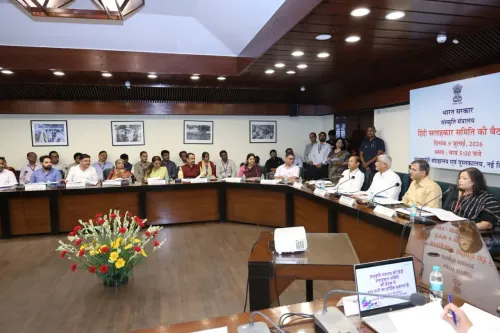
Union Minister Gajendra Singh Shekhawat chaired the Hindi Advisory Committee meeting on 13 July 2026, calling Hindi a unifying stream that transcends socio-economic divides. Discussions focused on effective Rajbhasha use across central government, with the ministry linking language promotion to culture and tourism outreach.
Key Takeaways
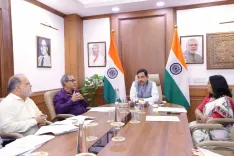
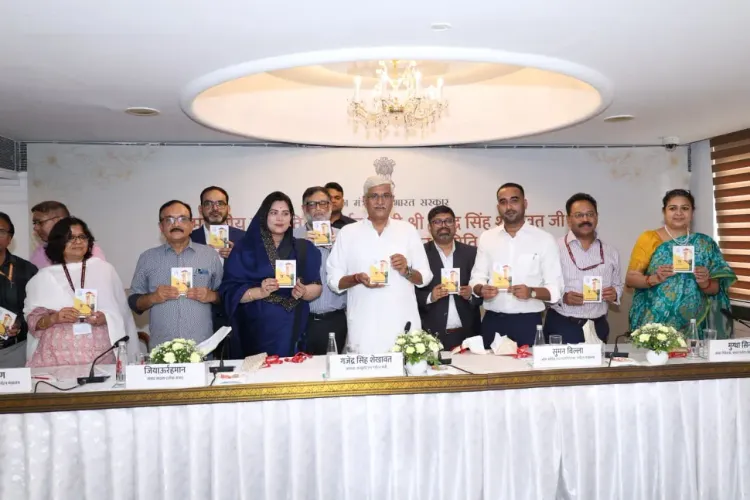
Union Culture and Tourism Minister Gajendra Singh Shekhawat chaired the Hindi Advisory Committee meeting on 13 July 2026 .
The meeting focused on 'many subjects related to the effective use of Rajbhasha Hindi' in central government functioning.
Shekhawat described Hindi as a unifying force that 'is not divided along socio-economic classes' and adapts to India's cultural diversity.
The post tagged the Prime Minister's Office , Ministry of Culture , and Ministry of Tourism , indicating cross-ministerial coordination.
The Official Languages Act, 1963 and annual advisory committee mandates form the statutory backbone for such reviews.
Follow-up policy circulars and Hindi Diwas (14 September) announcements are the next milestones to watch.
Union Culture and Tourism Minister Gajendra Singh Shekhawat chaired a meeting of the Hindi Advisory Committee on Monday, 13 July 2026, where substantive discussions were held on the effective use of Hindi as Rajbhasha across central government functions. The minister shared his reflections on the meeting on X, drawing a philosophical parallel between language, culture and tourism as 'pure streams of a vast sacred river that nourish human progress.'
Posting in Hindi, Shekhawat wrote: 'भाषा, संस्कृति और पर्यटन एक विशाल पवित्र नदी की निर्मल धाराओं के समान हैं' — 'Language, culture and tourism are like the clear streams of a vast sacred river, through whose nourishment human life progresses.' He described Hindi as one such stream, uniquely capable of flowing across cultural diversity and being understood by every Indian with a sense of belonging.
Context
The Hindi Advisory Committee is a statutory body that meets periodically to review and advise on the progressive implementation of Hindi as the official language in central government offices. Monday's meeting at the Ministry of Culture saw discussions on 'many subjects related to the effective use of Rajbhasha Hindi,' according to Shekhawat's post, though specific agenda items and decisions were not disclosed publicly.
Shekhawat notably highlighted Hindi's social character, stating that it 'is not divided along socio-economic classes' and carries a 'unique quality of adapting to cultural diversity' — framing the language as an instrument of unity rather than uniformity. The post tagged the Prime Minister's Office, the Ministry of Culture, and the Ministry of Tourism, signalling a cross-ministerial emphasis on the initiative.
Policy Backdrop
Article 343 of the Constitution, adopted in 1950, declared Hindi in Devanagari script as the official language of the Union. The Official Languages Act, 1963 provided the statutory framework for progressively expanding Hindi use in official correspondence alongside English. Since the 1960s, annual Hindi Advisory Committee meetings have been mandated across ministries to set and review Rajbhasha targets.
Successive governments have used these committees to drive Hindi correspondence, employee training, and increasingly, digital content in Hindi across central ministries. The Culture and Tourism Ministry's role in this ecosystem is particularly significant, as it links language promotion with domestic tourism outreach and cultural diplomacy — areas where Hindi serves as a primary medium of public communication.
Stakeholders and Impact
The meeting's outcomes are most directly relevant to central government employees across ministries, who are subject to annual Rajbhasha compliance targets. Hindi language advocacy groups and institutions operating under the Ministry of Culture are also key stakeholders in how advisory recommendations are translated into policy circulars and training programmes.
For the tourism sector, a stronger Hindi communication framework can enhance outreach to domestic travellers from Hindi-speaking regions — a demographic that represents a substantial share of India's internal tourism market. The minister's framing of language alongside culture and tourism as interconnected streams suggests an intent to integrate Rajbhasha promotion within broader ministry programming.
What's Next
The committee's discussions are expected to feed into follow-up circulars on Hindi usage targets for the Ministry of Culture and affiliated bodies. Attention will turn to Hindi Diwas on 14 September, when ministries traditionally announce new milestones, recognitions, and expanded Hindi initiatives in digital governance. Any formal recommendations from the July 2026 advisory meeting are likely to be reflected in those announcements.
With the ministry explicitly linking language, culture and tourism in its policy narrative, future programming may increasingly bundle Hindi promotion with cultural festivals, heritage tourism campaigns, and digital content strategies targeting domestic audiences.
Point of View
Careful to invoke 'unity in diversity' rather than linguistic imposition. The advisory committee format, unchanged since the 1960s, may be under quiet pressure to produce more visible digital-era deliverables ahead of Hindi Diwas in September.
NationPress
13 Jul 2026
Frequently Asked Questions
What is the Hindi Advisory Committee and what does it do?
The Hindi Advisory Committee is a statutory body that advises the central government on the progressive implementation of Hindi as Rajbhasha in official work. It meets periodically across ministries to set targets, review compliance, and recommend measures for expanding Hindi use in correspondence, training, and digital platforms.
What happened at the Hindi Advisory Committee meeting on 13 July 2026?
Union Minister Gajendra Singh Shekhawat chaired the meeting at the Ministry of Culture, where discussions covered multiple subjects related to the effective use of Rajbhasha Hindi in central government functions. Specific decisions were not publicly disclosed.
What did Shekhawat say about Hindi at the meeting?
Shekhawat described Hindi as a stream within the larger river of language, culture and tourism, emphasising that it is not divided along socio-economic lines and has a unique ability to adapt to India's cultural diversity, making it understood by every Indian with a sense of belonging.
What is the legal basis for Hindi as India's official language?
Article 343 of the Constitution (1950) declared Hindi in Devanagari script as the Union's official language. The Official Languages Act of 1963 provided the statutory framework for progressively expanding Hindi use in official work alongside English.
When is Hindi Diwas and why does it matter for this meeting?
Hindi Diwas is observed on 14 September each year. It is the key date when ministries announce new Rajbhasha milestones, targets, and recognition awards, making it the most likely occasion for any formal outcomes of the July 2026 advisory meeting to be publicly announced.