Joshi Reviews BIS Office-Lab Plans for Lucknow, Ranchi
Synopsis
Union Consumer Affairs Minister Pralhad Joshi chaired a review meeting on 13 July 2026 to examine BIS proposals for new office-cum-laboratory buildings in Lucknow and Ranchi, aimed at expanding India's standardisation, testing, and market surveillance infrastructure.
Key Takeaways
Union Consumer Affairs Minister Pralhad Joshi held a review meeting on 13 July 2026 with senior officials of the Bureau of Indian Standards (BIS) .
Proposals under discussion involve construction of new BIS office-cum-laboratory buildings at Lucknow (Uttar Pradesh) and Ranchi (Jharkhand).
The meeting focused on strengthening BIS infrastructure to support standardisation, testing, certification, and market surveillance activities.
Purpose-built facilities are being considered to improve operational efficiency and meet rising demand for quality assurance services.
The proposals align with India's broader push to decentralise testing capacity following the expanded mandate under the BIS Act, 2016 .
Budget allocation and tendering timelines remain to be determined in subsequent ministry planning cycles.
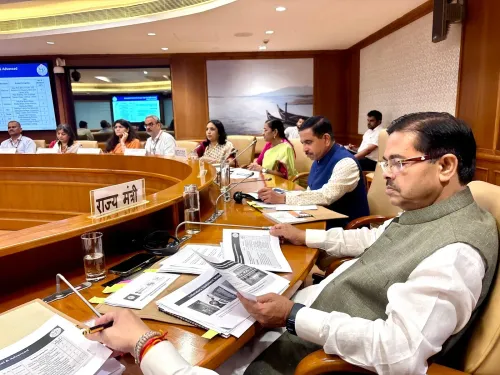
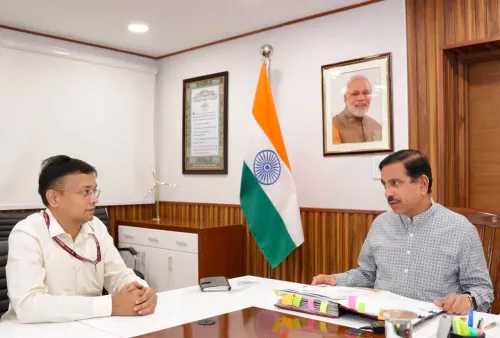
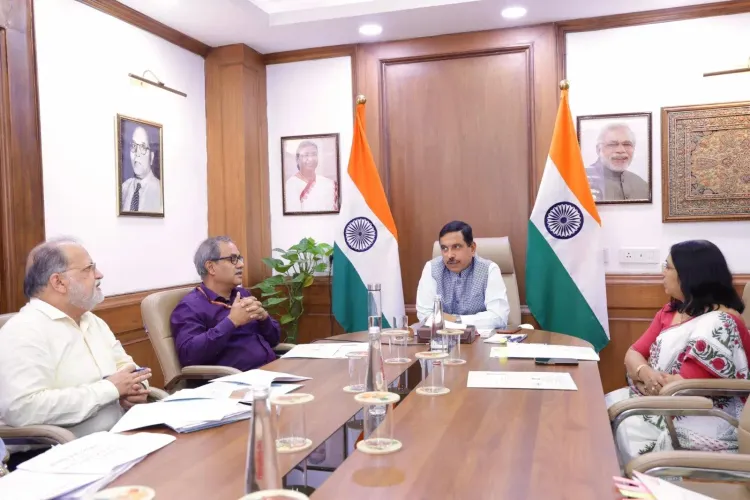
Union Consumer Affairs Minister Pralhad Joshi on Monday, 13 July 2026 chaired a review meeting with the Secretary of the Department of Consumer Affairs and senior officials of the Bureau of Indian Standards (BIS) to examine proposals for constructing new office-cum-laboratory buildings at Lucknow and Ranchi.
Context
The meeting centred on strengthening BIS's physical infrastructure to keep pace with its expanding mandate. Discussions covered the body's growing role in standardisation, testing, certification, and market surveillance, as well as the need for purpose-built facilities to improve operational efficiency and meet rising demand for quality assurance services.
Minister Joshi noted that the deliberations also addressed the increasing workload on existing BIS facilities and the importance of dedicated infrastructure to serve consumers and industry more effectively across different regions of the country.
Policy Backdrop
The BIS Act, 2016 replaced the earlier 1986 Act and significantly broadened BIS's mandate, introducing compulsory certification regimes and enhanced market surveillance powers. Since the 1990s, BIS has progressively established regional laboratories to decentralise testing and certification services, reducing dependence on centralised facilities.
The proposed buildings at Lucknow, capital of Uttar Pradesh, and Ranchi, capital of Jharkhand, fit within this long-standing pattern of expanding sub-national testing capacity. Both cities serve as administrative hubs for large, industrially active states where demand for standards-related services has grown alongside manufacturing and consumer markets.
Stakeholders and Impact
Indian manufacturers — particularly small and medium enterprises in Uttar Pradesh and Jharkhand — stand to benefit directly from closer access to BIS testing and certification services, reducing turnaround times and compliance costs. Consumers in these states would gain from more robust market surveillance, which helps keep substandard or non-compliant products off shelves.
BIS regional staff would also gain purpose-built workspaces designed to handle the scale of modern quality assurance operations, replacing makeshift or rented facilities where they currently exist. The broader standardisation ecosystem — including exporters who require internationally aligned certifications — would benefit from expanded laboratory capacity.
What's Next
The proposals discussed at the 13 July 2026 review meeting will need to progress through budget allocation and tendering processes before construction can begin. Watchers of the quality infrastructure space will track whether funds are earmarked in subsequent Union Budget cycles or ministry annual plans.
The Department of Consumer Affairs and BIS are expected to firm up project specifications, costs, and timelines in the coming months. The pace at which these facilities are operationalised will determine how quickly the expanded testing and certification capacity reaches manufacturers and consumers in Lucknow and Ranchi.
Point of View
With state capitals in large, economically significant states emerging as priority nodes. Choosing Lucknow and Ranchi reflects a deliberate strategy to strengthen regulatory reach in regions where manufacturing activity and consumer markets are growing but quality infrastructure has historically lagged. This move fits a broader government arc of tightening standards enforcement — from the expanded BIS Act of 2016 to compulsory certification orders covering a widening range of products. The real test will be execution: whether these proposals translate into funded, tendered, and operational facilities within a meaningful timeframe.
NationPress
12 Oct 2026
Frequently Asked Questions
What did Pralhad Joshi discuss in his BIS review meeting?
Minister Pralhad Joshi reviewed proposals for constructing new BIS office-cum-laboratory buildings in Lucknow and Ranchi, with discussions focused on expanding BIS's infrastructure for standardisation, testing, certification, market surveillance, and consumer protection.
Why is BIS building new offices in Lucknow and Ranchi?
The new facilities are intended to strengthen BIS's testing and certification capacity in Uttar Pradesh and Jharkhand, improve operational efficiency, and meet growing demand for quality assurance services in these regions.
What is the Bureau of Indian Standards (BIS)?
BIS is India's national standards body, responsible for standardisation, testing, certification, and market surveillance under the BIS Act, 2016. It operates under the Ministry of Consumer Affairs, Food and Public Distribution.
How will new BIS labs in Lucknow and Ranchi help manufacturers?
Manufacturers, especially small and medium enterprises in Uttar Pradesh and Jharkhand, will benefit from closer access to BIS testing and certification services, reducing turnaround times and compliance costs.
When will the BIS offices in Lucknow and Ranchi be built?
Exact timelines have not been announced. The proposals are at the review stage and will require budget allocation and tendering before construction begins, with progress expected to be tracked in upcoming ministry planning cycles.