Pralhad Joshi Reviews MNRE and Consumer Affairs Priorities
Synopsis
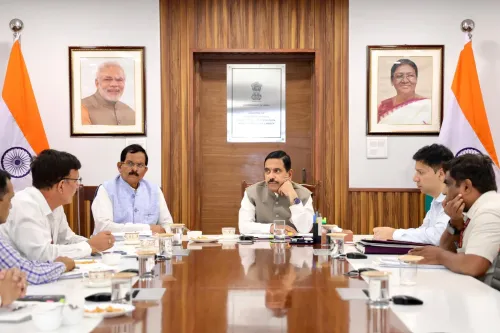
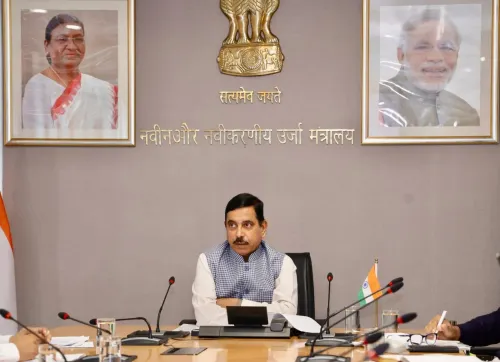
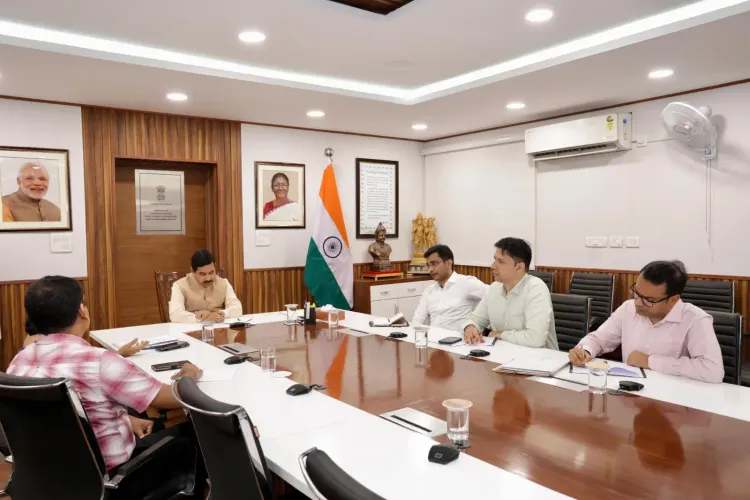
Union Minister Pralhad Joshi on 1 July 2026 held a joint review meeting with Secretaries of MNRE and the Department of Consumer Affairs, reaffirming commitment to effective governance and timely delivery of priorities across both portfolios.
Key Takeaways
Pralhad Joshi chaired a joint meeting with Secretaries of MNRE and the Department of Consumer Affairs on 1 July 2026 .
The meeting reviewed ministry functioning and deliberated on the way forward for key priorities.
Joshi holds dual Cabinet charge of both portfolios since the June 2024 Cabinet allocation, designed to align renewable energy and consumer welfare mandates.
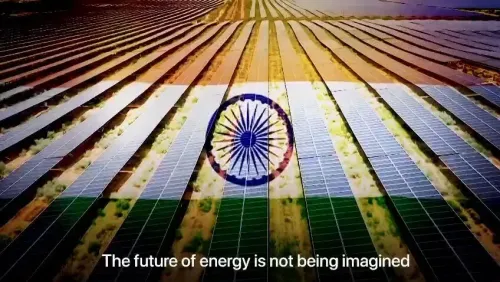
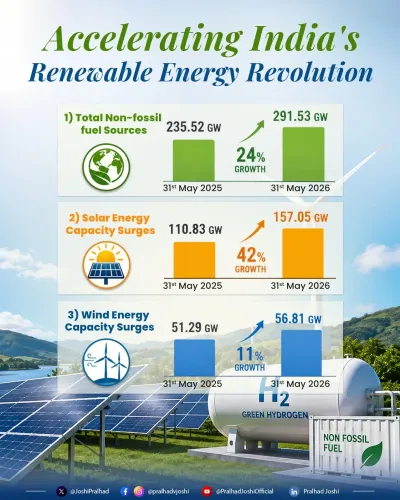
MNRE is steering India's 500 GW non-fossil energy target by 2030 , with schemes like PM Surya Ghar Muft Bijli Yojana linking subsidies directly to consumers.
The Department of Consumer Affairs administers the Consumer Protection Act 2019 and the Jago Grahak Jago consumer awareness platform.
Parliamentary Standing Committee reviews and possible integrated solar product standards guidelines are expected accountability markers ahead.
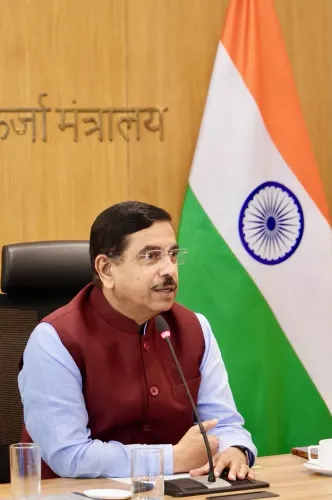
Union Consumer Affairs and New and Renewable Energy Minister Pralhad Joshi on Wednesday, 1 July 2026 chaired a joint meeting with the Secretaries of the Ministry of New and Renewable Energy (MNRE) and the Department of Consumer Affairs, reviewing the functioning of both ministries and deliberating on the way forward for key priorities.
Context
Joshi shared on X that the meeting covered matters relating to the functioning of both ministries and included a commitment to 'ensuring effective governance and the timely implementation of key priorities.' The post tagged both @mnreindia and @jagograhakjago, the official handles of MNRE and the Jago Grahak Jago consumer awareness initiative respectively, signalling that both portfolios were engaged simultaneously.
Joshi holds a rare dual Cabinet charge, having been assigned both the MNRE and Consumer Affairs, Food and Public Distribution portfolios following the June 2024 Cabinet allocation. This arrangement was designed to improve coordination between renewable energy deployment and consumer-facing schemes.
Policy Backdrop
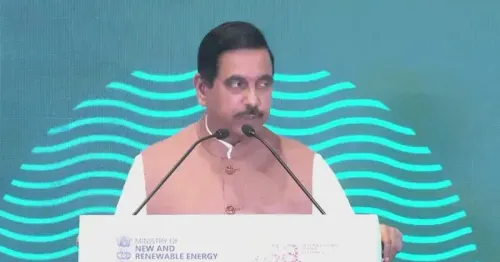
The Ministry of New and Renewable Energy is the nodal body steering India's target of 500 GW of non-fossil energy capacity by 2030. Its mandate spans solar, wind and distributed generation programmes, including the PM Surya Ghar Muft Bijli Yojana, a flagship 2024 scheme that provides rooftop solar subsidies to households and directly links renewable expansion with consumer electricity-bill savings.
The Department of Consumer Affairs administers the Consumer Protection Act 2019, which expanded regulatory oversight over e-commerce, product standards and grievance redressal — all areas with direct relevance to energy-efficient and solar appliances reaching end consumers. The Jago Grahak Jago campaign, referenced in the post, is the department's flagship consumer awareness platform.
The policy lineage connecting the two portfolios stretches back to the Jawaharlal Nehru National Solar Mission of 2010, which laid the initial framework for large-scale solar capacity addition. Successive governments have built subsidy, standards and grievance mechanisms on that foundation, and the current single-minister arrangement is an institutional expression of that convergence.
Stakeholders and Impact
The primary beneficiaries of tighter coordination between the two ministries are solar households availing rooftop subsidies and consumers filing grievances related to solar equipment quality. Synchronising subsidy disbursement with product-quality standards and grievance redressal portals can reduce delays and improve outcomes for both sets of stakeholders.
Consumer grievance forums and district-level redressal bodies under the Consumer Protection Act 2019 are also stakeholders, as integrated guidelines on solar product standards — if they emerge from such coordination — would flow through these bodies. Industry participants supplying solar panels and energy-efficient appliances to the retail market are similarly affected by any tightening of standards oversight.
What's Next
Parliamentary questions and Standing Committee reviews of MNRE budget utilisation and consumer complaint resolution rates are expected to be a key accountability mechanism in the coming months. Possible updates on integrated guidelines for solar product standards and subsidy disbursement timelines will be watched closely by industry and consumer advocacy groups alike.
With India's 500 GW renewable target requiring both rapid deployment and robust consumer-side uptake, the alignment of MNRE's programme machinery with the Department of Consumer Affairs' grievance and standards architecture will be a telling indicator of how effectively the dual-portfolio arrangement translates into on-ground outcomes.
Point of View
The minister signals an intent to close the gap between renewable energy subsidy delivery and consumer-side quality and grievance mechanisms — a coordination deficit that has historically slowed rooftop solar uptake. The move fits a broader Modi government pattern of using ministerial consolidation to drive inter-departmental alignment without creating new institutional layers. Whether this translates into measurable improvements in subsidy disbursement timelines or solar product complaint resolution will be the real test of the arrangement's effectiveness.
NationPress
30 Sept 2026
Frequently Asked Questions
What did Pralhad Joshi discuss in the 1 July 2026 meeting?
Joshi met the Secretaries of the Ministry of New and Renewable Energy and the Department of Consumer Affairs to review the functioning of both ministries and deliberate on the way forward for key priorities, committing to effective governance and timely implementation.
Why does one minister hold both MNRE and Consumer Affairs portfolios?
The June 2024 Cabinet allocation assigned both portfolios to Pralhad Joshi to improve coordination between renewable energy deployment programmes and consumer-facing schemes such as subsidy delivery, product standards and grievance redressal.
What is the PM Surya Ghar Muft Bijli Yojana?
It is a Central government scheme launched in 2024 that provides rooftop solar subsidies to households, directly linking renewable energy expansion with consumer electricity-bill savings and welfare outcomes.
What is Jago Grahak Jago?
Jago Grahak Jago is the Department of Consumer Affairs' flagship consumer awareness campaign and grievance platform, operating under the Consumer Protection Act 2019 to help citizens resolve complaints and access their rights.
What is India's renewable energy target and which ministry oversees it?
India has set a target of 500 GW of non-fossil energy capacity by 2030. The Ministry of New and Renewable Energy is the nodal body responsible for policy formulation and implementation of solar, wind and other renewable programmes to meet this goal.