Joshi Chairs Meet With Solar Module Manufacturers
Synopsis
Union Minister Pralhad Joshi on June 2, 2026, chaired a meeting with solar module manufacturers and senior MNRE officials, continuing the government's stakeholder engagement to advance India's domestic solar manufacturing push under the PLI scheme and its 500 GW clean energy target.
Key Takeaways
Minister Pralhad Joshi chaired a meeting with solar module manufacturers on June 2, 2026 .
Senior officials from the Ministry of New and Renewable Energy were present at the meeting.
The consultation is part of the implementation mechanism for India's solar industrial-policy measures, including the PLI Scheme for High-Efficiency Solar PV Modules .
The PLI scheme was approved in 2021 with an outlay of Rs 4,500 crore to build 10 GW of domestic manufacturing capacity.
India has a target of 500 GW of non-fossil fuel electricity capacity by 2030 , making domestic module supply critical.
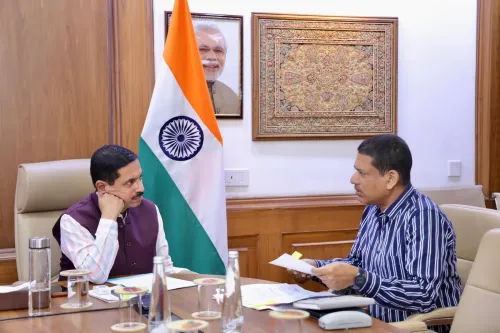
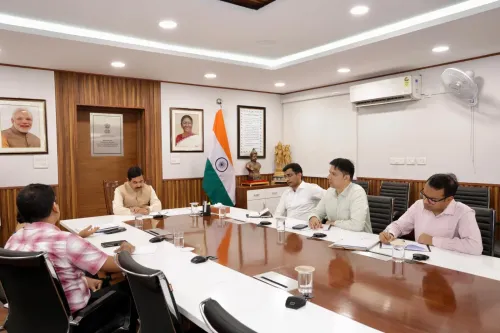
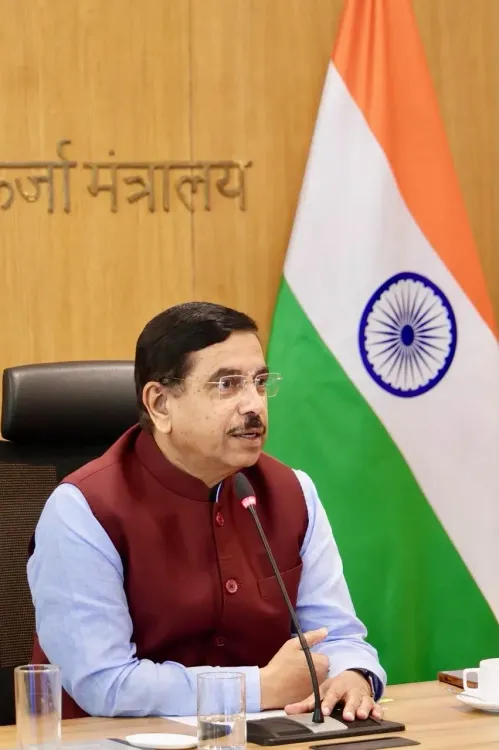
Union Consumer Affairs and New and Renewable Energy Minister Pralhad Joshi on Tuesday, June 2, 2026, chaired a stakeholder meeting with solar module manufacturers, with senior officials from the Ministry of New and Renewable Energy (MNRE) also in attendance. The consultation signals continued government engagement with the domestic solar manufacturing sector as India presses toward its clean energy targets.
Context
Posting on X, Minister Joshi stated: 'Chaired a meeting with stakeholders comprising solar module manufacturers. Senior officials from the Ministry were also present during the meeting.' The brief announcement was accompanied by three images from the meeting, underscoring its official character.
Regular stakeholder consultations between MNRE and industry players form a core part of the implementation mechanism for India's solar industrial-policy measures. Such meetings typically cover manufacturing targets, incentive disbursement timelines, and supply-chain challenges.
Policy Backdrop
India's domestic solar manufacturing push is anchored in the Production Linked Incentive (PLI) Scheme for High-Efficiency Solar PV Modules, approved by the Cabinet in 2021 with an initial outlay of Rs 4,500 crore. The scheme was designed to build 10 GW of domestic manufacturing capacity and reduce India's dependence on imported solar cells and modules, particularly from China, under the broader Atmanirbhar Bharat programme.
Successive PLI tranches and the imposition of basic customs duty on solar equipment have been deployed to attract domestic and foreign investment into the manufacturing segment. India also committed to a target of 500 GW of non-fossil fuel electricity capacity by 2030, a pledge made at the COP26 summit in Glasgow in 2021, placing enormous pressure on the domestic supply chain to scale rapidly.
Stakeholders and Impact
Solar module manufacturers are a pivotal constituency in India's energy transition. Their ability to ramp up production at competitive costs directly determines whether India can meet its renewable capacity additions without reverting to large-scale imports. Renewable energy developers — who procure modules for utility-scale and rooftop projects — are equally affected by the pace of domestic manufacturing growth.
Industry bodies and individual manufacturers have previously flagged concerns around PLI disbursement timelines, raw material availability, and the need for policy certainty to justify long-term capital expenditure on gigawatt-scale facilities. Ministerial-level meetings of this kind provide a direct channel to surface and address such concerns.
What's Next
Observers will watch for any announcements emerging from this consultation, including updates on PLI incentive disbursements, commissioning schedules for new manufacturing facilities, or fresh capacity targets that could be unveiled at upcoming platforms such as the next Union Budget or the RE-INVEST summit. With India's 2030 renewable capacity deadline approaching, the pace at which domestic module manufacturing scales up will be a key indicator of whether the country's import-substitution strategy in solar is delivering results.
Point of View
Who holds both the renewable energy and consumer affairs portfolios, such meetings reinforce MNRE's active role as a facilitator rather than a passive regulator. The meeting fits a broader arc in which New Delhi is using industrial policy instruments — customs duties, production incentives, and direct ministerial outreach — to build an indigenous solar supply chain ahead of the 2030 deadline. Whether these consultations translate into faster commissioning of gigawatt-scale facilities will be the real test of the strategy's effectiveness.
NationPress
16 Oct 2026
Frequently Asked Questions
Why did Pralhad Joshi meet solar module manufacturers?
Minister Pralhad Joshi chaired the meeting to engage with solar module manufacturers as part of the government's ongoing stakeholder consultation process for implementing India's solar manufacturing policy, including the PLI scheme.
What is the PLI scheme for solar modules in India?
The Production Linked Incentive scheme for high-efficiency solar PV modules was approved by the Cabinet in 2021 with an outlay of Rs 4,500 crore to build 10 GW of domestic manufacturing capacity and reduce dependence on imported solar equipment.
What is India's solar energy target for 2030?
India committed to achieving 500 GW of non-fossil fuel electricity capacity by 2030, a target announced at the COP26 summit in Glasgow in 2021.
What is the role of MNRE in India's solar sector?
The Ministry of New and Renewable Energy is the central ministry responsible for policy formulation and deployment of solar, wind, and other renewable energy programmes, including administering the PLI scheme for solar PV modules.
How is India reducing dependence on Chinese solar modules?
India has used successive PLI tranches and basic customs duty on solar equipment under the Atmanirbhar Bharat programme to incentivise domestic manufacturing and attract investment into the solar supply chain.