Pralhad Joshi Addresses Workshop on Green Hydrogen Mission
Synopsis
Union Minister Pralhad Joshi addressed a workshop on Strengthening the National Green Hydrogen Mission on June 17, 2026, spotlighting India's Rs 19,744 crore scheme targeting 5 million tonnes of annual green hydrogen output by 2030 and its role in decarbonising hard-to-abate sectors.
Key Takeaways
Union Minister Pralhad Joshi addressed a national workshop on the National Green Hydrogen Mission on June 17, 2026 .
The mission was approved by the Union Cabinet in January 2023 with an outlay of Rs 19,744 crore .
India's target is to produce 5 million tonnes of green hydrogen annually by 2030 .
Key beneficiary sectors include fertilisers and steel , which are among India's hardest-to-decarbonise industries.
The mission supports India's net-zero 2070 commitment and complements PLI schemes for electrolysers and solar modules.
State-level hydrogen policies and pilot project rollouts are among the key developments to watch following the workshop.
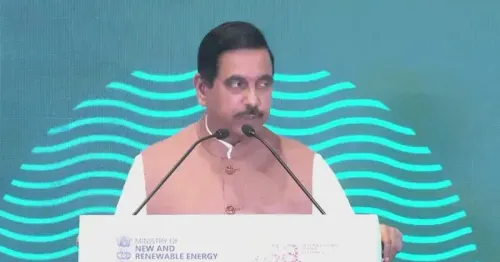
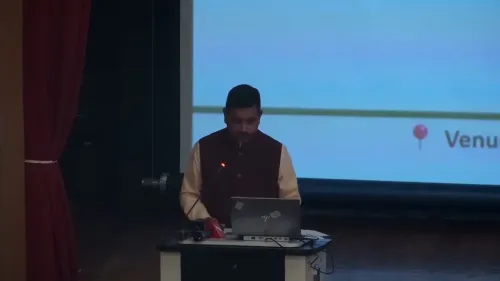
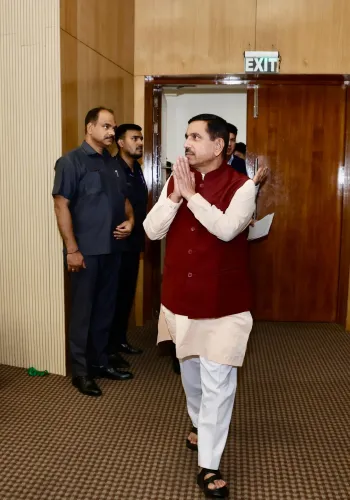
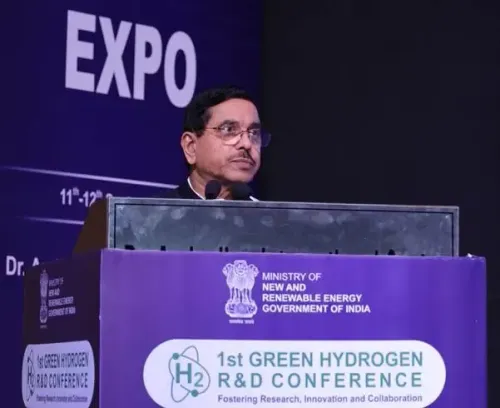
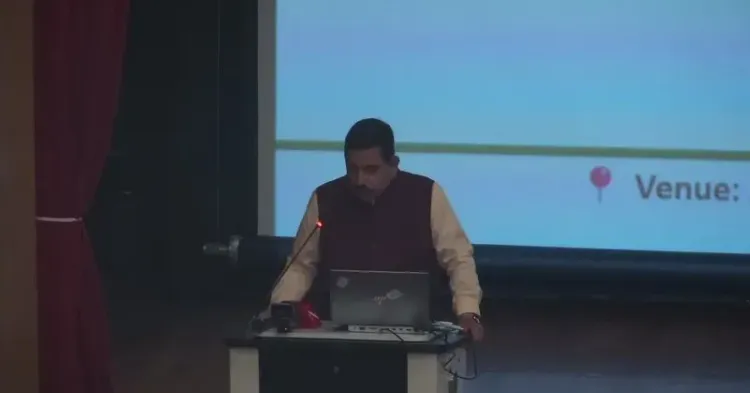
Union Consumer Affairs and New and Renewable Energy Minister Pralhad Joshi addressed a national workshop on Strengthening the National Green Hydrogen Mission on Wednesday, June 17, 2026, signalling the government's continued push to accelerate India's green hydrogen agenda ahead of its 2030 production targets.
Context
The workshop brought together stakeholders from across the renewable energy ecosystem to deliberate on measures to strengthen the National Green Hydrogen Mission, the flagship Central scheme aimed at positioning India as a global hub for green hydrogen production, use, and export. Joshi, as the Union Minister for New and Renewable Energy, is the political head of the nodal ministry responsible for the mission's rollout and oversight.
The minister shared the event live on social media, underlining the government's intent to maintain public transparency around the mission's progress and deliberations.
Policy Backdrop
The Union Cabinet approved the National Green Hydrogen Mission in January 2023 with a total outlay of Rs 19,744 crore. The mission sets an ambitious target of producing 5 million tonnes of green hydrogen annually by 2030, supported by domestic manufacturing incentives for electrolysers and solar modules under production-linked incentive schemes.
The mission is a cornerstone of India's broader strategy to decarbonise hard-to-abate industrial sectors — including fertilisers and steel — and to reduce the country's dependence on imported fossil fuels. It also feeds directly into India's commitment to achieving net-zero emissions by 2070.
The Ministry of New and Renewable Energy serves as the nodal body for policy design, funding allocation, and implementation coordination across central and state agencies.
Stakeholders and Impact
The workshop is expected to have drawn participation from renewable energy developers, representatives from the fertiliser and steel industries, and officials from the Ministry of New and Renewable Energy — sectors that stand to be most directly transformed by a successful green hydrogen scale-up. For energy-intensive industries, green hydrogen offers a viable decarbonisation pathway that conventional electrification cannot easily replace.
State governments are also key actors, as several have begun formulating their own hydrogen policies to attract investment and align with the Central mission's incentive framework. The workshop's deliberations could inform how the Centre coordinates with states on pilot project rollout and infrastructure development.
What's Next
Attention will now turn to the concrete outcomes of the workshop — including any revised timelines, new pilot project announcements, or policy refinements that emerge from the deliberations. Analysts and industry stakeholders will watch closely for signals on whether the government intends to revise the 5 million tonne 2030 target upward, or to expand the financial outlay in forthcoming budget or policy reviews.
With India's green hydrogen ambitions increasingly tied to its international climate commitments and its positioning as a clean energy exporter, workshops such as this one represent an important mechanism for course-correction and stakeholder alignment as the mission moves from design to implementation.
Point of View
And the gap between policy design and on-ground implementation remains a central concern for industry and climate observers alike. By convening stakeholders from renewables, fertilisers, and steel under one roof, the government signals awareness that green hydrogen's success depends on demand-side pull, not just supply-side incentives. The broader arc here is India's bid to convert its renewable energy scale into a clean fuels export advantage — a goal that requires sustained political attention at the ministerial level.
NationPress
16 Sept 2026
Frequently Asked Questions
What is the National Green Hydrogen Mission?
The National Green Hydrogen Mission is a Central government scheme approved in January 2023 with an outlay of Rs 19,744 crore , aimed at making India a global hub for green hydrogen production, use, and export, with a target of 5 million tonnes of annual output by 2030 .
What did Pralhad Joshi do at the Green Hydrogen workshop on June 17?
Union Minister Pralhad Joshi addressed a national workshop titled 'Strengthening the National Green Hydrogen Mission' on June 17, 2026 , and livestreamed the event, as part of ongoing government efforts to accelerate the mission's implementation.
Which ministry oversees the National Green Hydrogen Mission?
The Ministry of New and Renewable Energy (MNRE) is the nodal ministry responsible for policy, funding, and implementation of the National Green Hydrogen Mission, and is headed by Union Minister Pralhad Joshi .
Which industries benefit most from India's green hydrogen push?
The fertiliser and steel industries are among the primary beneficiaries, as green hydrogen offers a viable decarbonisation pathway for these hard-to-abate sectors that cannot easily be electrified.
What is India's net-zero target and how does green hydrogen fit in?
India has committed to achieving net-zero emissions by 2070 . The National Green Hydrogen Mission is a core pillar of this strategy, aiming to replace fossil fuel use in industry and reduce dependence on imported energy through domestically produced clean hydrogen.