Joshi Urges States to Fast-Track Green Hydrogen Policies
Synopsis
Union Minister Pralhad Joshi on June 17, 2026 urged state governments to fast-track their green hydrogen policies and align with MNRE, citing localised hydrogen infrastructure hubs and reduced levelized costs as keys to making India a global green hydrogen leader.
Key Takeaways
Pralhad Joshi called on state governments on June 17, 2026 to expedite green hydrogen policy frameworks in coordination with MNRE .
The minister identified building localised hydrogen infrastructure hubs and reducing the Levelized Cost of Hydrogen as the two critical priorities.
The National Green Hydrogen Mission , launched in January 2023 with an outlay of Rs 19,744 crore , targets 5 MT of annual green hydrogen production by 2030 .
India's green hydrogen push is linked to its 500 GW non-fossil energy target by 2030 and a net-zero commitment by 2070 .
State-level policy delays remain a key bottleneck for private investment and infrastructure rollout in the green hydrogen sector.
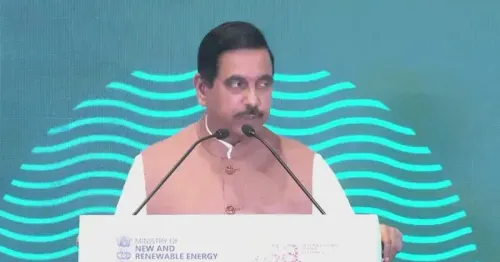
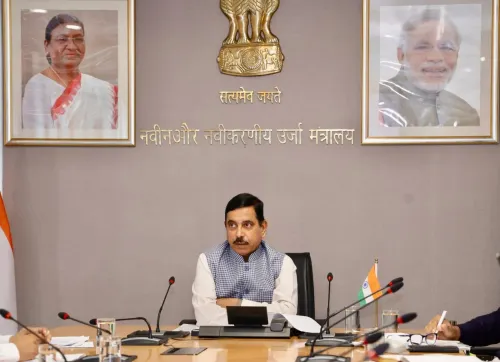
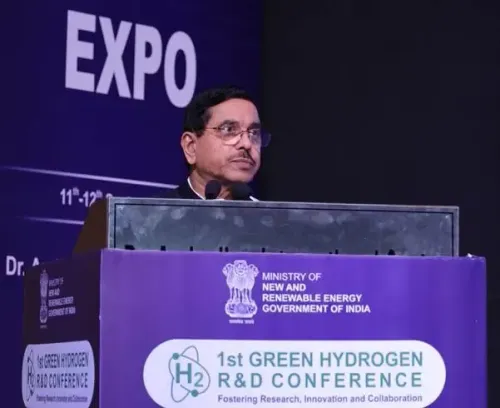
Union Consumer Affairs and New and Renewable Energy Minister Pralhad Joshi on Wednesday, June 17, 2026, called on state governments to expedite their green hydrogen policy frameworks and coordinate closely with the Ministry of New and Renewable Energy (MNRE) to finalise draft policies at the earliest, underscoring the centrality of localised hydrogen infrastructure and cost reduction to India's clean energy ambitions.
Context
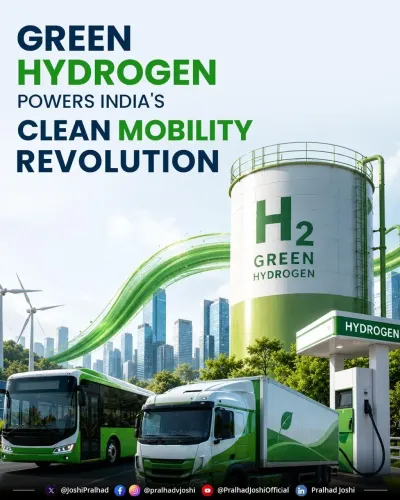
In his post on X, Pralhad Joshi urged states to 'fast-track their green hydrogen policies and work closely with MNRE to finalise draft frameworks at the earliest.' He identified two priorities: building 'localised hydrogen infrastructure hubs' and reducing the Levelized Cost of Hydrogen (LCOH) — a measure of the average cost of producing one kilogram of hydrogen over a project's lifetime — as prerequisites for positioning India as a global leader in the green hydrogen ecosystem.
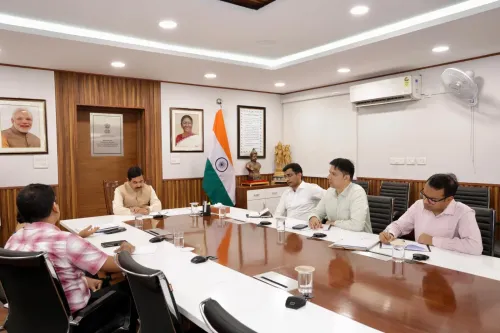
The minister's appeal comes at a stage when several state governments are at varying stages of drafting their own green hydrogen policies to complement the national framework. The call to synchronise state-level action with MNRE signals a push for greater policy coherence across the federal structure.
Policy Backdrop
The National Green Hydrogen Mission, approved by the Union Cabinet in January 2023 with an initial outlay of Rs 19,744 crore, is India's flagship scheme to scale green hydrogen production, infrastructure, and end-use applications. The mission targets an annual green hydrogen production capacity of 5 million tonnes (MT) by 2030.
The mission sits within India's broader climate commitments: a target of 500 GW of non-fossil energy capacity by 2030 and a long-term net-zero emissions goal by 2070. Reducing the LCOH has been a core technical and policy challenge cited in official documents since the mission's launch, as green hydrogen produced via electrolysis currently remains more expensive than fossil-fuel-derived alternatives.
MNRE serves as the nodal ministry for the mission, responsible for policy coordination, incentive design, and overseeing pilot project allocations. State governments are expected to complement the central scheme through their own policies on production incentives, land allocation, and infrastructure development.
Stakeholders and Impact
State governments are the primary audience of Joshi's appeal, as their policy frameworks determine the regulatory and land-use environment in which hydrogen projects are developed. Delays at the state level can bottleneck the rollout of electrolysers, storage facilities, and distribution networks that constitute localised hydrogen hubs.
Renewable energy developers and industrial end-users — particularly in sectors such as steel, fertilisers, and heavy transport — stand to be directly affected by the pace of state-level policy finalisation. A faster, more uniform policy environment across states would reduce regulatory uncertainty and could attract greater private investment into green hydrogen projects.
Reducing the LCOH is equally critical for demand-side uptake. Until green hydrogen becomes cost-competitive with grey hydrogen (produced from natural gas), large-scale industrial substitution will remain limited, constraining the mission's impact.
What's Next
The immediate watch-point is the finalisation and formal notification of pending state green hydrogen policies, followed by the identification and allocation of pilot project sites in coordination with MNRE. Any mid-term review of the National Green Hydrogen Mission's 2030 targets will also be a key indicator of whether the pace of state-level action is sufficient to meet national goals.
If states respond to the minister's call with expedited frameworks, India could meaningfully accelerate the build-out of hydrogen infrastructure hubs — a step that analysts and policymakers regard as essential to making the country's green hydrogen ambitions commercially viable before the end of the decade.
Point of View
Joshi is signalling that the National Green Hydrogen Mission's 2030 targets are at risk of slipping without faster state action. The appeal also positions the Centre as a facilitator rather than a top-down enforcer, consistent with the cooperative federalism framing the BJP government has favoured on energy policy. Whether states respond with concrete policy notifications or the call remains aspirational will be a telling test of the mission's implementation momentum.
NationPress
16 Sept 2026
Frequently Asked Questions
What is the National Green Hydrogen Mission in India?
The National Green Hydrogen Mission is a flagship central scheme approved by the Union Cabinet in January 2023 with an outlay of Rs 19,744 crore, aimed at achieving 5 million tonnes of annual green hydrogen production by 2030 and positioning India as a global hub for green hydrogen.
What did Pralhad Joshi say about green hydrogen policy?
On June 17, 2026, Union Minister Pralhad Joshi urged state governments to fast-track their green hydrogen policies, coordinate closely with MNRE to finalise draft frameworks, build localised hydrogen infrastructure hubs, and work to reduce the Levelized Cost of Hydrogen.
What is the Levelized Cost of Hydrogen and why does it matter?
The Levelized Cost of Hydrogen (LCOH) is the average cost of producing one kilogram of hydrogen over a project's lifetime. Reducing it is critical because green hydrogen currently costs more to produce than fossil-fuel-derived alternatives, limiting large-scale industrial adoption.
Why are state policies important for green hydrogen in India?
State governments control land allocation, local incentives, and regulatory approvals that determine where hydrogen production and infrastructure projects can be built. Without state-level frameworks aligned with the central mission, private investment and project rollout face significant delays.
What is India's 2030 clean energy target?
India aims to achieve 500 GW of non-fossil energy capacity by 2030 and has committed to reaching net-zero emissions by 2070. The National Green Hydrogen Mission, targeting 5 MT of annual green hydrogen production by 2030, is a key pillar of this broader clean energy strategy.