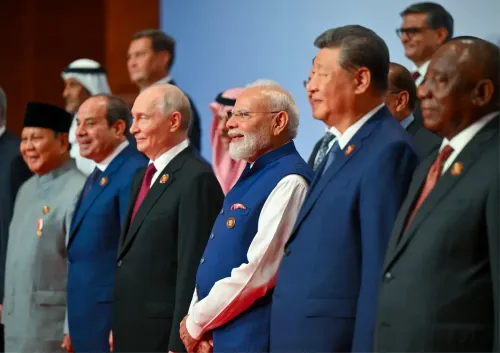
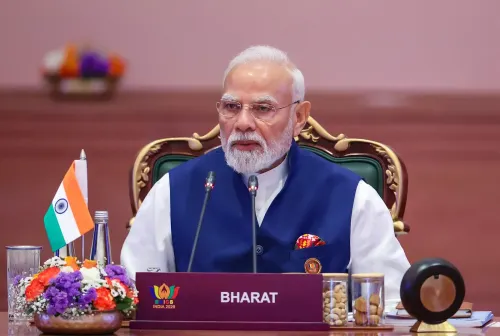
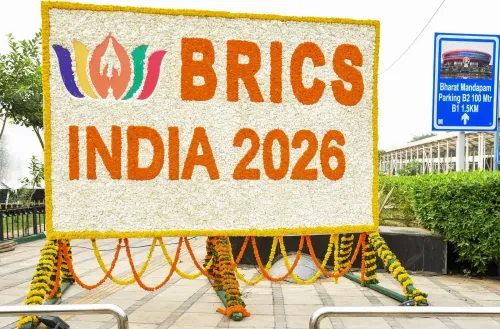
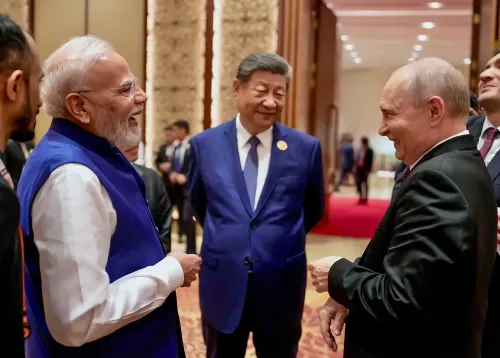
India steers BRICS to joint declaration at 18th summit, analysts call it diplomatic win
Synopsis
At the 18th BRICS Summit, India pulled off what analysts are calling a quiet masterstroke — brokering a joint declaration from an 11-member bloc riven by Middle East fault lines and India-China rivalry. By sidestepping blame-games and anchoring the agenda on trade and Global South representation, New Delhi turned a near-collapse into a credibility win on the world stage.
Key Takeaways
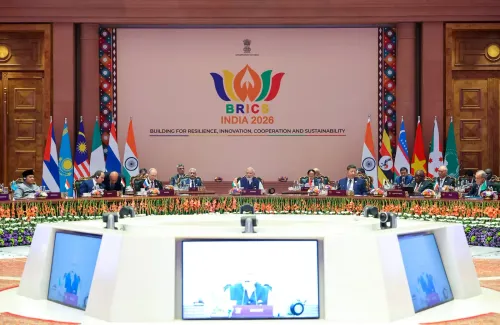
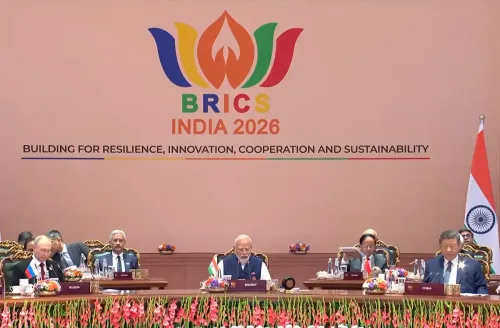
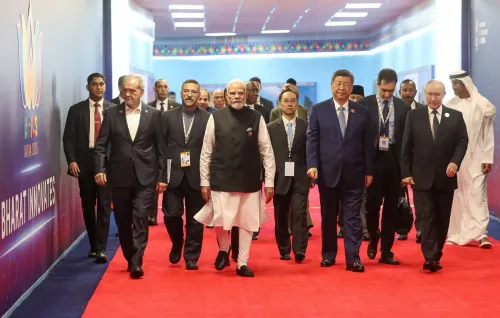
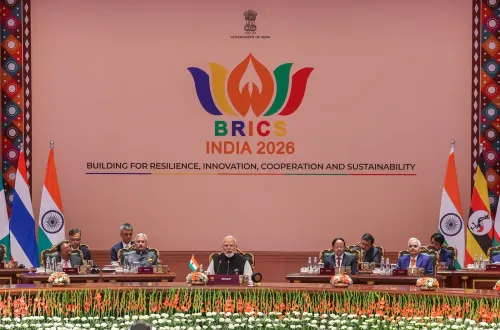
India chaired the 18th BRICS Summit in New Delhi , steering the expanded 11-member bloc to a joint declaration despite major geopolitical divisions.
Analysts describe the outcome as 'pragmatic consolidation,' with New Delhi keeping focus on trade, technology, and Global South representation .
BRICS foreign ministers had failed to agree on a joint statement in May due to divisions between Iran and the UAE over the Middle East conflict.
The final declaration expressed 'deep concern' and urged 'maximum restraint' without directly blaming any country — language credited to India's bridging role.
India and China hold competing visions for BRICS: New Delhi favours complementing existing institutions, while Beijing seeks to counterbalance Washington.
PM Narendra Modi's chairmanship emphasis on digital public infrastructure and fairer global financial governance shaped the summit's thematic agenda.
India secured a significant diplomatic achievement at the 18th BRICS Summit in New Delhi, helping the expanded 11-member bloc adopt a joint declaration despite deep divisions over global conflicts and the international order, according to analysts cited in recent reports. The outcome is being described as a textbook exercise in 'pragmatic consolidation.'
How India Brokered Consensus
According to observers, New Delhi achieved the breakthrough by deliberately avoiding pressure on member states to take sides on contentious geopolitical flashpoints, keeping the bloc's focus firmly on trade, technology, and amplifying the voice of the Global South. The approach allowed countries with sharply divergent worldviews to converge on shared language without direct confrontation.
Manoj Kewalramani, geopolitical analyst and chairman of the Takshashila Institution's geostrategy programme, described reaching consensus on the declaration's text as 'no easy feat.' 'The fact that New Delhi could balance competing interests while getting principled agreements is a success,' he said, adding that the declaration addressed key issues without delving into 'the politics of apportioning blame.'
What India's Chairmanship Prioritised
As chair of the summit, India placed emphasis on digital public infrastructure, a fairer global financial system, and greater representation for developing nations in multilateral institutions. Kewalramani noted that Prime Minister Narendra Modi's focus was not framed as opposition to Western dominance but rather as correcting the exclusion of developing countries from rule-making. 'The solution, therefore, is larger representation and a stake in rule-making. This is the anti-West vs non-West distinction between the two,' he said.
The Rift India Had to Bridge
Sarang Shidore, Director of the Global South programme at the Washington-based Quincy Institute, highlighted that BRICS foreign ministers had failed to agree on even a joint statement in May, owing to deep divisions between new members Iran and the United Arab Emirates over the Middle East conflict. 'India was able to find a solution to this impasse,' Shidore said, pointing to a paragraph in the final declaration that expressed 'deep concern' and urged 'maximum restraint' amid rising tensions, while refraining from directly blaming any specific country.
India vs China: Competing Visions for BRICS
Analysts note a subtle but consequential divergence between India and China over what BRICS should represent. According to Shidore, Beijing regards the grouping as a platform to counterbalance Washington and bolster its implicit claim to lead the Global South. India, by contrast, would prefer BRICS to complement rather than directly rival existing US-led institutions. 'But neither side has allowed their competitive elements to overpower their constructive engagement with BRICS,' Shidore said. 'In this sense, both have shown maturity as major powers in Asia.' This comes amid a broader India-China competition for influence across the developing world — a rivalry that, for now, appears to be managed rather than destabilising.
What Comes Next
The adopted joint declaration sets the agenda for follow-up action across trade, digital governance, and Global South representation — areas where India's chairmanship has staked its credibility. Whether the bloc's expanded membership can sustain this level of consensus through future flashpoints remains the central test of the BRICS framework going forward.
Point of View
Not by confrontation. By refusing to let the bloc become a forum for apportioning blame on global conflicts, New Delhi preserved consensus — but also avoided the harder question of whether BRICS can ever move beyond declarations to binding commitments. The India-China tension over the soul of BRICS — complementary to Western institutions versus a rival architecture — is the subtext that will define every future summit. For now, India's 'non-West, not anti-West' positioning is strategically coherent, but it will face a genuine stress test the moment a conflict directly implicates a BRICS member.
NationPress
16 Sept 2026
Frequently Asked Questions
What did India achieve at the 18th BRICS Summit?
India, as chair of the 18th BRICS Summit in New Delhi, helped the expanded 11-member bloc adopt a joint declaration despite deep divisions over global conflicts and the international order. Analysts describe the outcome as 'pragmatic consolidation,' with New Delhi keeping the agenda focused on trade, technology, and Global South representation rather than contentious geopolitical blame-games.
Why was reaching a BRICS joint declaration so difficult this time?
BRICS foreign ministers had already failed to agree on a joint statement in May 2026, primarily due to sharp divisions between new members Iran and the UAE over the Middle East conflict. The expanded bloc's diverse membership — spanning countries with fundamentally different geopolitical alignments — made any consensus text a significant negotiating challenge.
How did India's chairmanship approach differ from China's vision for BRICS?
India favours a BRICS that complements existing US-led multilateral institutions rather than directly rivalling them, while China views the grouping as a platform to counterbalance Washington and assert Global South leadership. According to the Quincy Institute's Sarang Shidore, both sides have so far shown enough maturity to keep this rivalry from derailing constructive engagement.
What issues did PM Modi prioritise during India's BRICS chairmanship?
Prime Minister Narendra Modi's chairmanship focused on digital public infrastructure, a fairer global financial system, and greater representation for developing nations in multilateral institutions. Analysts note that the approach was framed as correcting the exclusion of the Global South from rule-making, rather than as opposition to the West.
What does the BRICS joint declaration say about global conflicts?
The declaration expressed 'deep concern' and urged 'maximum restraint' amid rising global tensions, while deliberately refraining from directly blaming any specific country. This carefully crafted language is credited to India's bridging role between members with competing geopolitical positions.