Sridevi property dispute: SC issues notice to Boney, Janhvi, Khushi Kapoor
Synopsis
The Supreme Court has stepped into a decades-old land dispute tied to late actress Sridevi, issuing notice to Boney, Janhvi, and Khushi Kapoor over a 2.70-acre Chennai plot purchased in 1988. With the Madras High Court having already thrown out the claimants' suit as time-barred, the apex court's intervention — and its push for mediation — reopens a case that touches on inheritance, limitation law, and one of Bollywood's most prominent families.
Key Takeaways
The Supreme Court issued notice to Boney Kapoor , Janhvi Kapoor , and Khushi Kapoor on a petition linked to a 2.70-acre land parcel in Sholinganallur, Chennai .
The disputed land was purchased via sale deeds dated 19 April 1988 in favour of Rajeshwari , Sreelatha , and late actress Sridevi .
Natarajan claim a 1/5th share as legal heirs of the late M.C.
The Madras High Court on 20 April 2026 rejected the plaint, holding the suit — filed in 2025 — was barred by limitation.
The Supreme Court directed status quo and indicated a retired High Court judge will be appointed as mediator .
The matter is next listed on 18 December to review mediation progress.
The Supreme Court on Wednesday issued notice to film producer Boney Kapoor and his daughters Janhvi Kapoor and Khushi Kapoor on a petition seeking to revive a property dispute over a 2.70-acre parcel of land in Chennai that was purchased by late actress Sridevi and her family. The court also directed all parties to maintain status quo until the next date of hearing.
The Bench and Its Directions
A Bench comprising Justice K.V. Viswanathan and Justice Arun Pillai issued the notice on the petition filed by M.C. Sivakami and her brother M.C. Natarajan, who have claimed a share in the disputed property. The Justice Viswanathan-led Bench further indicated that the parties should explore an amicable resolution through mediation, and stated that a retired High Court judge would be appointed as mediator. The matter has been posted for 18 December to assess the progress of mediation proceedings.
What the Dispute Is About
The litigation centres on 2.70 acres of land in Survey No. 1/1B at Sholinganallur, Chennai. According to pleadings recorded by the Madras High Court, the petitioners — Sivakami and Natarajan — claim to be legal heirs of the late M.C. Chandrasekaran and have sought partition of the property into five equal shares, claiming a 1/5th share each. They also sought declarations that sale deeds dated 19 April 1988, executed in favour of Rajeshwari, Sreelatha, and Sridevi, as well as subsequent transactions concerning the property, were null and void.
The dispute has its roots in a suit originally filed before the Additional District Judge at Chengalpattu. The trial court had initially declined to reject the plaint under Order VII Rule 11 of the Code of Civil Procedure (CPC), holding that averments in the plaint needed to be considered at that stage and that disputed questions could be examined during trial.
How the Madras High Court Ruled
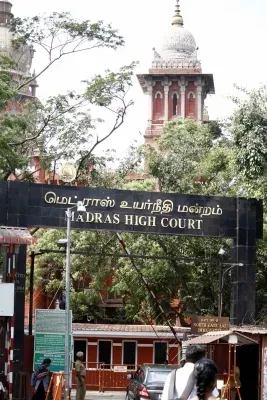
The Madras High Court overturned the trial court's order on 20 April 2026. A single-judge Bench of Justice T.V. Thamilselvi held that the plaintiffs' claim — that they came to know about the disputed transaction only in 2023 — did not hold up on the material placed before the court. The High Court concluded that the suit challenging the 1988 transactions was barred by limitation and ordered rejection of the plaint. Notably, the High Court also recorded that the petitioners had earlier instituted another suit in 2007 claiming a 1/5th share in family properties, which had been dismissed.
Arguments Before the Supreme Court
Before the Supreme Court, counsel for the petitioners submitted that the High Court had improperly ventured into questions concerning the claimants' legal-heir status and the validity of Chandrasekaran's alleged second marriage while deciding whether the plaint itself was liable to be rejected — a threshold question that should not have involved such an inquiry.
Appearing for the Kapoor family, senior advocate Abhishek Manu Singhvi argued that the sale transaction dates back to 19 April 1988, while the present suit was instituted only in 2025. He contended that the petitioners had attained majority in 1995 and 1999 respectively, making the claim significantly time-barred. During the hearing, the Supreme Court also sought clarification on whether M.C. Chandrasekaran held a 1/5th share in the property and whether there was any dispute regarding the petitioners being his children.
What Happens Next
With the Supreme Court having directed status quo and nudged both sides toward mediation, the immediate legal battle shifts to whether the parties can reach a negotiated settlement before 18 December. If mediation fails, the apex court will take up the substantive question of whether the Madras High Court correctly applied the limitation bar at the plaint-rejection stage — a question with implications beyond this case for how courts weigh limitation against the right to a full trial.
Point of View
Mediation would rarely be the first suggestion. The deeper legal fault line here is whether courts can probe inheritance legitimacy and the validity of a second marriage at the plaint-rejection stage, which is meant to be a threshold filter, not a mini-trial. That question, if fully argued, could have wider implications for how limitation is applied in family property disputes involving contested lineage. The Kapoor family's strongest card remains the nearly four-decade gap between the 1988 transactions and the 2025 suit — a gap the petitioners will struggle to explain away even if mediation fails.
NationPress
16 Sept 2026
Frequently Asked Questions
What is the Sridevi property dispute about?
The dispute concerns a 2.70-acre plot of land in Sholinganallur, Chennai, purchased via sale deeds dated 19 April 1988 in favour of Rajeshwari, Sreelatha, and late actress Sridevi. Petitioners M.C. Sivakami and M.C. Natarajan claim to be legal heirs of the late M.C. Chandrasekaran and are seeking a 1/5th share in the property, along with a declaration that the 1988 sale deeds are null and void.
Why did the Supreme Court issue notice to Boney, Janhvi, and Khushi Kapoor?
The Supreme Court issued notice after Sivakami and Natarajan challenged the Madras High Court's 20 April 2026 order, which had rejected their plaint as time-barred. The apex court is examining whether the High Court correctly applied the limitation bar at the plaint-rejection stage, and has directed status quo pending the next hearing on 18 December.
What did the Madras High Court rule in this case?
A single-judge Bench of Justice T.V. Thamilselvi of the Madras High Court ruled on 20 April 2026 that the petitioners' claim — that they only learned of the disputed transactions in 2023 — was not supported by the material on record. The court held the suit was barred by limitation and ordered rejection of the plaint.
What is the limitation argument raised by the Kapoor family?
Senior advocate Abhishek Manu Singhvi, appearing for the Kapoor family, argued that the sale transaction dates to 19 April 1988, while the present suit was filed only in 2025. He further noted that the petitioners had attained majority in 1995 and 1999 respectively, making the claim significantly time-barred under Indian limitation law.
What happens next in the Supreme Court case?
The Supreme Court has directed all parties to maintain status quo and indicated that a retired High Court judge will be appointed as mediator to explore an amicable resolution. The matter is listed for 18 December to assess mediation progress; if talks fail, the court will hear substantive arguments on the limitation and plaint-rejection questions.