Madras HC refuses to quash case against ex-DMK Minister K. Ponmudy over religious remarks
Synopsis
The Madras High Court has refused to quash criminal proceedings against former Tamil Nadu Forest Minister K. Ponmudy over a 2025 speech in which he allegedly compared sacred Shaivite and Vaishnavite forehead marks to sexual imagery. With the case now heading to trial, it puts a senior DMK leader in the dock on hate speech charges — and tests the limits of political speech in Tamil Nadu's religiously charged landscape.
Key Takeaways
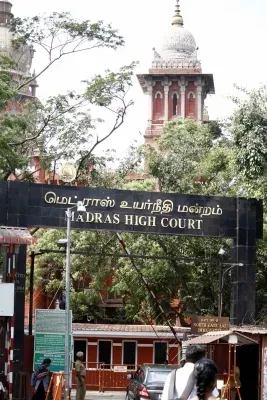
The Madras High Court on Thursday refused to quash criminal proceedings against former Tamil Nadu Minister K.
Ponmudy of the DMK .
The case stems from a speech Ponmudy delivered in April 2025 while serving as State Forest Minister , which allegedly contained derogatory remarks about Shaivites , Vaishnavites , and women.
Ilanthiraiyan dismissed Ponmudy's criminal revision petition, allowing the private complaint to proceed before the III Metropolitan Magistrate Court, Chennai .
The complaint was filed by BJP councillor Uma Anandan after police closed her initial complaint without action.
Summons to Ponmudy were issued on 23 February 2026 ; the criminal case will now continue before the trial court.
The Madras High Court on Thursday declined to interfere with criminal proceedings against former Tamil Nadu Minister and senior Dravida Munnetra Kazhagam (DMK) leader K. Ponmudy, allowing a private complaint over his controversial remarks on Shaivites, Vaishnavites, and women to proceed before the trial court in Chennai. The ruling keeps alive a case rooted in a speech Ponmudy delivered in April 2025 while serving as State Forest Minister.
What the Court Decided
Justice G.K. Ilanthiraiyan dismissed a criminal revision petition filed by Ponmudy challenging an earlier order by the III Metropolitan Magistrate Court, George Town, Chennai. That court had taken cognisance of a private complaint and, on 23 February 2026, issued summons to Ponmudy. The High Court refused to quash those proceedings, directing the criminal case to continue before the Magistrate's Court.
The Complaint and Its Origins
The complaint was filed by BJP Greater Chennai Corporation councillor Uma Anandan, who stated she came across a video of Ponmudy's speech on YouTube and found the remarks deeply offensive. According to her complaint, Ponmudy had referred to an anecdote in which the pattai — the horizontal sacred mark worn by Shaivites — and the tiruman — the vertical forehead mark worn by Vaishnavites — were compared with 'descriptions of sexual postures by a sex worker.'
Anandan contended that such remarks insulted the religious beliefs of both sects and disturbed communal harmony, amounting to hate speech under the Bharatiya Nyaya Sanhita (BNS). She had initially approached the police, but after the complaint was closed without action, she moved the Magistrate's Court directly.
Ponmudy's Defence
Challenging the summons before the High Court, Ponmudy argued that he had merely recalled comments made by another person years earlier during what he described as a closed-door meeting, and that the remarks did not originate from him. His counsel further contended that the complaint failed to disclose cognisable offences under Sections 196(1)(a), 299, and 302 of the BNS, which relate to promoting enmity between groups and deliberately wounding religious feelings.
The High Court rejected both submissions, declining to quash the proceedings at this stage.
Why This Case Matters
The ruling is significant in the context of Tamil Nadu's politically sensitive religious landscape, where Shaivite and Vaishnavite traditions command deep community allegiance. Notably, this is not the first time Ponmudy has faced legal and political controversy — he has previously been the subject of court scrutiny in other matters. The case also highlights the growing use of private complaints as a legal tool when police decline to act, a pattern seen with increasing frequency in hate speech cases across Indian states.
The proceedings before the Magistrate's Court are now set to continue, with Ponmudy required to respond to the summons.
Point of View
In a state where religion and electoral arithmetic are inseparable. The 'I was merely recounting someone else's words' defence is legally thin and will face scrutiny at trial. More broadly, the case underscores how private complaints have become a preferred instrument for political adversaries when police discretion is exercised in favour of the ruling party — a dynamic that cuts across state lines and party affiliations.
NationPress
1 Oct 2026
Frequently Asked Questions
What did K. Ponmudy say that triggered the complaint?
According to the complaint, Ponmudy during an April 2025 speech in Chennai allegedly compared the pattai (sacred mark of Shaivites) and the tiruman (sacred mark of Vaishnavites) with 'descriptions of sexual postures by a sex worker.' Ponmudy has argued he was merely recounting remarks made by someone else in a closed-door meeting.
Who filed the complaint against Ponmudy?
BJP Greater Chennai Corporation councillor Uma Anandan filed the private complaint after watching a video of the speech on YouTube. She had first approached the police, but the complaint was closed without action, leading her to approach the Magistrate's Court directly.
What did the Madras High Court rule?
Justice G.K. Ilanthiraiyan of the Madras High Court dismissed Ponmudy's criminal revision petition on Thursday, refusing to quash the criminal proceedings. The court allowed the private complaint to proceed before the III Metropolitan Magistrate Court in Chennai.
Under which laws is Ponmudy being prosecuted?
The complaint invokes Sections 196(1)(a), 299, and 302 of the Bharatiya Nyaya Sanhita (BNS), which pertain to promoting enmity between religious groups and deliberately wounding religious feelings. Ponmudy's counsel had argued the complaint did not disclose these offences, but the High Court disagreed.
What happens next in the case?
The criminal case will now continue before the III Metropolitan Magistrate Court, George Town, Chennai, where Ponmudy must respond to the summons issued on 23 February 2026. The trial court will examine whether the speech constitutes a cognisable offence under the BNS.