BRICS New Delhi Declaration 2025: Leaders pledge global governance reform
Synopsis
The 18th BRICS Summit concluded in New Delhi with a sweeping declaration targeting the architecture of global governance. The New Delhi Declaration demands greater developing-nation representation at the UN, transparency in senior appointments, and an end to any single bloc's monopoly on top posts — a pointed challenge to the Western-dominated multilateral order.
Key Takeaways
BRICS leaders unanimously adopted the New Delhi Declaration at the 18th BRICS Summit on 12 September .
The declaration calls for reformed, equitable and democratic global governance and stronger multilateralism.
Leaders demanded greater representation for EMDCs and LDCs — especially from Africa, Asia, and Latin America — in UN decision-making.
The bloc stressed that no single state or group should monopolise senior UN posts, invoking Article 101 of the UN Charter.
BRICS positioned the Global South as a key driver for positive change amid geopolitical tensions and economic uncertainty.
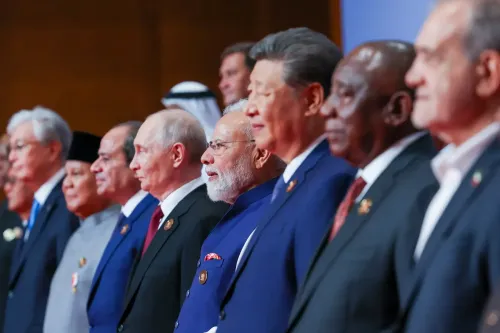
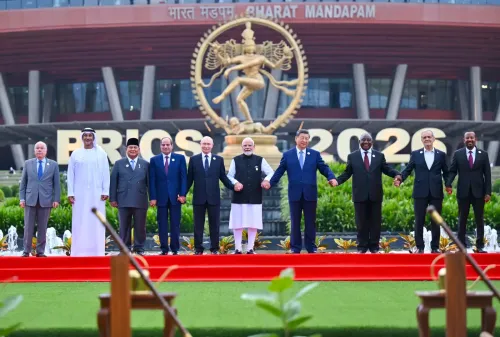
Leaders of the BRICS bloc on Saturday, 12 September unanimously adopted the New Delhi Declaration, reaffirming their collective commitment to reforming and improving global governance. The declaration calls for a more equitable, representative, democratic and accountable multilateral system — a signal aimed squarely at institutions that developing nations have long argued over-represent Western interests.
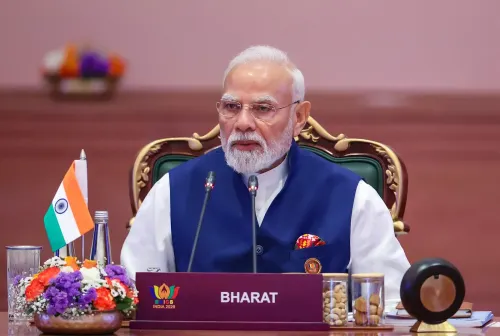
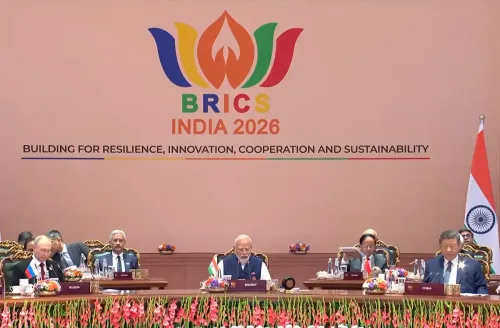
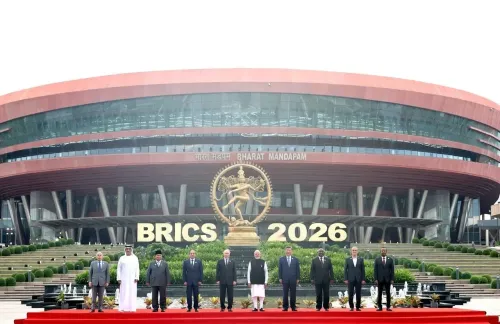
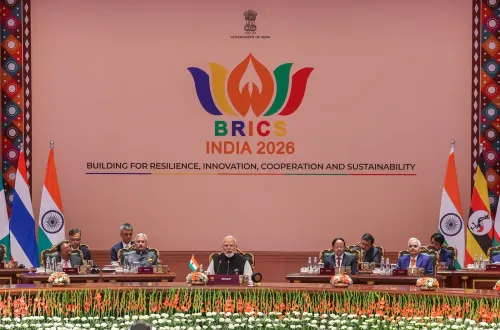
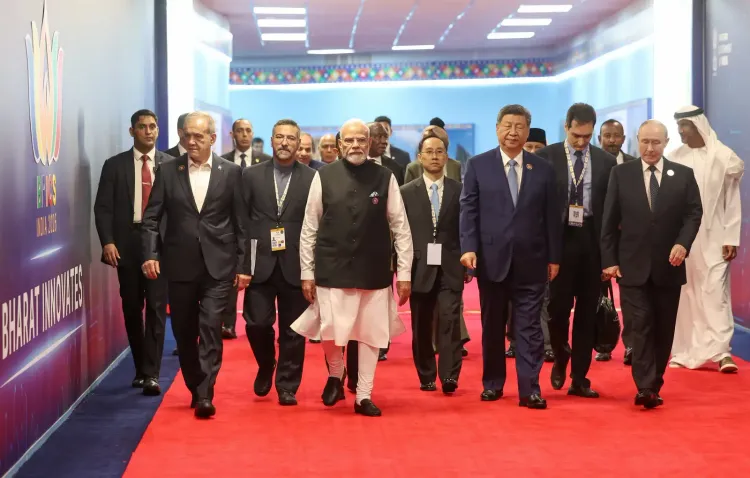
The declaration was adopted at the conclusion of the 18th BRICS Summit, held at Bharat Mandapam in New Delhi under the theme 'Building for Resilience, Innovation, Cooperation and Sustainability'.
Key commitments in the New Delhi Declaration
The BRICS leaders reiterated their commitment to strengthening multilateralism and multipolarity while upholding international law, including the purposes and principles enshrined in the United Nations Charter. The declaration explicitly frames the UN's central role as 'indispensable' and calls for cooperation rooted in solidarity, mutual respect, justice and equality.
'We reiterate our commitment to strengthening multilateralism and multipolarity and to upholding international law, including the Purposes and Principles of the Charter of the United Nations in their entirety,' the declaration stated, adding that the aim is to 'build a brighter shared future for the international community based on mutually beneficial cooperation.'
Push for greater developing-nation representation
A significant pillar of the declaration centres on expanding the participation of Emerging Market and Developing Countries (EMDCs) and Least Developed Countries (LDCs) — especially from Africa, Asia, and Latin America and the Caribbean — in global decision-making structures. The leaders called for equitable geographical representation within the UN Secretariat and other international organisations, flagging the persistent under-representation of developing nations at senior and decision-making levels.
Notably, the declaration also stressed the need to increase the role and share of women from EMDCs at all levels of leadership in these institutions. This comes amid longstanding criticism that top UN posts have historically been dominated by a narrow set of countries.
UN leadership selection under scrutiny
The BRICS leaders emphasised that the selection and appointment of UN executive heads and senior officials must be guided by transparency, inclusiveness, and the provisions of Article 101 of the UN Charter. They specifically deplored attempts to 'unilaterally undermine the work of global multilateral institutions and impair the implementation of their respective mandates' — language that, while not naming any country, is widely interpreted as directed at unilateral actions by major Western powers.
The declaration further stated that there should be 'no monopoly on senior posts in the UN system by nationals of any state or group of states.'
Multipolarity and the Global South's role
In one of its most forward-looking passages, the declaration acknowledged that 'multipolarity can expand opportunities for EMDCs to develop their constructive potential and enjoy universally beneficial, inclusive, sustainable and equitable economic globalisation and cooperation.'
The leaders also stressed the importance of the Global South as a driver for positive change, particularly amid deepening geopolitical tensions, economic downturns, protectionist measures, migratory challenges, and climate change. They affirmed that BRICS will continue to voice the concerns and priorities of the Global South while promoting a more just and stable international order grounded in international law.
What lies ahead
The New Delhi Declaration is the most comprehensive governance-reform text adopted by the bloc since its expansion. Whether these commitments translate into concrete institutional changes — particularly at the UN Security Council and Bretton Woods institutions — remains to be seen. The next round of diplomatic follow-ups is expected in the coming months as member states work to operationalise the declaration's principles.
Point of View
But BRICS communiqués have a pattern of ambitious language followed by limited institutional follow-through. The real test is whether this group — now expanded and internally diverse — can convert rhetoric into structural shifts at the UN Security Council or the IMF, where voting-share reforms have stalled for over a decade. The demand to end Western monopoly on senior posts is pointed, yet BRICS itself has offered no concrete mechanism or timeline. Until the bloc moves from declaratory diplomacy to binding institutional proposals, these summits risk remaining exercises in collective signalling rather than collective action.
NationPress
28 Oct 2026
Frequently Asked Questions
What is the BRICS New Delhi Declaration?
The New Delhi Declaration is a joint statement unanimously adopted by BRICS leaders at the 18th BRICS Summit on 12 September in New Delhi. It reaffirms the bloc's commitment to reforming global governance, strengthening multilateralism, and increasing developing-nation representation in international institutions.
Where was the 18th BRICS Summit held?
The 18th BRICS Summit was held at Bharat Mandapam in New Delhi, India, under the theme 'Building for Resilience, Innovation, Cooperation and Sustainability.'
What does the declaration say about UN reform?
The declaration calls for equitable geographical representation in the UN Secretariat, transparency in the selection of senior UN officials under Article 101 of the UN Charter, and an end to any single country or group monopolising top UN posts.
Why does the declaration focus on the Global South?
BRICS leaders view the Global South as a driver of positive change amid geopolitical tensions, economic downturns, and climate change. The declaration commits BRICS to voicing Global South concerns and promoting a more just and inclusive international order.
What are EMDCs and LDCs mentioned in the declaration?
EMDCs are Emerging Market and Developing Countries, and LDCs are Least Developed Countries. The declaration seeks greater participation for both categories — particularly from Africa, Asia, and Latin America — in global decision-making structures.