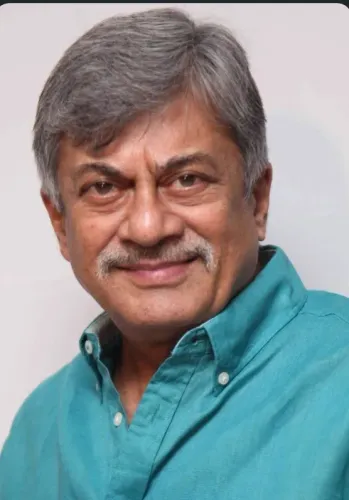
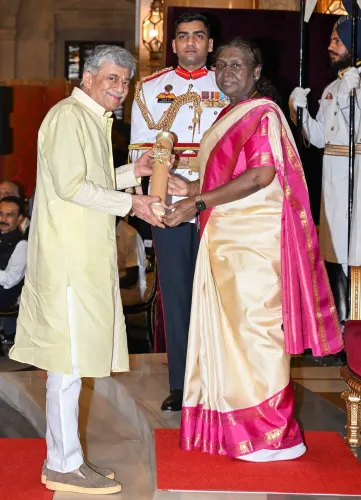
Dadasaheb Phalke 2024 winner Anant Nag credits gurus and journalists for 50-year Karnataka journey
Synopsis
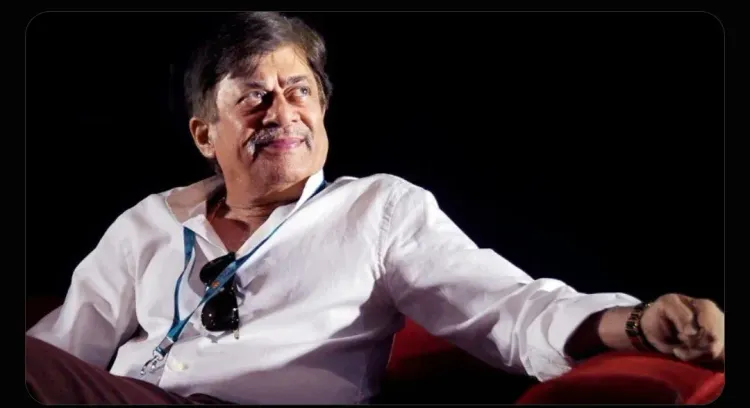
India's highest film honour went to a man who once dismissed the news as fake and went back to sleep. Anant Nag's Dadasaheb Phalke Award 2024 crowns a 50-year journey built not on industry networking but on gurus, journalist friendships, and a deliberate bet on Karnataka's new-wave cinema — a path entirely of his own making.
Key Takeaways
Anant Nag has been named the recipient of the Dadasaheb Phalke Award 2024 , India’s highest film honour.
Nag credited his gurus and journalist friends in Bengaluru as the primary support system during his five decades in Karnataka.
He was a regular at the Press Club and described his social circle as almost entirely drawn from the press and TV world.
Wife Gayathri Anant Nag revealed that Nag initially called the award news ‘fake news’ and went back to sleep before official confirmation arrived.
Nag has acted in more than 300 films across Kannada, Hindi, Konkani, Marathi , and Telugu cinema, and his debut film ‘Ankur’ won three National Film Awards .
Beyond acting, he has served as an MLC and Bengaluru Development Minister .
Veteran Kannada actor Anant Nag, named the recipient of the Dadasaheb Phalke Award 2024 for his outstanding contribution to Indian cinema, has spoken warmly about the gurus and journalist friends who shaped his remarkable five-decade career in Karnataka. Speaking at a public event in Bengaluru on 16 September, Nag offered a rare, reflective account of the human bonds that anchored his journey from Mumbai's theatre stages to Kannada cinema's new-wave movement.
The Gurus He Never Forgot
“I remember all my gurus on the stage. When I came into films, I remembered all of them,” Anant Nag said, recounting the moment he chose to relocate to Karnataka. He noted that a growing wave of new-wave and experimental cinema in the state had drawn him there deliberately. “When I decided that new-wave films and different kinds of films were being made in greater numbers in Karnataka, I decided to shift to Karnataka,” he added.
Born in Shirali, Bhatkal, in 1948 as Anant Nagarkatte, Nag had moved to Mumbai before the age of 16. He initially aspired to join the Indian Air Force, but that path did not materialise. He instead found his calling in theatre during the modern theatre movement in Mumbai and Maharashtra, working alongside prominent artistes including Amol Palekar.
Journalists as Pillars of Support
Nag was candid about the unusual support system he leaned on after settling in Bengaluru. Having neither completed his schooling nor his college education in the city, he found his social circle almost entirely within the press community. “At that time, the people who stood by me and particularly helped me along were people from journalism and my journalist friends,” he said.
“My friend circle was only the press, and then there were TV channels and people from the TV world. I was never a member of any club, but I was a regular at the Press Club, thanks to the journalists of our region,” Nag recalled. He described these friendships as formative — not just socially, but professionally. His journalist friends, he said, offered candid guidance without hesitation. “They never hesitated to cross-examine me, tell me this is not the way, this is the way, and correct me whenever they felt that I was overstepping,” he added.
Wife Gayathri Recalls His Disbelief at the Award News
Popular actress and Nag’s wife, Gayathri Anant Nag, shared a lighter moment from the day the award news broke. A journalist had called her first with the information, but even she could not immediately process it. When she informed her husband, his reaction was telling. “Anant was at home, so I told him about it. But he said, ‘This must be some fake news’, and went back to sleep,” she recalled with a smile.
It was only after the official press release began circulating on WhatsApp that the reality sank in. “Soon after, congratulatory phone calls started pouring in,” Gayathri said. She went on to describe her immense pride in her husband’s singular career path. “He has never followed somebody else’s path. He has created his own unique path. Even though he chose a different path, the people of Karnataka have loved him immensely,” she added.
A Career Spanning More Than 300 Films
Anant Nag has appeared in more than 300 films across Kannada, Hindi, Konkani, Marathi, and Telugu cinema over his career. He emerged as a leading figure in India’s new-wave cinema movement, collaborating with acclaimed filmmakers and artistes including Shyam Benegal, Amol Palekar, and Shabana Azmi. His debut Hindi film, ‘Ankur’, earned three National Film Awards — a remarkable opening statement for any actor.
Beyond acting, Nag has worked as a producer and entrepreneur, and has also served in public life as an MLC and as Bengaluru Development Minister. Notably, even after five decades in the industry, he continues to remain active and regularly engages with new film scripts.
What the Dadasaheb Phalke Award Means for Kannada Cinema
The Dadasaheb Phalke Award is India’s highest honour in cinema, presented by the Government of India at the National Film Awards ceremony. Nag’s selection for the 2024 edition is widely seen as a recognition not just of his individual body of work, but of the broader contribution of Kannada parallel cinema to Indian film culture. This comes amid growing national attention to regional-language cinema following the global success of films from the South Indian industry in recent years.
As Nag himself put it, reflecting on his five decades in the state: “That was all the experience since 50 years here in Karnataka.” With the Dadasaheb Phalke Award now to his name, that experience has received its most definitive national acknowledgement.
Point of View
But what makes his story distinctive is the path he chose — parallel cinema, regional roots, and a social world built around the press rather than the film fraternity. His career is a quiet rebuke to the idea that Bollywood proximity is the only route to lasting national recognition. The award also arrives at a moment when Kannada and South Indian cinema are commanding unprecedented national attention, making Nag’s honour feel like a belated but well-timed acknowledgement of a movement he helped build. The question now is whether the mainstream industry will use this moment to look more seriously at the parallel cinema tradition he championed — or treat it as a one-off tribute.
NationPress
16 Sept 2026
Frequently Asked Questions
Who has won the Dadasaheb Phalke Award 2024?
Veteran Kannada actor Anant Nag has been named the recipient of the Dadasaheb Phalke Award 2024 for his contribution to Indian cinema. The award is India’s highest honour in the field of cinema, presented by the Government of India.
Why is Anant Nag significant in Indian cinema?
Anant Nag is a pioneering figure in India’s new-wave cinema movement, having worked across Kannada, Hindi, Konkani, Marathi, and Telugu films over more than 50 years. He has appeared in over 300 films and collaborated with acclaimed filmmakers including Shyam Benegal, Amol Palekar, and Shabana Azmi. His debut Hindi film ‘Ankur’ won three National Film Awards.
What did Anant Nag say about journalists and his career in Karnataka?
Anant Nag said journalist friends were among the most important pillars of support during his early years in Bengaluru. He described his social circle as almost entirely drawn from the press, and noted that he was a regular at the Press Club. He credited these friends with offering honest feedback and correcting him whenever he veered off course.
How did Anant Nag react when he first heard about the Dadasaheb Phalke Award?
According to his wife Gayathri Anant Nag, the actor initially dismissed the news as ‘fake news’ and went back to sleep. He only accepted the news as genuine after the official press release began circulating on WhatsApp and congratulatory phone calls started arriving.
What is Anant Nag’s background before his film career?
Anant Nag was born as Anant Nagarkatte in Shirali, Bhatkal, in 1948, and moved to Mumbai before the age of 16. He initially aspired to join the Indian Air Force, but that ambition was not fulfilled. He subsequently entered the theatre world during the modern theatre movement in Mumbai and Maharashtra, which eventually led him to a career in cinema.