Jaishankar's three-point plan: shipping, grain and energy in Russia-Ukraine talks
Synopsis
India is quietly running a three-track diplomatic effort between Russia, Ukraine, Europe, and the US — covering civilian shipping, Black Sea grain flows, and energy infrastructure attacks. EAM Jaishankar's Atlanta remarks reveal New Delhi's most detailed public articulation yet of its mediator role, with Secretary Rubio personally briefed on the initiative's progress.
Key Takeaways
EAM Jaishankar outlined a three-point framework involving Russia , Ukraine , and Europe : protecting civilian shipping, restoring Black Sea grain exports, and a non-attack pact on energy infrastructure.
Jaishankar described the energy element as 'probably the most complicated piece' due to differing definitions of legitimate infrastructure targets.
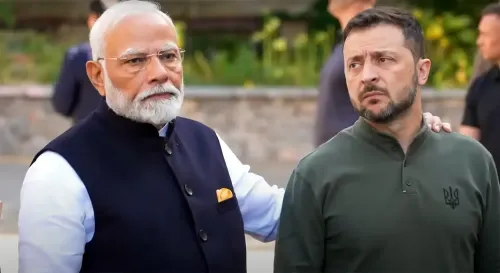
Prime Minister Modi has held direct talks with President Putin in Delhi and Bishkek ; Jaishankar himself has visited both Moscow and Kyiv .
India is coordinating its effort with US Secretary of State Rubio , who has been briefed on the initiative.
Jaishankar reaffirmed India's G20 position that 'there are no military solutions' and that a diplomatic pathway is essential.
The Black Sea grain disruption is described as a 'big concern for the global south,' which constitutes the bulk of purchasing nations.
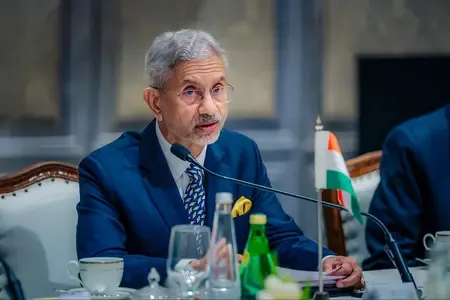
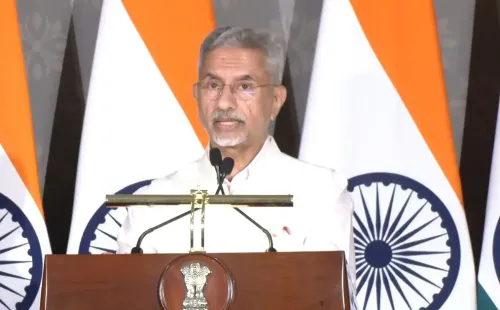
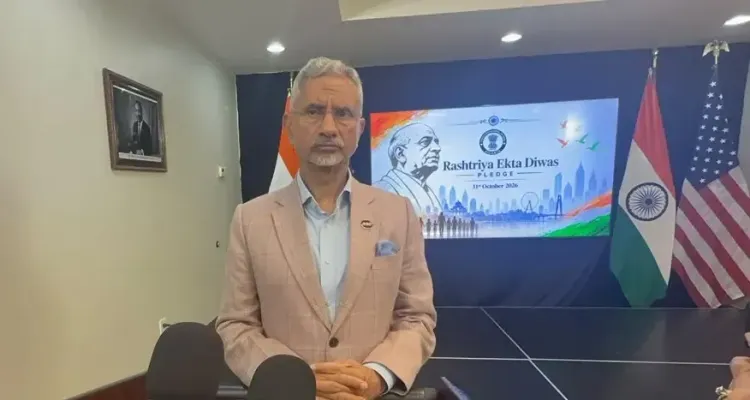
External Affairs Minister S Jaishankar has revealed that India is actively engaged in diplomacy with Russia, Ukraine, and Europe on a three-point framework to limit the humanitarian and economic fallout of the ongoing conflict — covering civilian shipping protection, Black Sea grain exports, and a mutual non-attack on energy infrastructure. Speaking to Indian reporters in Atlanta on Saturday, at the conclusion of the G20 Foreign Ministers' Meeting, Jaishankar confirmed that Washington is also being kept in the loop as part of a broader coordinated effort.
The Three Pillars of India's Diplomatic Push
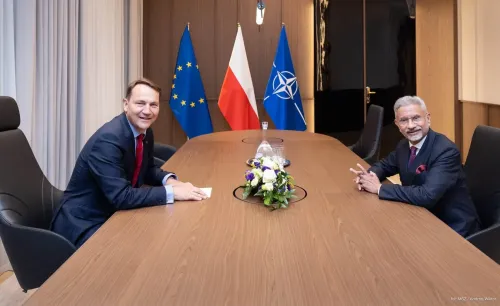
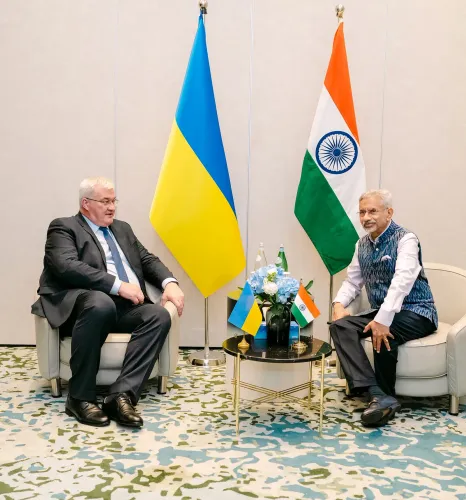
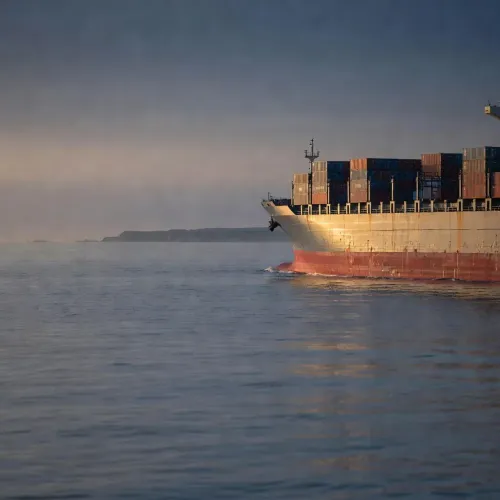
Jaishankar laid out the framework with clarity. 'We've had discussions with Russia. We've had discussions with Europe. We've had discussions with Ukraine also about three aspects of the current conflict: one, not to attack civilian shipping and seafarers; the second, to find a way by which the grain exports from both Russia and Ukraine... find a way of restoring that flow because that flow has cut down very sharply in the Black Sea, and the third is with regard to energy,' he said.
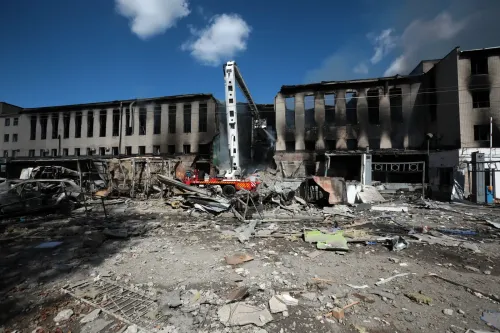
On the grain dimension, Jaishankar underlined the stakes for developing nations. He described it as 'a big concern for the global south because much of the purchasers of that grain are basically global south countries.' The disruption of Black Sea grain flows has already strained food security across Africa, the Middle East, and parts of Asia.
Why the Energy Element Is the Hardest
Of the three pillars, Jaishankar acknowledged that the non-attack on energy infrastructure was the most complex to advance. 'Non-attack on energy is probably the most complicated piece because it means different things to the different players,' he said. 'Infrastructure itself to some would mean a refinery. To some it would mean grids. There would be issues relating to ships carrying fuel. So we have been trying to see if we can get them together to address these issues,' he added.
This complexity reflects a fundamental asymmetry: what Russia and Ukraine each consider legitimate military targets diverges sharply, making any consensus on protecting energy assets a diplomatic challenge of the highest order.
India's High-Level Contacts on Both Sides
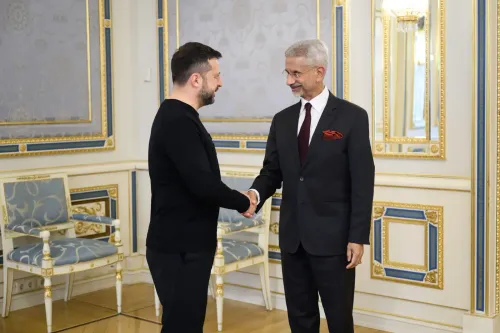
Jaishankar outlined the depth of India's engagement at the highest levels of both Moscow and Kyiv. 'Prime Minister himself had discussion with Russian President Vladimir Putin in Delhi, and before that in Bishkek. I had gone earlier to Moscow, and we continue even today. I discussed it with Russian Foreign Minister Mr Lavrov, and then in between, I had gone to Kyiv. And we are in touch with the Ukrainian side,' he said.
On the sidelines of the G20 meeting, Jaishankar met Russian Foreign Minister Sergey Lavrov, and said in a post on X that he 'Discussed the Ukraine conflict, Gulf situation and multilateral issues' with Lavrov.
Coordination with Washington
India is not operating in isolation. Jaishankar confirmed that New Delhi has been coordinating its efforts with the United States, which has its own parallel mediation initiative. 'We have also been coordinating this with the Americans, because they have their own peace mediation initiative. So Secretary Rubio knows roughly what is going on here,' he said.
He declined to elaborate on the specifics or current state of play, stating he would not be in a position to share those details publicly. Notably, this coordinated approach — engaging Moscow, Kyiv, and Washington simultaneously — reflects India's long-standing posture of strategic autonomy in global conflicts, while increasingly playing an active facilitation role.
India's Broader Message at the G20
Jaishankar also articulated India's overarching stance at the G20 gathering: that 'there are no military solutions' to the two major conflicts currently roiling the global order, and that a 'diplomatic pathway' remains the only viable route forward. He affirmed that India has been 'active' in pursuing that pathway. This is consistent with Prime Minister Narendra Modi's oft-repeated formulation that 'this is not an era of war,' which he delivered directly to Putin during their bilateral meeting.
With India holding the threads of communication with all major parties, New Delhi's role as an unofficial back-channel appears to be deepening — and the outcome of this three-point effort could have significant consequences for global food prices, energy markets, and maritime trade.
Point of View
Which may be why it carries the most diplomatic traction. The energy piece, however, is where this initiative will either break through or stall — both sides have used infrastructure strikes as instruments of strategic pressure, and neither has shown willingness to surrender that leverage. The real question is whether India's unique access to all parties can translate into enforceable commitments, or whether this remains a well-intentioned back-channel that stops short of producing binding outcomes.
NationPress
1 Nov 2026
Frequently Asked Questions
What is India's three-point diplomatic plan on the Russia-Ukraine conflict?
India is engaged in discussions with Russia, Ukraine, and Europe on three specific issues: preventing attacks on civilian shipping and seafarers, restoring grain exports through the Black Sea, and establishing a non-attack understanding on energy infrastructure. EAM Jaishankar outlined the framework at the G20 Foreign Ministers' Meeting in Atlanta.
Why is the energy element considered the most difficult?
Jaishankar described it as 'probably the most complicated piece' because the term 'energy infrastructure' means different things to each party — covering refineries, electricity grids, and fuel-carrying ships. Russia and Ukraine have differing views on what constitutes a legitimate military target, making consensus elusive.
How has India engaged both Russia and Ukraine at the highest levels?
Prime Minister Modi has held direct talks with President Putin in both Delhi and Bishkek. Jaishankar himself has visited Moscow and Kyiv, and continues to engage both sides. India is simultaneously coordinating with US Secretary of State Rubio on the broader peace effort.
Why does India consider the Black Sea grain issue a priority?
Jaishankar called it 'a big concern for the global south' because the bulk of grain purchasers from the Black Sea region are developing nations across Africa, the Middle East, and Asia. The sharp fall in grain flows from the Black Sea has worsened food insecurity in these countries.
What was India's overall message at the G20 Foreign Ministers' Meeting?
India's position at the G20 was that 'there are no military solutions' to the major ongoing conflicts and that a diplomatic pathway must be found. Jaishankar reaffirmed that India has been actively pursuing that pathway through its multi-directional engagement with all key parties.