Rajnath Singh Greets Kerala on 70th Formation Day
Synopsis
Union Defence Minister Rajnath Singh extended warm wishes to the people of Kerala on Kerala Piravi, the state's Formation Day, on 1 November 2026, marking 70 years since Kerala was constituted under the States Reorganisation Act of 1956.
Key Takeaways
Rajnath Singh greeted Kerala on Kerala Piravi, 1 November 2026 .
Kerala was formed on 1 November 1956 under the States Reorganisation Act .
Singh used the Malayalam spelling Keralam , a deliberate nod to linguistic authenticity.
The minister praised Kerala's 'civilisational and cultural heritage' and its people's contributions to national growth.
Central ministers routinely mark state formation anniversaries as part of India's federal ceremonial tradition.
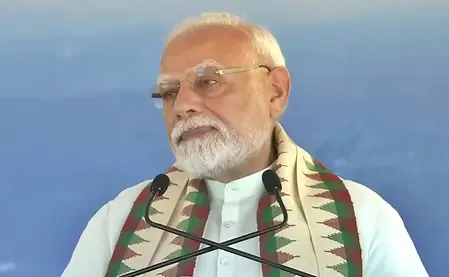
Seventy years after the States Reorganisation Act of 1956 drew the map of modern India, Union Defence Minister Rajnath Singh marked Kerala Piravi — Kerala's Formation Day — on Sunday, 1 November 2026, with a message saluting the southern state's civilisational depth and its people's contributions to the nation.
Singh wrote: 'On the occasion of Kerala Piravi, I extend my warm wishes to the sisters and brothers of Keralam. Keralam holds a distinctive place in India's rich civilisational and cultural heritage. Its people have made immense contributions to the nation's growth and development.' He closed with wishes for the state's 'continued progress, prosperity and a bright future.'
Kerala Piravi: the day a state was born
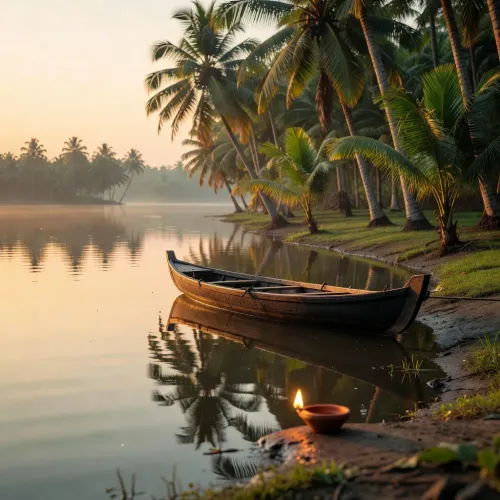
Kerala came into existence on 1 November 1956, when the States Reorganisation Act merged the princely state of Travancore-Cochin with the Malabar district and the taluk of Kasaragod to form a single Malayalam-speaking state. The date is celebrated annually as Kerala Piravi — literally, 'the birth of Kerala' — and draws greetings from leaders across the political spectrum.
The state carved from the southwestern tip of the subcontinent has since built an identity defined by high literacy, a robust public health system, a vibrant arts tradition, and a globally dispersed diaspora whose remittances form a significant pillar of its economy.
Centre's practice of acknowledging regional milestones
Singh's message follows an established practice among central ministers of issuing Formation Day greetings for every state — a ritual that reinforces the federal compact and signals Delhi's recognition of distinct regional identities within the broader national framework. For a senior BJP leader whose party has historically found Kerala a competitive challenge, the tone — warm, respectful, free of political colour — is calibrated precisely for the occasion.
The minister's choice of the spelling Keralam, the Malayalam form of the state's name, is a small but deliberate nod to linguistic authenticity that rarely goes unnoticed in the state.
Point of View
But they carry added political texture when directed at states where the ruling party faces stiff competition. Singh's warm, culturally attuned message — complete with the Malayalam spelling 'Keralam' — reflects a studied effort by the BJP's top leadership to build an emotional bridge with Kerala's electorate. The broader arc here is a Union government keen to project civilisational unity while respecting the linguistic and cultural distinctiveness that defines India's southern states.
NationPress
1 Nov 2026
Frequently Asked Questions
What is Kerala Piravi?
Kerala Piravi, meaning 'birth of Kerala,' is celebrated on 1 November every year to mark the formation of Kerala as a state on 1 November 1956 under the States Reorganisation Act.
Why did Rajnath Singh wish Kerala on 1 November 2026?
Rajnath Singh posted greetings on Kerala Piravi , the state's 70th Formation Day, as part of the standard practice of central ministers acknowledging state formation anniversaries.
How was Kerala formed?
Kerala was constituted on 1 November 1956 by merging the princely state of Travancore-Cochin with the Malabar district and Kasaragod taluk into a unified Malayalam-speaking state under the States Reorganisation Act.
What did Rajnath Singh say about Kerala?
Singh said Kerala 'holds a distinctive place in India's rich civilisational and cultural heritage' and that its people have made 'immense contributions to the nation's growth and development.'
What does the spelling 'Keralam' signify?
'Keralam' is the Malayalam form of the state's name. Singh's use of this spelling is widely seen as a respectful nod to Kerala's linguistic identity.