CM Sukhu: Wild Flower Hall e-auction yields ₹2,000 cr revenue
Synopsis
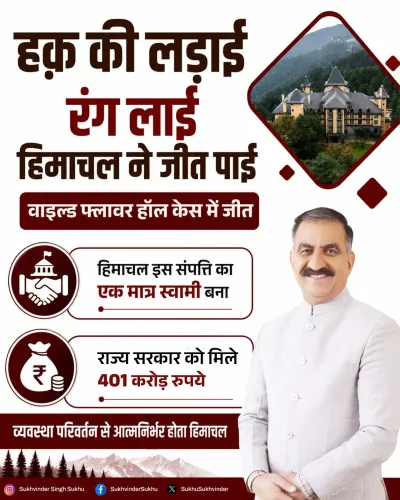
Himachal Pradesh CM Sukhvinder Singh Sukhu announced the Wild Flower Hall Hotel e-auction secured a record 47.1% revenue jump, with ₹3 crore monthly income, ₹24 crore upfront fee, ₹50 crore investment commitment, and ₹400 crore cash — totalling an estimated ₹2,000 crore over 35 years.
Key Takeaways
The Wild Flower Hall Hotel e-auction delivered a record 47.1% revenue growth for the Himachal Pradesh government.
The 35-year licence will generate approximately ₹3 crore per month , with a 3% annual escalation .
Total projected revenue over the licence period is approximately ₹2,000 crore .
An upfront advance licence fee of ₹24 crore is included in the deal terms.
The licensee has committed to a minimum ₹50 crore investment in the hotel property.
The state has already received approximately ₹400 crore in cash from the hotel transaction.
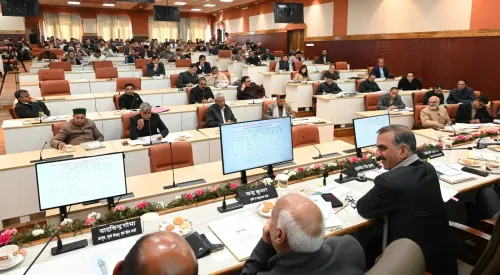
A single e-auction in the Shimla hills just rewrote what a government-owned heritage hotel can earn — and Himachal Pradesh Chief Minister Sukhvinder Singh Sukhu is making sure every rupee of it counts. On 1 November 2026, CM Sukhu announced that the e-auction of the iconic Wild Flower Hall Hotel had delivered a record 47.1% revenue growth, setting the stage for a projected ₹2,000 crore windfall for the state exchequer over the life of the deal.
₹3 crore a month, every month, for 35 years
The licence runs for 35 years, during which the state will receive approximately ₹3 crore per month in recurring revenue. That monthly figure is not static — it escalates at 3% annually, compounding the state's earnings over the full tenure and pushing the total projected receipts to roughly ₹2,000 crore. On top of the recurring stream, the government will pocket an upfront advance licence fee of ₹24 crore the moment the deal closes.
The successful bidder has also committed to a minimum investment of ₹50 crore in the property itself — a clause designed to ensure the heritage asset is maintained and upgraded rather than merely extracted from. Beyond the structured payments, CM Sukhu stated that the state has already received approximately ₹400 crore in cash from the hotel transaction.
Wild Flower Hall: from Shimla landmark to revenue engine
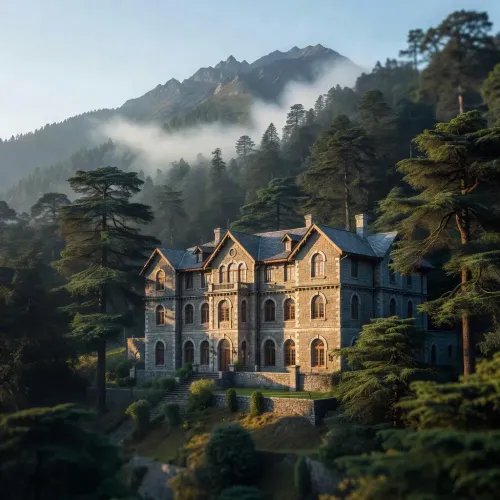
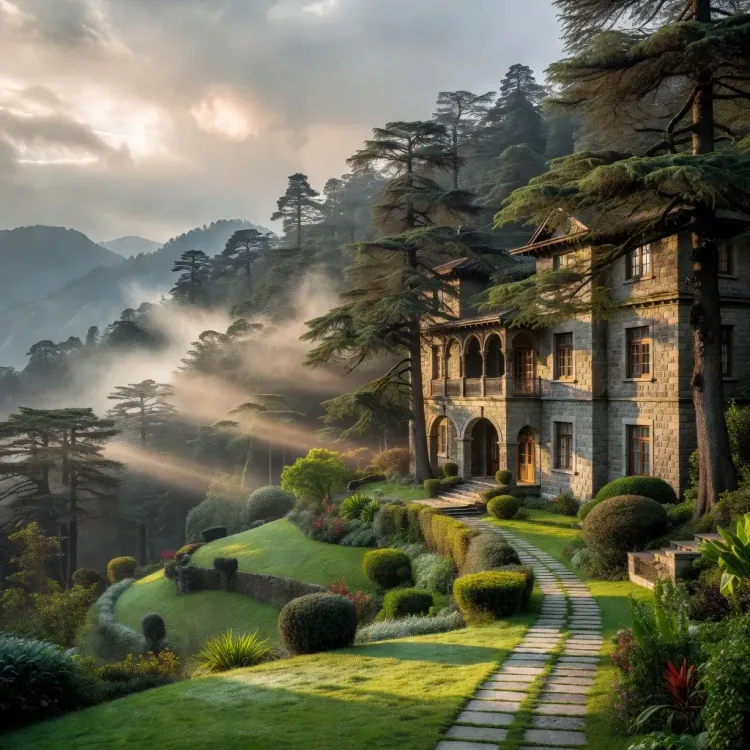
Wild Flower Hall sits in the forested heights of the Shimla hills, long regarded as one of Himachal Pradesh's most prized hospitality assets. Its colonial-era heritage, altitude setting, and proximity to Shimla have made it a marquee property in Indian luxury tourism. The e-auction model applied here — competitive bidding for a long-term operating licence rather than an outright sale — follows a pattern several Indian states have adopted to monetise public assets without permanently transferring ownership.
The 47.1% jump in revenue over whatever the baseline licence commanded is the headline number: it signals that competitive e-auctions can unlock significantly higher valuations than negotiated or rolled-over licences for the same assets.
Every paisa directed at Himachal's people
CM Sukhu was explicit about the end-use of the proceeds, writing that 'होटल से होने वाली कमाई की पाई-पाई का उपयोग हिमाचल की देवतुल्य जनता के हित में किया जाएगा' — 'every last paisa earned from this hotel will be used in the interest of Himachal's people.' That framing matters in a tourism-reliant hill state where the public debate around government property often centres on who benefits from leasing deals.
Himachal Pradesh carries a significant fiscal burden relative to its revenue base, and long-term asset-monetisation deals like this one offer a route to durable, predictable income streams — as opposed to one-off capital receipts. The annual escalation clause locks in inflation-adjusted growth without requiring fresh negotiations for three and a half decades.
The next test is execution: whether the private operator delivers the committed ₹50 crore in improvements and whether the state captures all projected escalations on schedule. If Wild Flower Hall performs, it becomes a template for Himachal's other tourism properties — and the fiscal arithmetic changes considerably.
Point of View
Inflation-protected income from legacy public assets. For CM Sukhu, announcing a 47.1% revenue jump serves a dual political purpose: it validates the Congress government's asset-management credentials and pre-empts Opposition criticism by committing proceeds publicly to public welfare. The 3% annual escalation clause is the structurally significant detail — it transforms a single negotiation into three and a half decades of compounding state income. Whether this becomes a replicable template for Himachal's other tourism properties will be the real measure of the model's ambition.
NationPress
1 Nov 2026
Frequently Asked Questions
What is the Wild Flower Hall Hotel e-auction deal in Himachal Pradesh?
The Himachal Pradesh government conducted an e-auction for a 35-year operating licence for the Wild Flower Hall Hotel in the Shimla hills region, achieving a 47.1% jump in revenue over the previous arrangement and projecting total receipts of approximately ₹2,000 crore for the state exchequer.
How much revenue will Himachal Pradesh earn from Wild Flower Hall Hotel?
The state is projected to earn approximately ₹2,000 crore over the 35-year licence period, with roughly ₹3 crore per month in recurring revenue escalating at 3% annually, plus a ₹24 crore upfront licence fee and around ₹400 crore in cash already received.
What is the minimum investment commitment in the Wild Flower Hall deal?
The winning bidder has committed to investing a minimum of ₹50 crore in the hotel property as part of the licence terms, aimed at maintaining and upgrading the heritage asset.
What is CM Sukhu's stance on how the Wild Flower Hall revenue will be used?
CM Sukhvinder Singh Sukhu stated that every paisa earned from the hotel will be used in the interest of Himachal Pradesh's people, with no proceeds diverted away from public welfare.
How does e-auctioning of government hotels work in India?
Indian states increasingly use competitive e-auctions to grant long-term operating licences for government-owned hospitality properties. This model secures upfront fees and recurring revenue while retaining state ownership and mandating private investment commitments from the operator.