Jaishankar briefed by Ukraine FM Sybiha on Black Sea crisis, navigation freedom
Synopsis
Within 48 hours, India's External Affairs Minister S. Jaishankar spoke separately with both Ukraine's FM Sybiha — who briefed him on Black Sea shipping attacks threatening global food security — and Russia's FM Lavrov in Moscow. The back-to-back diplomatic contacts position New Delhi as a rare channel between the two warring sides at a moment when Black Sea hostilities are escalating sharply.
Key Takeaways
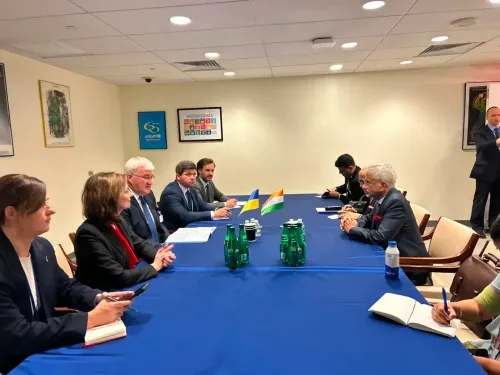
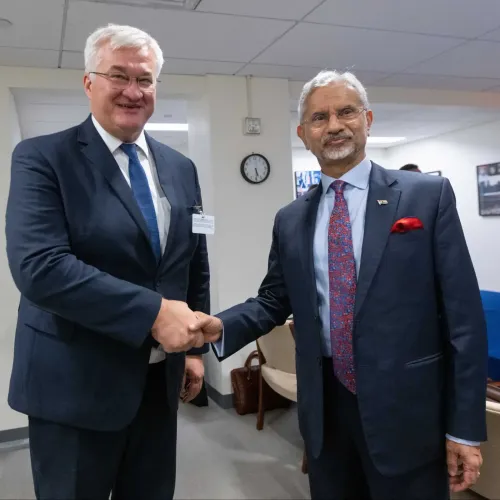
Jaishankar and Ukrainian FM Andrii Sybiha spoke by phone on 27 August , discussing the Black Sea crisis and ways to restore freedom of navigation.
Sybiha said Russian attacks on Ukrainian ports and maritime routes pose a direct threat to global food security , affecting 'millions of families worldwide.' On 25 August , Russia struck three cargo vessels and a tanker at Pivdennyi port and another cargo ship at Odesa .
Jaishankar reaffirmed India's position as 'a steadfast advocate of dialogue and diplomacy.' A day before the Sybiha call, Jaishankar held wide-ranging talks with Russian FM Sergey Lavrov in Moscow .
Both sides agreed to advance Ukraine–India bilateral cooperation and coordinate upcoming diplomatic contacts.
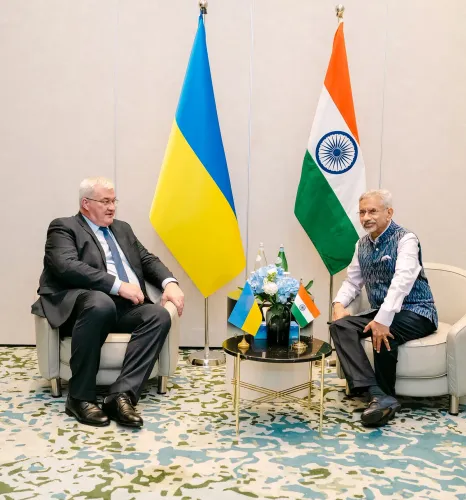
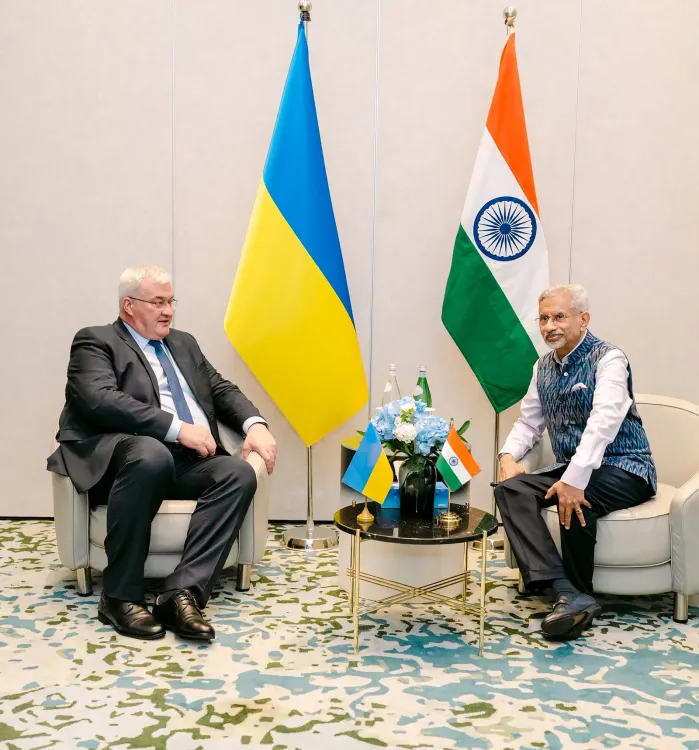
External Affairs Minister S. Jaishankar and Ukrainian Foreign Minister Andrii Sybiha held a phone conversation on 27 August, during which Sybiha briefed Jaishankar on the deteriorating situation in the Black Sea and both sides discussed pathways to restore freedom of navigation in the strategically critical waterway. The call underscores India's active diplomatic engagement with both warring parties as the conflict's economic fallout spreads globally.
What Sybiha Said
In a post on X, Sybiha described the Black Sea situation as 'difficult', attributing it to what he called 'Russian aggression against Ukraine and intensified attacks on our ports and maritime routes.' He stressed that the disruption extends well beyond the region: 'Russia's attempts to disrupt Ukrainian food exports pose a direct threat to global food security, reaching far beyond our region and putting millions of families worldwide at risk.'
Sybiha confirmed that both ministers discussed concrete ways to 'restore and secure freedom of navigation in the Black Sea.' The two also agreed to advance Ukraine–India bilateral cooperation and to remain in close contact ahead of upcoming diplomatic engagements.
India's Position: Dialogue and Diplomacy
Jaishankar, in his own post on X following the call, said the discussion 'focused on the resumption of commerce in the Black Sea, ensuring the safety and security of all seafarers and commercial shipping.' He reaffirmed India's consistent stance: 'India remains a steadfast advocate of dialogue and diplomacy.'
New Delhi has maintained a carefully balanced posture throughout the Russia-Ukraine conflict — abstaining on key United Nations votes while keeping open channels with both Moscow and Kyiv. The Jaishankar-Sybiha call is consistent with that calibrated approach.
The Black Sea: A Worsening Choke Point
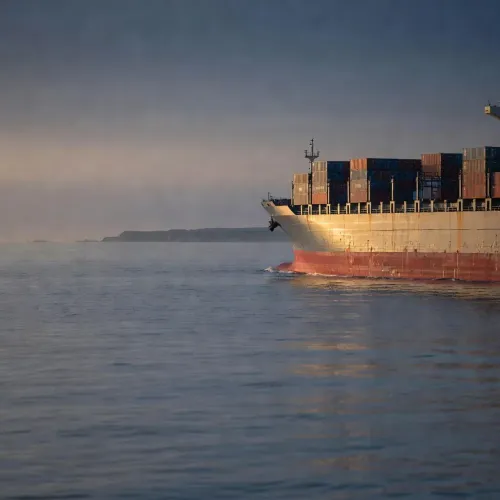
The call came against the backdrop of a sharp escalation in Black Sea hostilities. On 25 August, the Russian Defence Ministry confirmed it had launched missile and drone barrages that struck three cargo vessels and a tanker at the port of Pivdennyi, as well as another cargo ship at the port of Odesa. Both Russia and Ukraine have been conducting near-daily strikes on each other's commercial shipping, port infrastructure, and energy pipelines, turning the sea lane into one of the most volatile economic and military flashpoints of the war.
Ukraine is a major global exporter of grain, sunflower oil, and other food commodities. Sustained disruption to its Black Sea ports directly affects food supply chains across Africa, the Middle East, and parts of Asia — including India's own import-dependent neighbours.
Jaishankar's Parallel Engagement With Russia
Notably, just a day earlier on 25 August, Jaishankar had held a 'wide-ranging conversation' with Russian Foreign Minister Sergey Lavrov in Moscow, covering bilateral cooperation, regional hotspots, global challenges, and multilateral issues. Jaishankar shared details of that exchange in a post on X: 'A wide-ranging conversation this evening with FM Sergey Lavrov of Russia. Discussed our bilateral cooperation, regional hotspots, global challenges and multilateral issues.'
The back-to-back calls with Lavrov and Sybiha signal that India is positioning itself as a potential interlocutor — or at minimum, an informed neutral — as international pressure mounts to revive a Black Sea grain corridor arrangement. India's next diplomatic move in this space will be closely watched.
Point of View
A domain where India has a concrete economic interest: disrupted grain and commodity corridors push up food import costs across the Global South, and India's neighbourhood is directly exposed. New Delhi has so far avoided any public proposal for mediation, but the sequencing of these calls — Moscow one day, Kyiv the next — suggests it is quietly building the informational basis to play a larger role if a diplomatic opening emerges. The question is whether India's studied neutrality will be read as leverage or as fence-sitting by both sides.
NationPress
11 Oct 2026
Frequently Asked Questions
What did Jaishankar and Ukraine FM Sybiha discuss?
They discussed the deteriorating security situation in the Black Sea, including Russian attacks on Ukrainian ports and commercial shipping, and explored ways to restore freedom of navigation. The two also agreed to advance Ukraine–India bilateral cooperation and coordinate upcoming diplomatic contacts.
Why is the Black Sea situation a global concern?
Ukraine is a major exporter of grain and food commodities, and sustained attacks on its Black Sea ports disrupt supply chains across Africa, the Middle East, and Asia. Ukrainian FM Sybiha warned that Russia's disruption of Ukrainian food exports 'poses a direct threat to global food security, putting millions of families worldwide at risk.'
What attacks occurred in the Black Sea on 25 August?
The Russian Defence Ministry confirmed it launched missile and drone strikes on 25 August that hit three cargo vessels and a tanker at the port of Pivdennyi, and another cargo ship at the port of Odesa, further escalating tensions on the critical waterway.
Did Jaishankar also speak with Russia's foreign minister?
Yes. On 25 August — a day before the Sybiha call — Jaishankar held a wide-ranging conversation with Russian FM Sergey Lavrov in Moscow, covering bilateral cooperation, regional hotspots, global challenges, and multilateral issues.
What is India's stated position on the Russia-Ukraine conflict?
India has consistently advocated dialogue and diplomacy, maintaining open channels with both Moscow and Kyiv while abstaining on key UN votes related to the conflict. Jaishankar reiterated after the Sybiha call that 'India remains a steadfast advocate of dialogue and diplomacy.'