Jaishankar, Ukraine FM Sybiha discuss Black Sea, bilateral ties at UNGA
Synopsis
India's External Affairs Minister met Ukraine's top diplomat twice in three weeks — first in Kyiv, now at UNGA in New York. The Black Sea is centre stage: Kyiv wants India's backing on restoring freedom of navigation, which it frames as a global food security issue. New Delhi, for its part, is threading a careful needle — talking to both sides while insisting the war must end at the table, not the battlefield.
Key Takeaways
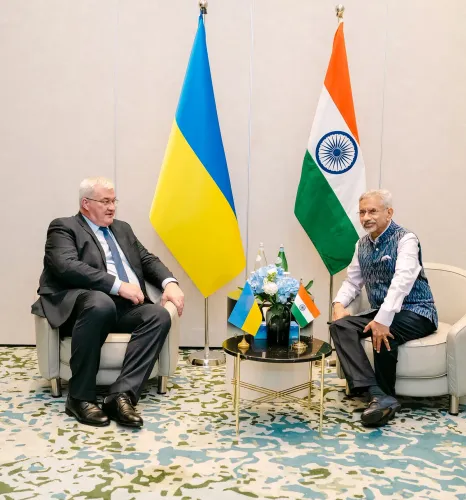
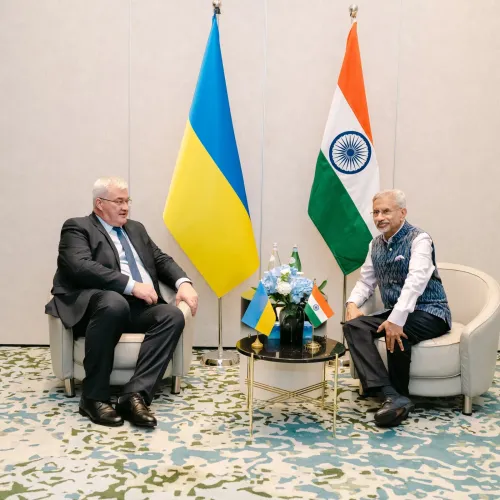
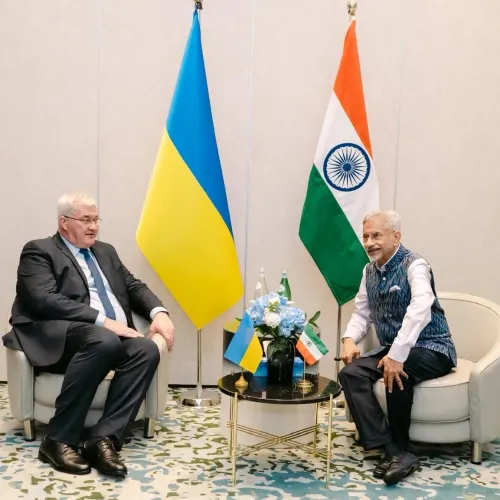
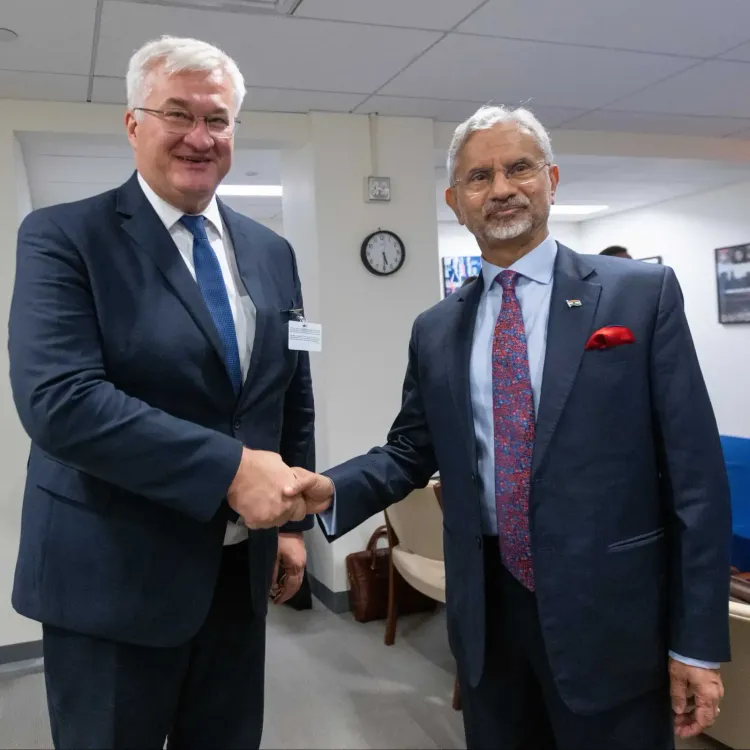
Jaishankar and Ukrainian FM Andrii Sybiha met on 22 September 2026 on the sidelines of the 81st UN General Assembly in New York .
Talks centred on the Black Sea situation, its market implications , and global food security via restored freedom of navigation.
Both sides discussed the upcoming India-Ukraine bilateral intergovernmental commission meeting, with a focus on innovation and business .
Ukraine expressed interest in partnerships with India in science, education, technology, agriculture, IT, and pharmaceuticals .
This was the second Jaishankar-Sybiha meeting in under three weeks; the first was during Jaishankar's 3 September visit to Kyiv — the first standalone bilateral visit by an Indian External Affairs Minister to Ukraine.
India reiterated its position that the conflict must end through dialogue and diplomacy , not on the battlefield.
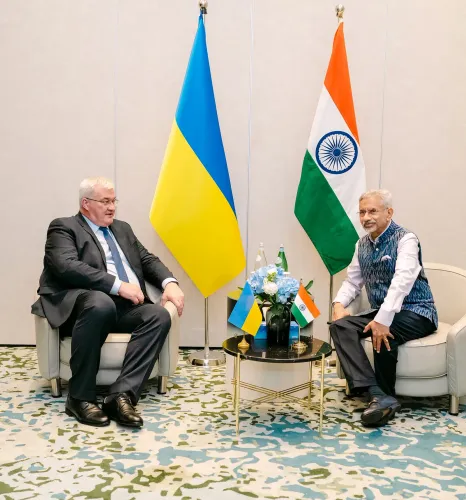
External Affairs Minister S. Jaishankar met Ukrainian Foreign Minister Andrii Sybiha on the sidelines of the 81st session of the UN General Assembly in New York on 22 September 2026, focusing on the Black Sea situation and its market implications, as well as expanding bilateral cooperation across multiple sectors. The meeting signals India's continued diplomatic engagement with Kyiv as the Russia-Ukraine conflict enters a critical phase.
Key Developments from the New York Meeting
Following the talks, Jaishankar posted on X: 'Welcomed the opportunity to meet FM Andrii Sybiha again, after my recent visit to Ukraine. Our conversation focused on developments over the past few weeks.' Sybiha, in turn, said he was pleased to meet Jaishankar to discuss peace efforts, bilateral cooperation, and international developments.
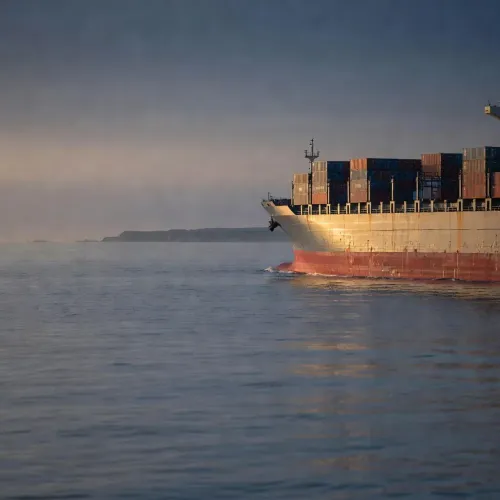
On the Black Sea specifically, Sybiha stated: 'We spoke about the situation in the Black Sea and its market implications. Restoring freedom of navigation is critical for global food security. Ukraine is ready to play a constructive role, and we value India's engagement.' The emphasis on freedom of navigation underscores the strategic stakes — disruptions in the Black Sea directly affect global grain and commodity flows, with India among the affected importers.
Bilateral Commission and Sector-Wide Cooperation
The two ministers also discussed preparations for the next meeting of the India-Ukraine bilateral intergovernmental commission, to be convened in the near future. Sybiha noted it 'will involve a strong business component with an emphasis on innovation.'
Ukraine has expressed interest in deepening partnerships with India across science, education, technology, agriculture, IT, pharmaceuticals, and other sectors, according to Sybiha. This reflects a broader Ukrainian push to diversify economic partnerships amid wartime pressures.
India's Position on the Conflict
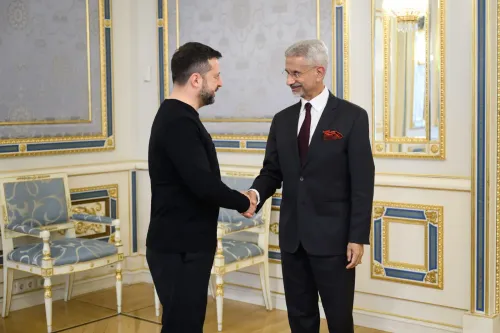
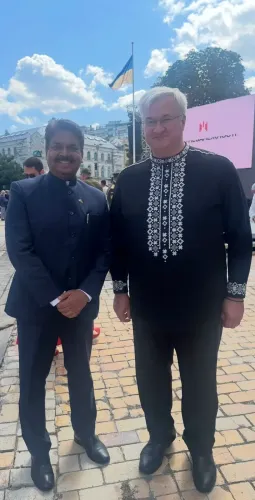
This meeting is the second between Jaishankar and Sybiha in less than three weeks. On 3 September, Jaishankar made the first-ever standalone bilateral visit by an Indian External Affairs Minister to Ukraine, meeting both Sybiha and President Volodymyr Zelensky in Kyiv. During that visit, Jaishankar reiterated India's long-held position that the conflict cannot be resolved on the battlefield and that solutions require dialogue and diplomacy, adding that India remains ready to help end the war.
Jaishankar had written on X following the Kyiv visit: 'A pleasure to meet with FM Andrii Sybiha of Ukraine here in Kyiv. Was updated on the recent developments in the ongoing conflict and peace negotiations. Conveyed the need to ensure the safety and security of commercial shipping and seafarers.'
Zelensky's Remarks During the September 3 Visit
President Zelensky, posting on X after meeting Jaishankar in Kyiv, said both sides discussed 'important issues' including the Black Sea situation. 'We are grateful to India for its desire to end this unjust war — the war of Russia against Ukraine. This time must certainly not be a time of war. Peace is needed. This is India's clear position,' Zelensky wrote.
He also noted that Russian drone strikes — involving Iranian-origin 'Shahed' drones — were launched on the day of Jaishankar's visit, though the delegation remained safe thanks to Ukrainian air defences. The remark was a pointed appeal to major global powers to take a firmer stand against the conflict.
What Comes Next
The frequency of high-level India-Ukraine diplomatic contact — two ministerial meetings in three weeks — reflects a deliberate Indian effort to position itself as a credible interlocutor in the conflict. With the bilateral intergovernmental commission meeting expected soon and a business-and-innovation agenda taking shape, the relationship appears to be moving beyond symbolic diplomacy toward concrete sectoral engagement. How far India is willing to translate its stated neutrality into active peace facilitation remains the central question to watch.
Point of View
Without formally aligning. Yet the tension in India's posture is real: its largest oil supplier is Russia, while Ukraine is pressing for a harder global stand against Moscow. The Black Sea conversation is particularly telling — India's own food and commodity import interests converge with Kyiv's navigation argument, giving New Delhi a material reason to engage beyond rhetoric. Whether that shared interest translates into India taking a more explicit public stance is the diplomatic test the coming weeks will reveal.
NationPress
22 Sept 2026
Frequently Asked Questions
What did EAM Jaishankar and Ukraine FM Sybiha discuss at UNGA 2026?
The two ministers met on 22 September 2026 in New York on the sidelines of the 81st UN General Assembly and discussed the situation in the Black Sea and its market implications, global food security through freedom of navigation, and plans to advance bilateral cooperation in sectors including science, agriculture, IT, and pharmaceuticals. They also reviewed preparations for the next India-Ukraine bilateral intergovernmental commission meeting.
Why is the Black Sea important to India-Ukraine talks?
The Black Sea is a critical corridor for global grain and commodity exports, and its disruption due to the Russia-Ukraine conflict has had cascading effects on food prices worldwide. Ukraine has called restoring freedom of navigation 'critical for global food security' and has sought India's active engagement on the issue, given India's own import interests in stable commodity markets.
When did Jaishankar last visit Ukraine before the UNGA meeting?
Jaishankar visited Kyiv on 3 September 2026 in what was the first-ever standalone bilateral visit by an Indian External Affairs Minister to Ukraine. During that visit he met both FM Sybiha and President Zelensky, reiterating India's call for a negotiated end to the conflict.
What is India's stated position on the Russia-Ukraine war?
India has consistently maintained that the conflict cannot be resolved on the battlefield and that solutions require dialogue and diplomacy. Jaishankar reiterated during the Kyiv visit that India remains ready to assist in ending the war in any way possible, while New Delhi has avoided formal alignment with either side.
What sectors is Ukraine looking to develop with India?
According to FM Sybiha, Ukraine is interested in building an active partnership with India in science, education, technology, agriculture, IT, and pharmaceuticals, among other areas. The upcoming bilateral intergovernmental commission meeting is expected to include a strong business and innovation component.