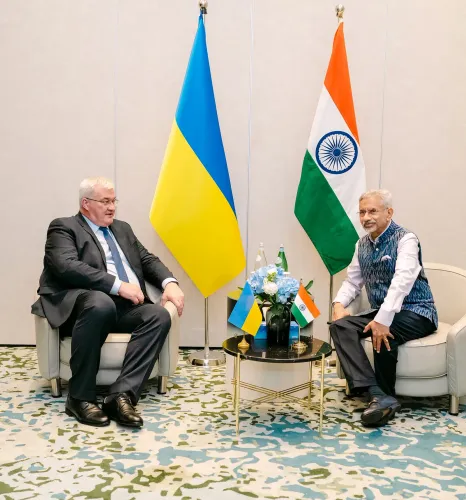
Jaishankar meets Ukraine FM Sybiha at UN days after Modi-Putin talks
Synopsis
Days after PM Modi told Putin that the world needs to move 'from endless war to an end to the war,' EAM Jaishankar sat down with Ukraine's FM Sybiha at the UN — a calculated signal that India is keeping diplomatic lines open on both sides of the conflict, even as the five-year-old war escalates and global pressure for a ceasefire intensifies.
Key Takeaways
Jaishankar met Ukraine FM Andrii Sybiha at the United Nations on 22 September 2026 , covering peace efforts, bilateral cooperation, and Black Sea developments.
The meeting followed PM Modi's talks with President Putin at the 18th BRICS Summit in New Delhi, where Modi called for a cessation of hostilities.
Modi and Putin had also met at the SCO Summit in Bishkek on 31 August — their second bilateral in under two weeks.
The Ukraine war is now in its fifth year , with intensified missile and drone attacks on both sides in recent weeks.
Ukraine FM Sybiha said restoring Black Sea freedom of navigation is 'critical for global food security' and expressed interest in deeper India-Ukraine ties in IT, pharma, and agriculture.
Ukrainian President Zelensky is attending the UNGA summit; Putin is not present.
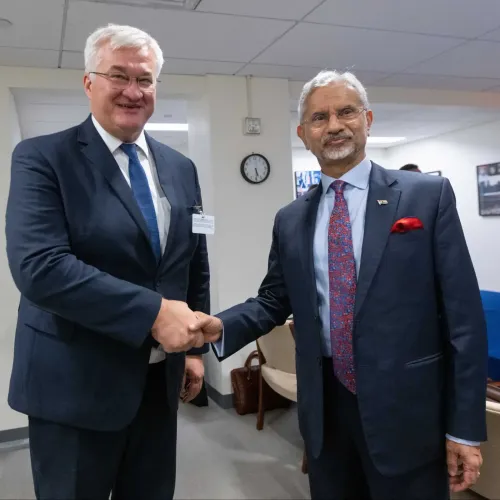
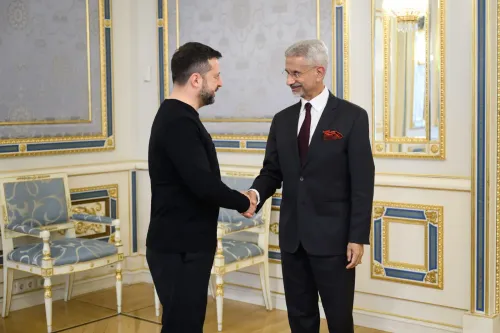
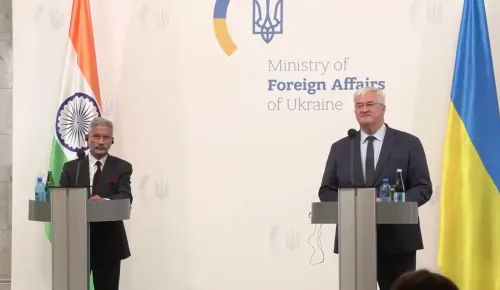
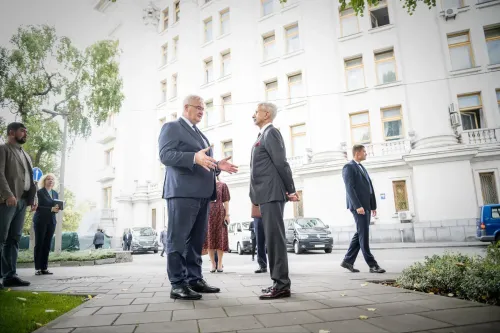
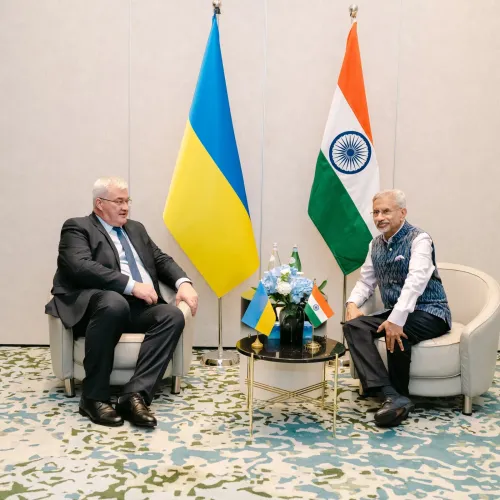
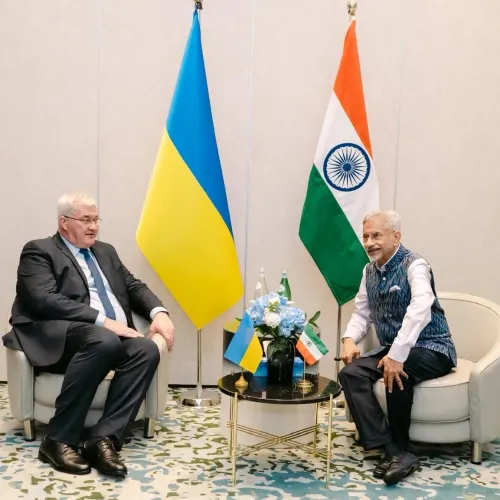
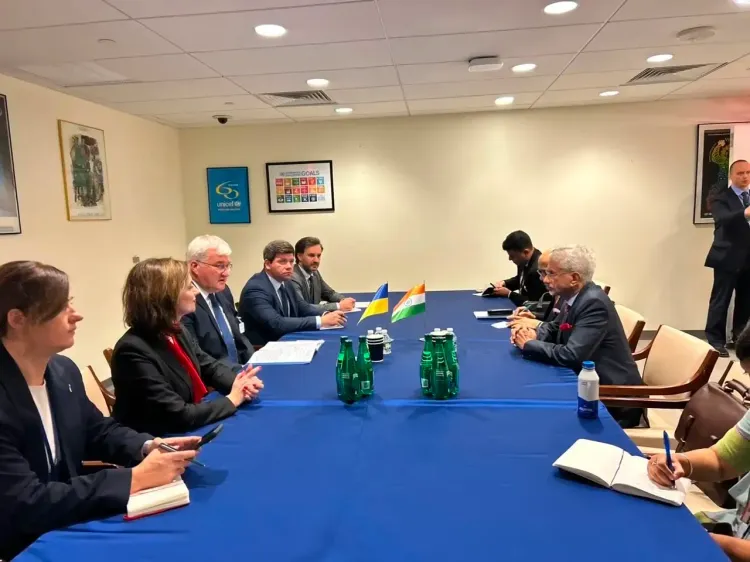
External Affairs Minister S. Jaishankar met with Ukraine's Foreign Minister Andrii Sybiha on the sidelines of the United Nations General Assembly in New York on 22 September 2026, holding talks that spanned peace efforts, bilateral cooperation, and international developments — coming just days after Prime Minister Narendra Modi urged Russian President Vladimir Putin to move toward an end to the war in Ukraine.
What Was Discussed
Sybiha confirmed the meeting on X, saying the two ministers met 'to discuss peace efforts, bilateral cooperation, and international developments.' Jaishankar, in his own X post, said, 'Our conversation focused on developments over the past few weeks.' Beyond the conflict, the talks touched on the situation in the Black Sea, bilateral business ties, and preparations for an upcoming intergovernmental commission meeting with a 'strong business component' focused on innovation.
Sybiha specifically highlighted the economic stakes of the Black Sea crisis: 'We spoke about the situation in the Black Sea and its market implications. Restoring freedom of navigation is critical for global food security.' He added that Ukraine values India's engagement and is keen to build partnerships in science, education, technology, agriculture, IT, and pharmaceuticals.
The Modi-Putin Meeting That Set the Stage
The Jaishankar-Sybiha meeting follows closely on PM Modi's encounter with Putin on the sidelines of the 18th BRICS Summit in New Delhi earlier this month, where Modi once again pressed for dialogue and diplomacy as the path to resolving the conflict. Just weeks before that, the two leaders had also met at the 26th Shanghai Cooperation Organisation (SCO) Summit in Bishkek, Kyrgyzstan on 31 August — their second meeting in less than a fortnight.
At the SCO Summit, Modi had stated plainly: 'We need to move from endless war to an end to the war, to a cessation of hostilities. Every day that the war continues, humanity is, in effect, set back a step, whilst every step towards peace gives all of humanity real hope for peace.'
The War's Escalating Toll
The Ukraine war, now in its fifth year following Russia's full-scale invasion in 2022, has intensified in recent weeks. Russia has continued a daily barrage of missiles and drones targeting Ukrainian territory, while Ukraine has struck back deep inside Russia, hitting petroleum infrastructure and economic facilities. The conflict has severely disrupted Black Sea shipping — a critical artery for global foodgrain and fertiliser exports from both Ukraine and Russia — affecting vulnerable nations dependent on those supplies.
India's Balancing Act at the UN
India's diplomatic positioning is under close international watch this week as Ukrainian President Volodymyr Zelensky attends the General Assembly summit in New York, while Putin is notably absent. New Delhi has maintained strategic ties with Moscow — a legacy of Cold War-era partnerships — while simultaneously engaging Kyiv and signalling support for a negotiated settlement. This dual engagement, critics argue, reflects India's longstanding doctrine of strategic autonomy, though some Western partners have pressed New Delhi for a clearer stance. Jaishankar's meeting with Sybiha signals that India is keeping both channels open as global pressure for a ceasefire mounts.
With the UNGA session providing a rare convergence of global leaders, the coming days are likely to produce further diplomatic contacts on the Ukraine file — and India's voice, given its ties to both sides, will be closely scrutinised.
Point of View
Jaishankar with Sybiha at the UN — are a textbook display of strategic autonomy, but the question is whether they amount to meaningful leverage or merely managed ambiguity. New Delhi has for years positioned itself as a potential peace broker, yet no Indian-led initiative has materialised. With the war entering its fifth year and both sides escalating, India's credibility as a neutral interlocutor depends on whether it can translate access to both capitals into a concrete diplomatic proposal — something it has so far declined to do. The Black Sea food security angle, raised by Sybiha, is a pressure point India cannot ignore given its own import dependencies and obligations to the Global South.
NationPress
22 Sept 2026
Frequently Asked Questions
Why did EAM Jaishankar meet Ukraine's Foreign Minister Sybiha at the UN?
EAM S. Jaishankar met Ukrainian Foreign Minister Andrii Sybiha on 22 September 2026 on the sidelines of the United Nations General Assembly to discuss peace efforts, bilateral cooperation, and international developments. The meeting came days after PM Modi urged President Putin to pursue a cessation of hostilities at the BRICS Summit.
What did PM Modi tell Putin at the BRICS Summit about the Ukraine war?
At the 18th BRICS Summit in New Delhi, PM Modi reiterated that dialogue and diplomacy are the way forward and that India stands ready to assist in peace efforts. He had earlier told Putin at the SCO Summit in Bishkek: 'We need to move from endless war to an end to the war, to a cessation of hostilities.'
What is the significance of the Black Sea in the Ukraine conflict?
The Black Sea is the primary export route for foodgrains and fertilisers from both Ukraine and Russia, and the ongoing war has severely disrupted supplies to vulnerable countries. Ukraine FM Sybiha said restoring freedom of navigation in the Black Sea is 'critical for global food security.'
What areas of bilateral cooperation did India and Ukraine discuss?
Beyond the conflict, the two sides discussed preparations for an upcoming intergovernmental commission meeting with a focus on business and innovation. Ukraine expressed interest in building active partnerships with India in science, education, technology, agriculture, IT, and pharmaceuticals.
What is India's position on the Russia-Ukraine war?
India has maintained a position of strategic autonomy, engaging both Moscow and Kyiv diplomatically while calling for dialogue, diplomacy, and a negotiated settlement. New Delhi has declined to condemn Russia outright at international forums, but has repeatedly stressed the need to end the conflict and has offered to assist in peace efforts.