Jaishankar in Kyiv: India ready to help end Russia-Ukraine war
Synopsis
India's top diplomat landed in Kyiv with a message that goes beyond bilateral courtesy: New Delhi is willing to play an active role in ending a war it has so far observed from the sidelines. With an Indian national killed in Kyiv just days earlier and Indian seafarers caught in the crossfire at sea, Jaishankar's visit signals that the conflict is no longer a distant geopolitical abstraction for India.
Key Takeaways
Jaishankar visited Kyiv on 3 September and met Ukrainian Foreign Minister Andrii Sybiha .
India declared it is ready to assist 'in any manner' to help end the Russia-Ukraine conflict , now in its fifth year.
An Indian national was killed in a Kyiv attack just two days before the visit.
India has delivered 19 consignments of humanitarian aid totalling 160 tonnes to Ukraine.
Jaishankar raised concerns over attacks on commercial shipping and their impact on Global South nations.
Jaishankar invited Sybiha to India for the next Intergovernmental Commission meeting; a meeting with President Zelensky was also scheduled for the same day.
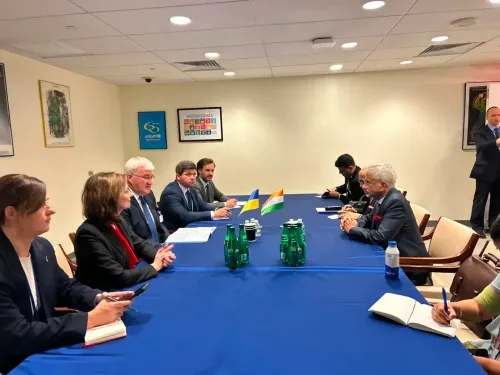
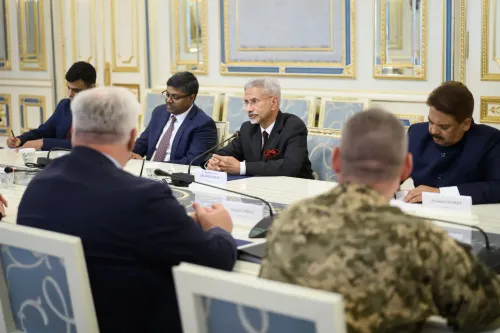
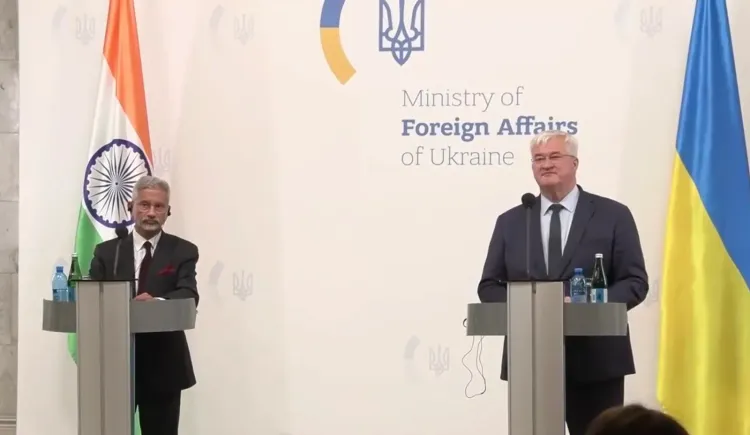
External Affairs Minister S. Jaishankar on Thursday, 3 September declared in Kyiv that India is prepared to assist in any capacity to bring the Russia-Ukraine conflict to an end, invoking Prime Minister Narendra Modi's recent call that 'endless war must now give way to the end of war.' The statement came during Jaishankar's meeting with Ukrainian Foreign Minister Andrii Sybiha, marking a significant diplomatic signal as the war enters its fifth year.
What Jaishankar Said in Kyiv
'Just two days ago in Bishkek, Prime Minister Modi declared that endless war must now give way to the end of war. Every passing day of conflict only means more deaths and more destruction. Understandably, it is for the parties involved to find a way. But if India can be of any help, in any manner, we are ready,' Jaishankar stated, describing this as the 'core' of his discussion with Minister Sybiha.
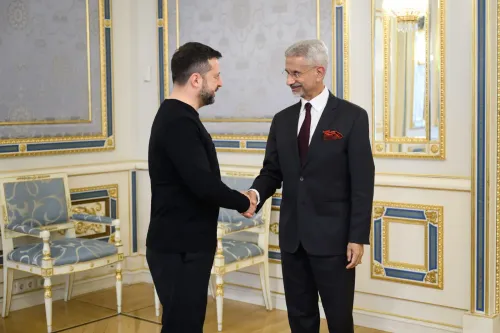
Jaishankar acknowledged that his Kyiv visit carries a bilateral purpose but is framed against the broader backdrop of a war that has been ongoing since 2022. He also confirmed plans to meet President Volodymyr Zelensky later the same day to convey Prime Minister Modi's personal greetings.
Indian National Killed in Kyiv Attack
Jaishankar drew attention to a deeply personal dimension of the conflict for India: 'Only two days ago, an Indian national was also killed in an attack in Kyiv. We join in mourning every life lost and convey our deepest sympathy to every affected family.' The death underscores the direct human cost the war is exacting on Indian nationals present in Ukraine, including a significant number of students.
Jaishankar thanked Ukrainian authorities for the care extended to Indian students currently studying in Ukraine and noted that academic and scientific institution linkages between the two countries also featured in the discussions.
Shipping, Food, and Global South Concerns
The EAM raised the impact of the conflict on commercial shipping, noting that Indian seafarers serving on vessels of multiple flags have been among the casualties. He stressed that disruptions to maritime trade are generating cascading fuel, fertiliser, and food shortages across nations of the Global South — a concern India has consistently highlighted in multilateral forums.
'The impact on shipping is also significantly affecting many nations of the Global South in a variety of ways, leading to fuel, fertiliser, and food shortages,' he said.
India's Humanitarian Assistance to Ukraine
India has so far delivered 19 consignments of humanitarian aid to Ukraine, totalling 160 tonnes of assistance comprising generator sets, medicines, and medical equipment, Jaishankar noted. This sustained humanitarian engagement has run alongside India's diplomatic posture of urging dialogue over battlefield resolution.
He also noted that India is developing rapidly in areas such as digital capabilities, innovation, and startups, and flagged these as potential areas for deeper bilateral cooperation with Ukraine going forward.
Diplomatic Timeline and What Comes Next
Jaishankar and Sybiha have maintained regular contact well before this visit, having met in Cyprus (May), France (March), Munich (February), and in Canada and New Delhi in 2025. At the leadership level, Modi and Zelensky last met on the sidelines of the G7 Summit in Evian, France, in June this year.
Jaishankar extended a formal invitation to Minister Sybiha to visit India for the next session of the Intergovernmental Commission, signalling that bilateral engagement is set to deepen regardless of how the conflict evolves. India's position — that this is not an era of war and that solutions will not emerge from the battlefield — remains unchanged, even as New Delhi carefully avoids assigning blame to either side.
Point of View
Refusing to condemn Russia while quietly deepening ties with Ukraine. Jaishankar's Kyiv visit, framed around Modi's Bishkek statement, is a calibrated signal that India wants a seat at any eventual peace table — without pre-committing to a mediator role it may not be able to fill. The death of an Indian national in Kyiv and the seafarer casualties add domestic urgency that makes continued fence-sitting harder to justify politically.
NationPress
19 Oct 2026
Frequently Asked Questions
What did EAM Jaishankar say during his Kyiv visit?
Jaishankar said India is ready to help 'in any manner' to bring the Russia-Ukraine conflict to an end, echoing Prime Minister Modi's statement in Bishkek that 'endless war must now give way to the end of war.' He made the remarks after meeting Ukrainian Foreign Minister Andrii Sybiha on 3 September.
Why is India getting more involved in the Russia-Ukraine conflict?
India has maintained a neutral diplomatic stance since the war began in 2022, but the conflict is increasingly affecting Indian nationals — including a citizen killed in a Kyiv attack days before the visit — and Indian seafarers on commercial vessels. New Delhi also cites the war's impact on Global South nations through fuel, fertiliser, and food shortages.
What humanitarian aid has India sent to Ukraine?
India has provided 19 consignments of humanitarian assistance to Ukraine, totalling 160 tonnes of aid including generator sets, medicines, and medical equipment, according to Jaishankar.
Did Jaishankar meet President Zelensky during the Kyiv visit?
Jaishankar was scheduled to meet President Volodymyr Zelensky later on 3 September to convey Prime Minister Modi's greetings. The two leaders had previously met on the sidelines of the G7 Summit in Evian, France, in June this year.
What is India's official position on the Russia-Ukraine war?
India has consistently maintained that 'this is not an era of war' and that solutions will not emerge from the battlefield. New Delhi has avoided assigning blame to either party while calling for dialogue, and has now signalled a willingness to play an active facilitative role if requested.