Jaishankar in Kyiv: Ukraine conflict needs diplomacy, not oil boycotts
Synopsis
Standing in Kyiv, India's top diplomat told Ukraine and the West something neither wanted to hear: that stopping Russian oil purchases won't end the war. Jaishankar's blunt defence of India's energy calculus — 1.4 billion people, market costs, no apologies — reframes the oil debate as a sovereignty question, not a moral failing.
Key Takeaways
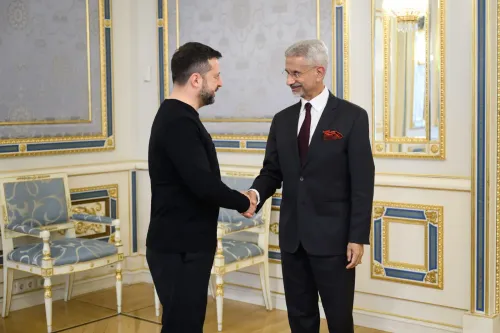
Jaishankar visited Kyiv on 3 September and held talks with Ukrainian FM Andrii Sybiha .
Jaishankar stated the Russia-Ukraine conflict , now in its fifth year , will be resolved through diplomacy and negotiation , not oil boycotts.
India has continued buying Russian crude , citing the energy needs of 1.4 billion people and market-driven costs.
Bilateral talks covered education, health, agriculture, digital, innovation, diplomatic training , and development cooperation .
Jaishankar conveyed India's concern for the safety of commercial shipping and seafarers amid the ongoing conflict.
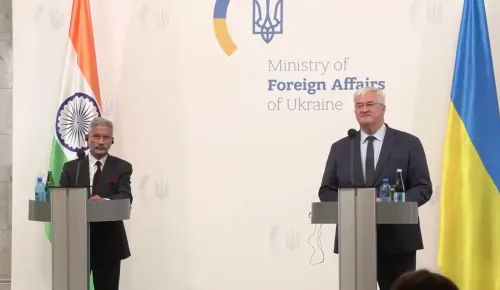
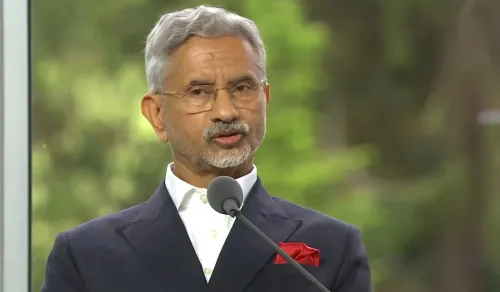
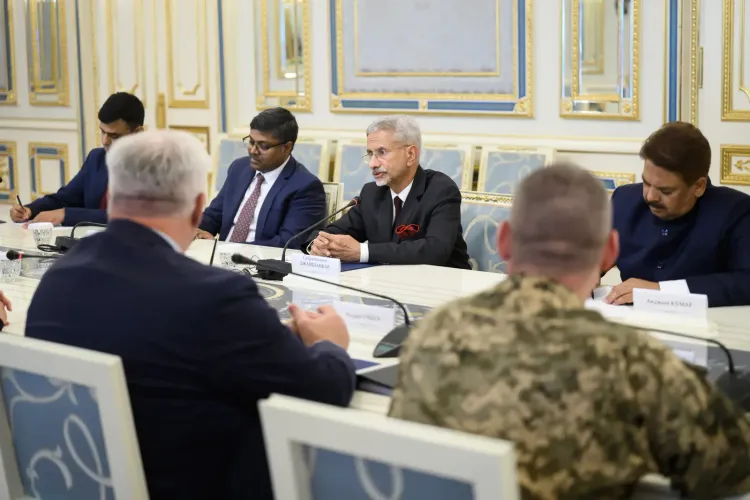
External Affairs Minister S. Jaishankar said on Thursday, 3 September in Kyiv that the Russia-Ukraine conflict — now in its fifth year — can only be resolved through dialogue and diplomacy, not through decisions by nations to buy or stop buying Russian oil, minerals, alumina, or fertilisers. The remarks came at a joint press conference with Ukrainian Foreign Minister Andrii Sybiha following a bilateral meeting in the Ukrainian capital.
Jaishankar's Position on Russian Oil
When asked whether India would reduce purchases of Russian oil if the United States passes legislation imposing sanctions on countries that buy it, Jaishankar was direct. 'I think it's also important that all of you get the challenges of providing for energy for 1.4 billion people at a time when the world energy situation is very, very difficult,' he said. He added that Ukraine has its perspective on India's energy choices, which India respects, and that New Delhi expects others to equally respect India's position.
Jaishankar underscored that the path to ending the conflict runs through negotiation, not economic coercion. 'This conflict will be solved by dialogue, by diplomacy, by negotiation, and that is why it is something we would encourage,' he stated.
India's Energy Calculus
India has continued purchasing Russian crude throughout the conflict, maintaining that the decision is grounded in the imperative of securing affordable energy for its population and in market-driven cost considerations. This position has drawn scrutiny from Western governments, though New Delhi has consistently held that energy security for a developing nation of its scale cannot be subordinated to geopolitical pressure.
Notably, this is not the first time Jaishankar has articulated this stance publicly — he has made similar arguments at forums including the G20 and in bilateral engagements with European counterparts. The consistency of the messaging signals a settled policy posture, not an improvised response.
Bilateral Talks: What Was Discussed
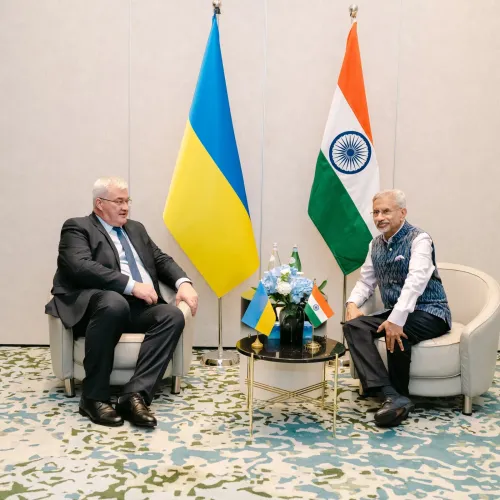
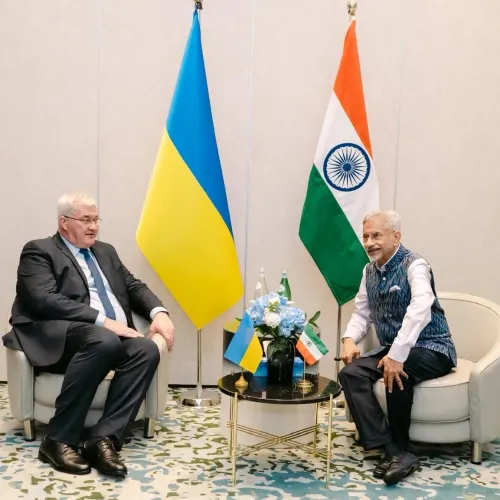
Ahead of the press conference, Jaishankar and Sybiha held a substantive bilateral meeting covering a range of areas beyond the conflict. The two ministers discussed deepening cooperation in education, health, agriculture, digital infrastructure, innovation, diplomatic training, and development cooperation. Sybiha briefed the Indian minister on recent developments in the ongoing conflict and the status of peace negotiations.
Jaishankar also conveyed India's concern about the safety and security of commercial shipping and seafarers — a matter of direct relevance given disruptions in the Black Sea trade corridor that affect Indian vessels and cargo.
Jaishankar's Post on X
Following the meeting, Jaishankar posted on X: 'A pleasure to meet with FM Andrii Sybiha of Ukraine here in Kyiv. Thank him and his team for the hospitality extended. Was updated on the recent developments in the ongoing conflict and peace negotiations. Conveyed the need to ensure the safety and security of commercial shipping and seafarers. Also discussed ways to further strengthen our bilateral relationship, including in the fields of education, health, agriculture, digital, innovation, diplomatic training and development cooperation.'
What Comes Next
The Kyiv visit signals India's intent to maintain active diplomatic engagement with both sides of the conflict — New Delhi has previously held talks with Moscow as well. Whether India's balancing act can translate into a meaningful mediation role remains to be seen, but Thursday's visit reinforces that India is positioning itself as a credible interlocutor rather than a passive bystander.
Point of View
The US, and Europe. By insisting that oil purchases have no bearing on conflict resolution, India is not just defending its energy policy; it is rejecting the Western framework that treats economic coercion as a legitimate peace tool. The subtext is significant: India is telling a potential sanctions coalition that it will not be moved. What mainstream coverage underplays is that India's consistency on this position — repeated across G20 summits, European capitals, and now Kyiv itself — has gradually shifted the conversation from 'why is India buying Russian oil' to 'how does India fit into any eventual peace process.' That is a diplomatic gain, even if it looks like stubbornness from Brussels or Washington.
NationPress
19 Oct 2026
Frequently Asked Questions
What did EAM Jaishankar say about India buying Russian oil?
Jaishankar said India respects Ukraine's perspective on the matter but expects others to equally respect India's position, citing the challenge of securing energy for 1.4 billion people. He argued that the Russia-Ukraine conflict will not be resolved by nations choosing to buy or not buy Russian oil, minerals, or fertilisers.
Why did Jaishankar visit Kyiv?
Jaishankar visited Kyiv on 3 September to meet Ukrainian Foreign Minister Andrii Sybiha for bilateral talks. The meeting covered the status of the ongoing conflict and peace negotiations, as well as cooperation in education, health, agriculture, digital infrastructure, and development.
What is India's official position on the Russia-Ukraine conflict?
India has consistently called for dialogue, diplomacy, and negotiation to resolve the conflict, while maintaining that it will not take sides. New Delhi has continued purchasing Russian oil, framing it as an energy security decision independent of the geopolitical dispute.
Did Jaishankar raise any other issues during the Kyiv visit?
Yes. Jaishankar conveyed India's concern about the safety and security of commercial shipping and seafarers, a reference to disruptions in Black Sea trade routes that affect Indian vessels. He also discussed deepening India-Ukraine bilateral ties across several sectors.
What would happen if the US imposes sanctions on buyers of Russian oil?
Jaishankar did not directly answer whether India would reduce Russian oil purchases under such a scenario, but made clear that India's energy decisions are driven by its own needs and market considerations. He implied that external pressure of this kind would not determine India's policy.