Jaishankar defends India's Russian oil buys, hits back at Europe over arms exports
Synopsis
At a high-profile security forum in Helsinki, Jaishankar didn't just defend India's Russian oil buys — he went on offence, telling European counterparts that no Indian weapon has ever been used to attack a European nation, but the same cannot be said for European arms vis-a-vis India. It is a sharp recalibration of the moral-equivalence debate that the West has tried to pin on New Delhi.
Key Takeaways
Jaishankar defended India's Russian oil purchases at the Kultaranta Talks in Helsinki on 12 June , citing cost and availability.
He noted that when European nations shifted to Middle Eastern oil, Russian crude became the available alternative for India.
Jaishankar pointedly stated that no European country has been attacked with Indian weapons , but European-supplied arms have been used against India.
India has consistently called for dialogue and diplomacy to resolve the Russia-Ukraine conflict, framing its position as strategic autonomy.
India's Russian crude imports have risen significantly since February 2022 , making it one of Russia's largest oil customers.
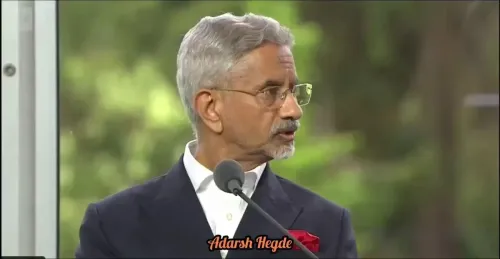
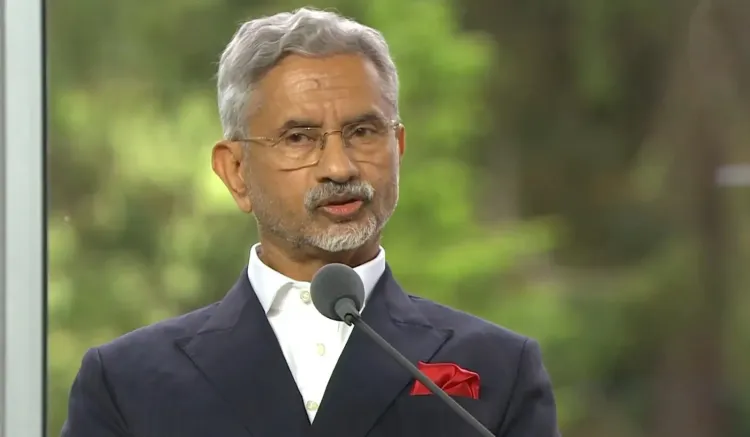
External Affairs Minister S. Jaishankar on Thursday, 12 June mounted a pointed defence of India's purchase of Russian oil at the Kultaranta Talks in Helsinki, arguing that New Delhi's energy decisions are driven by cost and availability — and turned the tables on European critics by highlighting that European-supplied weapons have been used to attack India.
What Jaishankar Said on Russian Oil
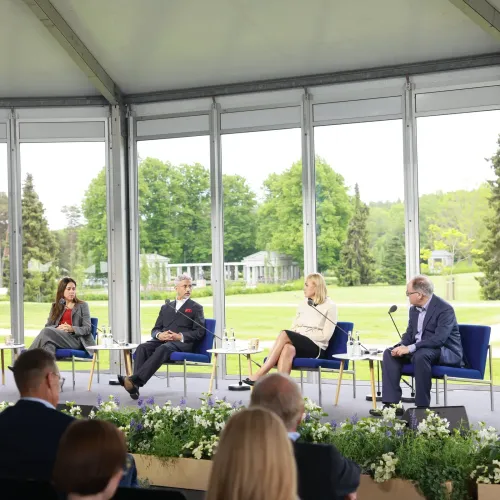
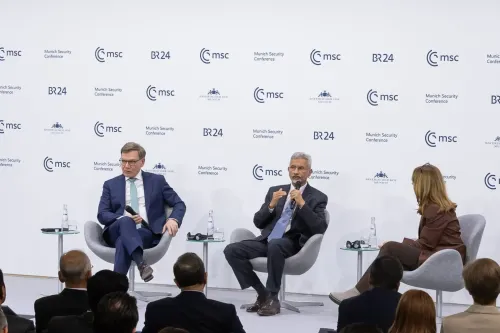
Speaking on the panel 'Emerging Powers and the New Geopolitical Competition' alongside Finnish Foreign Minister Elina Valtonen and UAE Assistant Foreign Minister Lana Nusseibeh, Jaishankar pushed back firmly against the characterisation that India is 'too sympathetic to Russia' or 'too willing to buy Russian oil.'
'I buy oil based on cost and availability. So, at that point in time, much of the oil available in the market was Russian because Europeans were essentially buying oil from the Middle East, which was our traditional supplier. So, circumstances pushed us in a certain direction,' he said.
The minister's remarks underline India's consistent position: energy import decisions are guided by national interest, citizen welfare, and domestic energy security — not geopolitical alignment.
The Sharp Rebuke on European Arms Exports
Jaishankar's most pointed remarks came when he raised the issue of European arms exports and their downstream consequences for India's own security.
'Since you spoke about moral ambiguity, I would say that no European country has been attacked with Indian weapons. I wish I could say that for European weapons vis-a-vis India. So, keep that in mind,' he said.
Asked to elaborate, he pressed the point further: 'Europeans sell weapons, which are used to attack India, not now, but for many years. We Indians have never done anything to endanger Europe. I think that's a reasonable point.'
The remarks are a direct reference to European-origin military hardware that has, over the decades, found its way into arsenals used against Indian forces — a long-standing grievance in New Delhi's strategic community.
India's Broader Stance on the Russia-Ukraine Conflict
India has consistently called for dialogue and diplomacy to resolve the Russia-Ukraine conflict, declining to join Western-led condemnation votes at the United Nations. New Delhi has framed its position as one of strategic autonomy, not tacit endorsement of Moscow.
Notably, this is not the first time Jaishankar has deployed this line of argument. He has repeatedly used international forums to reframe questions about India's Russia ties as a reflection of double standards in Western foreign policy discourse.
Context and What It Signals
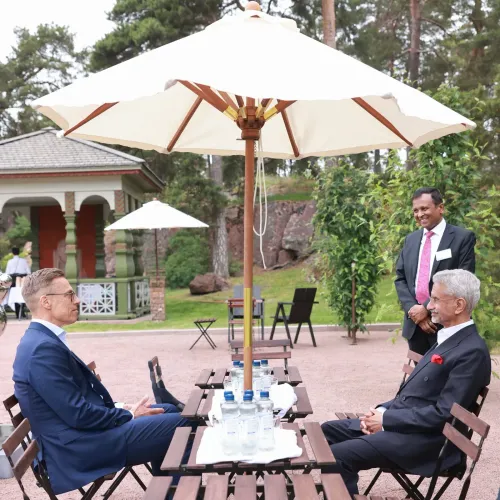
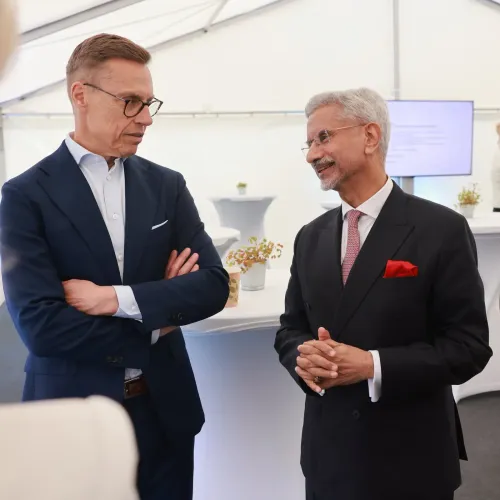
The Kultaranta Talks, hosted annually by the Finnish President, are a high-level forum on international security and foreign policy. Jaishankar's presence — and his willingness to challenge European interlocutors on their home turf — signals that India is increasingly comfortable asserting its independent foreign policy posture in Western capitals, not just in the Global South.
This comes amid ongoing pressure from the European Union and the United States on countries that have maintained economic ties with Russia since the February 2022 invasion of Ukraine. India's Russian crude imports have risen sharply since then, making it one of Russia's largest oil customers.
How Europe responds to Jaishankar's arms-export challenge — and whether it prompts any formal diplomatic follow-up — will be worth watching in the weeks ahead.
Point of View
But saying it in Helsinki, to a Finnish counterpart whose country only recently joined NATO, carries a different charge. What mainstream coverage often misses is the structural point: India's Russian oil dependency post-2022 was partly a consequence of European countries vacating the Middle Eastern market, not a purely ideological choice. The harder question — whether India's strategic autonomy posture is sustainable as the war drags on and Western pressure intensifies — remains unanswered, and Jaishankar's sharp rhetoric, however effective in a panel setting, does not resolve it.
NationPress
24 Sept 2026
Frequently Asked Questions
Why did Jaishankar defend India buying Russian oil at Helsinki?
Jaishankar argued that India's oil purchases are driven by cost and availability, not political alignment. He noted that European nations had moved to Middle Eastern oil after the Russia-Ukraine conflict, displacing India from its traditional suppliers and making Russian crude the available alternative.
What did Jaishankar say about European arms exports?
He stated that no European country has ever been attacked with Indian weapons, but European-supplied arms have been used to attack India over many years. He described this as a 'reasonable point' when the question of moral ambiguity in foreign policy was raised.
What is India's official position on the Russia-Ukraine conflict?
India has consistently called for dialogue and diplomacy to resolve the conflict, declining to join Western-led condemnation votes at the United Nations. New Delhi frames its stance as strategic autonomy guided by national interest, not endorsement of any party.
What is the Kultaranta Talks forum?
The Kultaranta Talks is an annual high-level international security and foreign policy forum hosted in Finland. Jaishankar participated in a panel on 'Emerging Powers and the New Geopolitical Competition' alongside Finnish Foreign Minister Elina Valtonen and UAE Assistant Foreign Minister Lana Nusseibeh.
How much Russian oil has India been buying since the Ukraine war began?
India's imports of Russian crude have risen sharply since Russia's invasion of Ukraine in February 2022, making India one of Russia's largest oil customers globally, according to energy trade data.