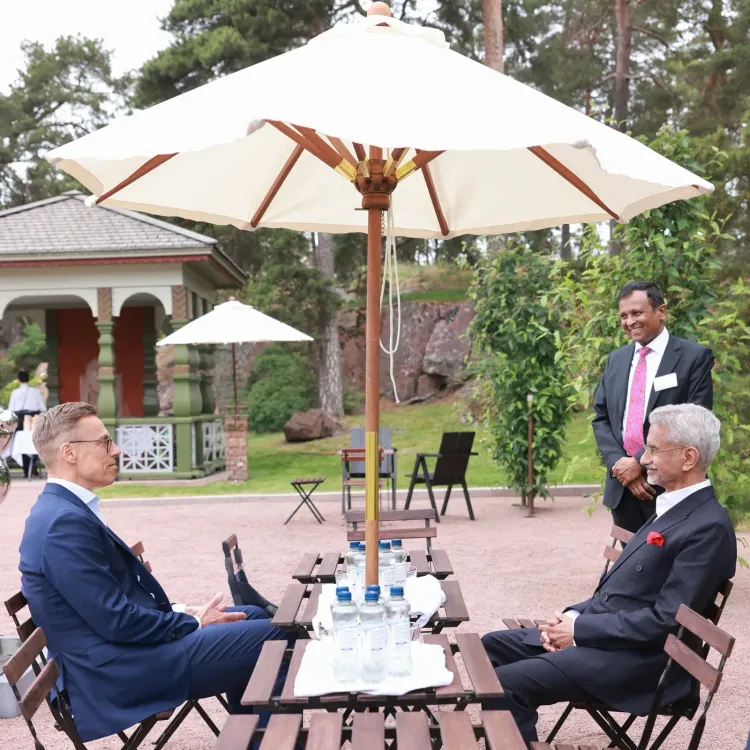
Jaishankar meets Finnish President Stubb in Helsinki, India hailed as global force
Synopsis
Finnish President Alexander Stubb publicly called India an ‘influential actor’ whose views are ‘important to hear’ — a pointed endorsement from a European head of state as EAM Jaishankar attended the Kultaranta Talks in Helsinki. The meeting covered Ukraine, the Middle East, G7, and India’s energy stance, underscoring New Delhi’s growing role as a diplomatic pivot point between the Global South and the West.
Key Takeaways
Jaishankar met Finnish President Alexander Stubb on 12 June at the Kultaranta Talks in Helsinki .
Stubb described India as an ‘influential actor’ and said its views are ‘important to hear’ on global issues.
Talks covered Ukraine , the Middle East , the Persian Gulf , and the upcoming G7 summit .
Jaishankar reaffirmed India’s energy choices are driven by national interest — affordability and availability.
India and Finland committed to advancing their Strategic Partnership in Digitalization and Sustainability.
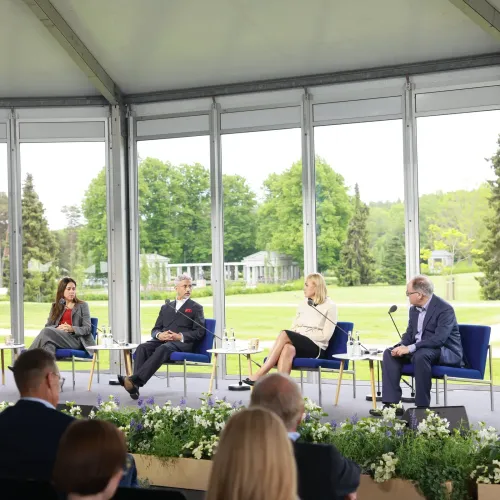
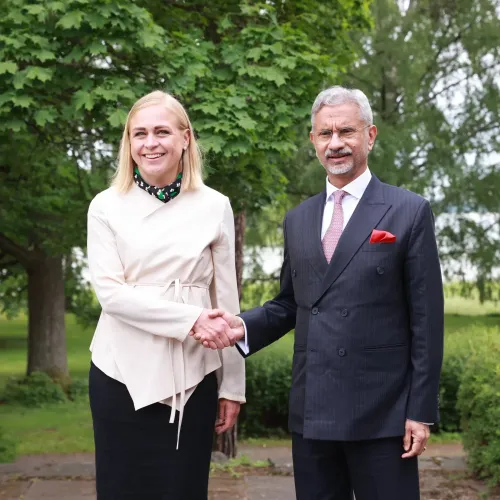
Jaishankar also participated in a panel on ‘Emerging Powers and the New Geopolitical Competition’ with Finnish FM Elina Valtonen and UAE’s Lana Nusseibeh .
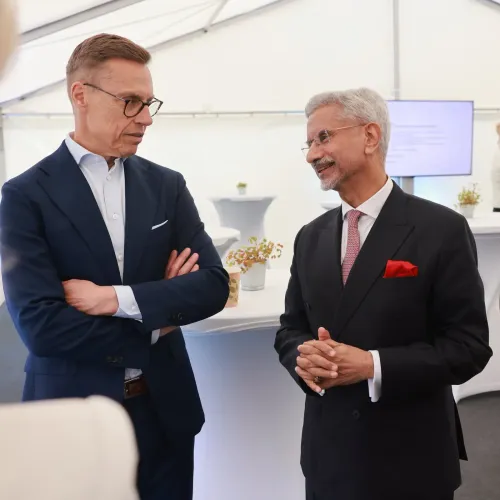
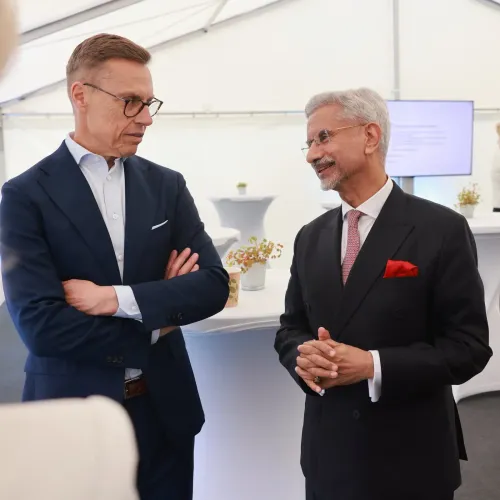
External Affairs Minister S. Jaishankar met Finnish President Alexander Stubb on the sidelines of the Kultaranta Talks in Helsinki on 12 June, with Stubb describing India as an ‘influential actor’ on the world stage whose perspectives carry significant weight. The meeting covered a broad diplomatic agenda, from the Middle East and the Persian Gulf to the ongoing war in Ukraine and the forthcoming G7 summit.
What Stubb Said
Following the bilateral, President Stubb posted on X: ‘We met today at Kultaranta with India’s Foreign Minister S. Jaishankar. We discussed the situation in the Middle East and the Persian Gulf, efforts to end Russia’s war of aggression in Ukraine, and the upcoming G7 summit. India is an influential actor whose views are important to hear.’ The phrasing is notable — a European head of state publicly affirming India’s centrality to global diplomatic conversations, not merely as a regional power but as a consequential voice in multilateral affairs.
Jaishankar’s Position on Key Issues
In his own post on X, EAM Jaishankar said he was ‘pleased to meet President Alexander Stubb’ and that both sides ‘underscored the importance of diplomacy in navigating an increasingly uncertain global environment.’ He also reaffirmed that India and Finland remain committed to advancing their Strategic Partnership in Digitalization and Sustainability, while strengthening coordination in multilateral forums on issues of shared interest.
During a panel discussion at the Kultaranta Talks alongside Finnish Foreign Minister Elina Valtonen and UAE Minister of State for Foreign Affairs Lana Nusseibeh, Jaishankar addressed the theme of ‘Emerging Powers and the New Geopolitical Competition.’ He noted that ongoing conflicts are imposing costs and triggering changes far beyond their immediate regions, and stressed that the international community must continue efforts to mitigate consequences and create conditions for diplomacy.
India’s Energy Stance and Supply Chain Priorities
Jaishankar reiterated that India’s energy choices are guided by national interest, with procurement decisions based on affordability and availability — a consistent position New Delhi has maintained amid Western pressure over Russian energy imports. He also emphasised the importance of de-risking and diversifying supply chains to build resilience in a volatile global environment.
The EAM highlighted the centrality of India’s relations with the Gulf region, underpinned by strong people-to-people ties, energy cooperation, and a growing strategic and defence partnership. This comes amid India’s intensifying diplomatic engagement across Europe and West Asia as it navigates competing geopolitical alignments.
Broader Significance
The Kultaranta Talks, hosted annually by the Finnish President, are a high-level foreign and security policy forum — making Jaishankar’s participation a signal of India’s deepening engagement with Nordic and European diplomatic circles. Notably, this meeting follows a period of heightened Indian diplomatic activity, with New Delhi positioning itself as an indispensable interlocutor in global conflict resolution and trade architecture discussions. The next steps in the India-Finland Strategic Partnership, particularly on digitalisation and sustainability, are expected to be formalised through follow-up diplomatic channels.
Point of View
Rather than demanding alignment. For India, the Kultaranta appearance is part of a deliberate strategy: be present in every significant multilateral forum without being bound by any bloc. Jaishankar’s energy remarks are the tell — even in Helsinki, India did not soften its position on Russian oil. The West is increasingly accepting that posture, which is itself a measure of how much India’s leverage has grown.
NationPress
26 Oct 2026
Frequently Asked Questions
What was discussed at the Jaishankar-Stubb meeting in Helsinki?
EAM Jaishankar and Finnish President Stubb discussed the situation in the Middle East and the Persian Gulf, efforts to end Russia’s war in Ukraine, and the upcoming G7 summit at the Kultaranta Talks on 12 June. Both leaders also reaffirmed the India-Finland Strategic Partnership on Digitalization and Sustainability.
What did Finnish President Stubb say about India?
President Stubb described India as an ‘influential actor’ on the global stage and said its views are ‘important to hear,’ in a post on X following the bilateral meeting. The remark signals growing European recognition of India’s diplomatic weight.
What is India’s position on energy as stated by Jaishankar in Helsinki?
EAM Jaishankar reiterated that India’s energy choices are guided by national interest, with purchases based on affordability and availability. This is consistent with New Delhi’s stated position on continuing to buy Russian oil despite Western pressure.
What are the Kultaranta Talks?
The Kultaranta Talks are an annual high-level foreign and security policy forum hosted by the President of Finland. Jaishankar’s participation alongside Finnish and UAE foreign ministers signals India’s deepening engagement with Nordic and European diplomatic circles.
Who else did Jaishankar meet at the Kultaranta Talks?
Jaishankar participated in a panel discussion with Finnish Foreign Minister Elina Valtonen and UAE Minister of State for Foreign Affairs Lana Nusseibeh on the theme of ‘Emerging Powers and the New Geopolitical Competition.’