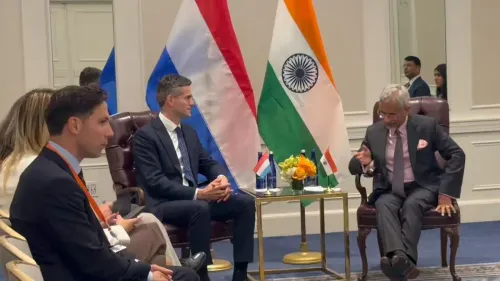
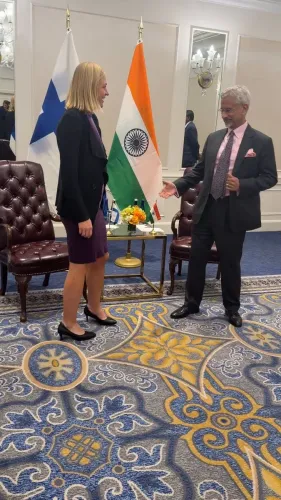
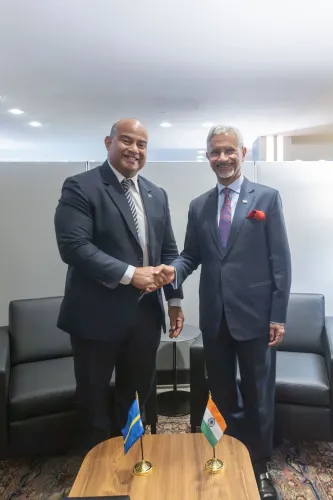
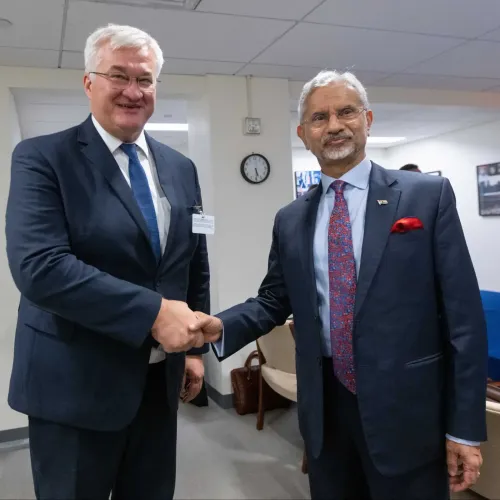
Jaishankar meets Estonia FM Tsahkna at UNGA81
Synopsis
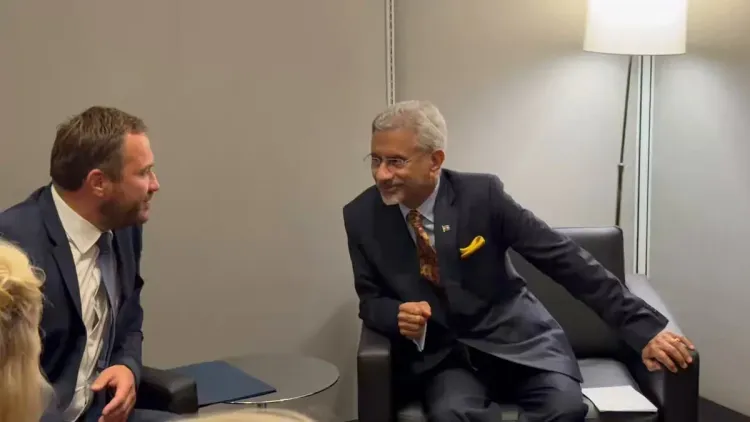
Union External Affairs Minister Dr. S. Jaishankar met Estonian FM Tsahkna on the sidelines of UNGA81 in New York on September 25, discussing the ongoing Ukraine conflict and multilateral cooperation, continuing India's pattern of European outreach at the UN.
Key Takeaways
Jaishankar met Estonian Foreign Minister Tsahkna on the sidelines of UNGA81 on September 25, 2026 .
The two ministers discussed the ongoing Ukraine conflict and its global implications.
Multilateral cooperation was also on the agenda, reflecting shared stakes at the United Nations.
Estonia is a Baltic EU and NATO member aligned with the Western consensus on Ukraine, contrasting with India's call for dialogue without sanctions.
India has used UNGA sideline bilaterals since 2022 to engage European counterparts on the war while maintaining its strategic autonomy position.
The meeting continues New Delhi's deliberate outreach to smaller European states alongside its larger partnerships with Russia and the West.
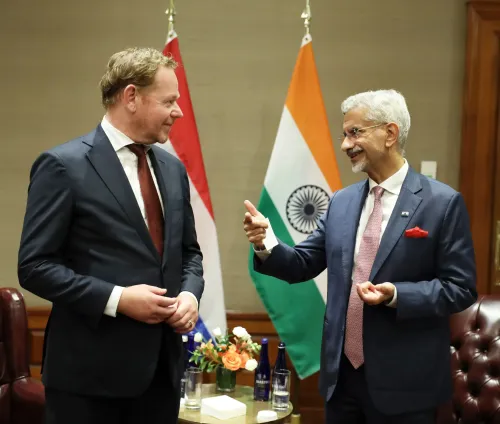
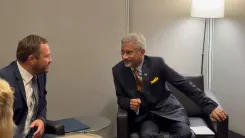
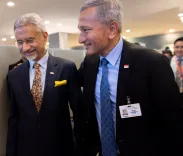
On the sidelines of the 81st United Nations General Assembly, Union External Affairs Minister Dr. S. Jaishankar sat down with Estonian Foreign Minister Tsahkna on Friday, September 25, 2026 — a meeting that placed the grinding realities of the Ukraine conflict squarely at the centre of India-Estonia diplomacy.
Ukraine on the table at New York
Dr. Jaishankar noted that the two sides 'talked about the ongoing Ukraine conflict and its implications' — a formulation India has used consistently at the UN since Russia's full-scale invasion in 2022. Estonia, a Baltic EU and NATO member, sits firmly within the Western consensus that has demanded Russian withdrawal and imposed sweeping sanctions. India's position has been markedly different: advocating dialogue and diplomacy without endorsing punitive measures against Moscow.
That gap makes conversations like this one diplomatically significant. New York's UNGA week compresses months of bilateral calendars into days, and the sidelines have become India's preferred forum for taking the temperature of European capitals on the war's trajectory.
Estonia, digital governance, and multilateral cooperation
Estonia punches well above its weight in global discussions on digital governance, cybersecurity, and transatlantic security architecture — areas of growing relevance to India's own digital ambitions. The two ministers also discussed 'multilateral cooperation', signalling that the conversation ranged beyond Ukraine to shared stakes at the UN and other international bodies.
India's sustained engagement with smaller European states — alongside its larger partnerships with both Russia and the West — reflects a strategic autonomy calculus that New Delhi has refined over four years of wartime diplomacy. Each bilateral adds a strand to that web.
India's UNGA sidelines pattern
The Jaishankar-Tsahkna meeting fits a now-established template. Since 2022, every UNGA high-level week has seen Indian ministers hold multiple European bilaterals on Ukraine, carefully listening, registering concerns, and restating India's call for a negotiated peace — without shifting the foundational position. For European interlocutors, these meetings matter because India's voice in the Global South carries weight no Western coalition can replicate.
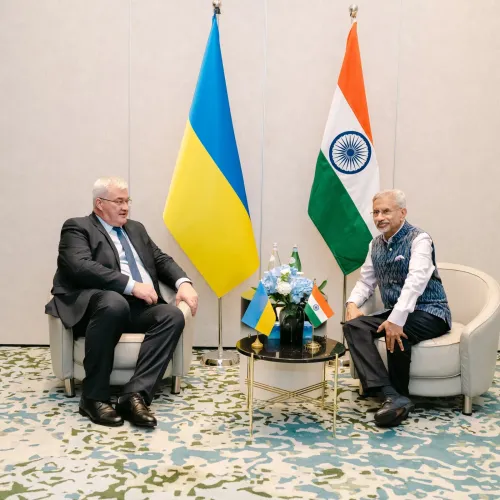
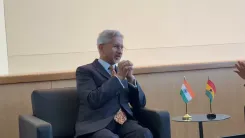
The tricolour and the Estonian blue-black-white together on Jaishankar's post are a small but deliberate signal: New Delhi is talking to everyone.
As the UNGA81 high-level week unfolds, watch for any broader India-EU signals that cite these smaller bilateral touchpoints — they often shape the language of larger joint statements to come.
Point of View
If quiet, listening post for New Delhi. India's consistent refusal to endorse sanctions while sustaining these bilaterals has allowed it to present itself as a potential mediator without committing to one. Each such meeting marginally deepens that credibility with Western capitals, even as the core gap in positions remains unresolved.
NationPress
25 Sept 2026
Frequently Asked Questions
Why did Jaishankar meet Estonia's FM at UNGA81?
Dr. S. Jaishankar met Estonian Foreign Minister Tsahkna on the sidelines of the 81st UN General Assembly in New York to discuss the ongoing Ukraine conflict and multilateral cooperation matters of shared interest to both nations.
What is India's position on the Ukraine conflict at the United Nations?
India has consistently advocated dialogue and diplomacy as the path to resolving the Ukraine conflict, refraining from endorsing Western-led sanctions against Russia while calling for a negotiated peace at successive UN sessions since the full-scale invasion began in 2022.
Why does Estonia matter in the context of the Ukraine war?
Estonia is a Baltic state and a member of both the European Union and NATO, placing it firmly within the Western bloc that has imposed sanctions on Russia and strongly backed Ukraine. Its perspective carries weight in both Brussels and transatlantic security discussions.
What is India's broader diplomatic strategy with European states on Ukraine?
India has used UNGA sidelines and bilateral engagements since 2022 to maintain open channels with European states across the spectrum, reinforcing its strategic autonomy position while signalling willingness to facilitate dialogue — a posture that preserves ties with both Russia and the West.