Jaishankar discusses Ukraine, Gulf crisis with EU's Kallas at G20
Synopsis
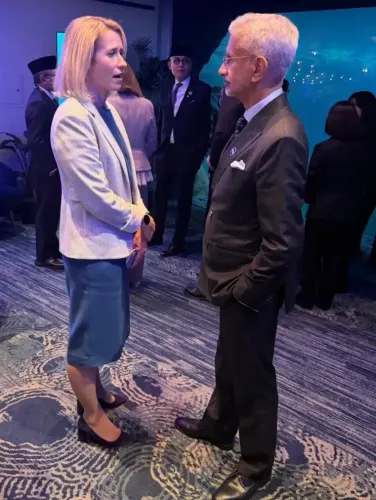
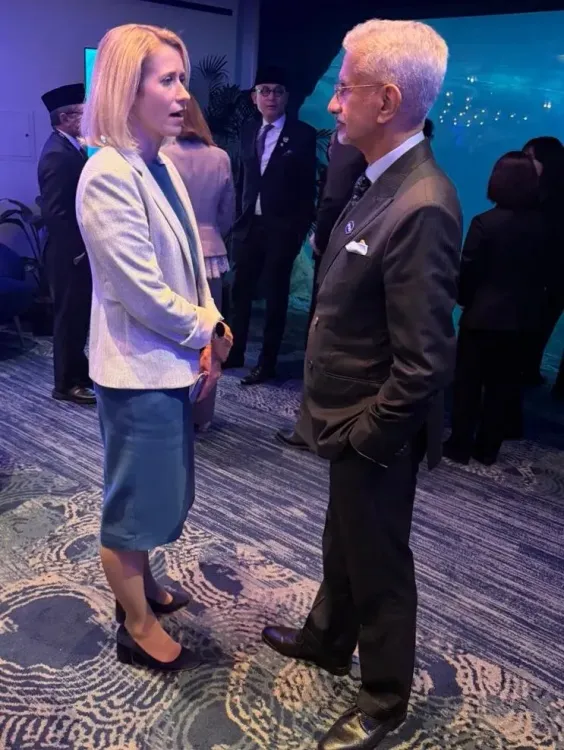
External Affairs Minister Dr. S. Jaishankar met EU High Representative Kaja Kallas at the G20 in Atlanta on October 31, discussing the Ukraine conflict and the Gulf situation — a meeting that underscores India's sustained diplomatic engagement with Europe on the world's most volatile crises.
Key Takeaways
Jaishankar met EU HRVP Kaja Kallas on the sidelines of the G20 in Atlanta on October 31, 2026 .
Talks covered two major global flashpoints: the Ukraine conflict and the Gulf situation .
India and the EU hold divergent positions on Russia-Ukraine but maintain active high-level diplomatic dialogue.
India's strategic stakes in the Gulf — including a diaspora of roughly nine million and major energy imports — make Gulf stability a direct national-interest issue.
The G20 platform has historically served India as a venue for bridge-building on contentious global conflicts, including during its 2023 New Delhi presidency .
The meeting reflects India's 'strategic autonomy' doctrine: engaging all major powers without binding alignment.
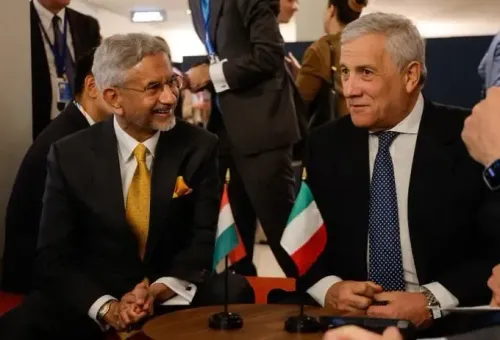
On the sidelines of the G20 meetings in Atlanta, Union External Affairs Minister Dr. S. Jaishankar sat down with European Union High Representative for Foreign Affairs and Security Policy Kaja Kallas on Saturday, October 31, 2026 — working through two of the world's most consequential flashpoints: the grinding war in Ukraine and the volatile situation in the Gulf.
Two crises, one conversation
Dr. Jaishankar confirmed the meeting on X, writing: 'Discussed the Ukraine conflict and the Gulf situation with EU HRVP @kajakallas @g20org #Atlanta.' Short on words, heavy on significance. The two officials represent blocs whose positions on both crises carry global weight — and whose alignment, or lack of it, shapes the diplomatic architecture around each conflict.
On Ukraine, the EU has been among Kyiv's firmest backers, imposing sweeping sanctions on Moscow and channelling substantial military and financial support. India has walked a different line — maintaining trade and energy ties with Russia while consistently calling for dialogue and a negotiated settlement. That gap has not prevented engagement; it has, in fact, made it more necessary.
India's Gulf posture meets EU concern
The Gulf dimension adds another layer. India's deep economic and strategic stakes in the region — from energy imports to the roughly nine million-strong Indian diaspora in Gulf states — make any regional escalation a direct national-interest issue. The EU, too, watches Gulf stability closely given energy dependencies and the Mediterranean spillover risks of any wider regional conflict. A shared concern, even if the prescriptions differ.
Atlanta as a diplomatic venue
The G20 platform has long served as a corridor for exactly this kind of consequential bilateral conversation — issues too sensitive or complex for a formal communiqué find space in the margins. India used its own 2023 G20 presidency in New Delhi to broker a leaders' declaration on Ukraine that preserved consensus among members with sharply divergent views, a diplomatic feat that burnished New Delhi's reputation as a bridge-builder. Meeting Kallas in Atlanta continues that pattern: India engaging the EU as a serious interlocutor on global crises, not a peripheral one.
For Dr. Jaishankar, the encounter is consistent with a foreign policy doctrine that prizes 'strategic autonomy' — the freedom to talk to everyone, commit to no single bloc, and keep every channel warm. In a world of hardening alliances, that is both India's strength and its most scrutinised choice.
The question now is whether conversations like this one translate into coordinated diplomatic initiatives — or remain, as they have largely been, a candid exchange between parties who see the same fires and reach for different hoses.
Point of View
A posture New Delhi frames as principled neutrality. That India and the EU can hold a substantive conversation on Ukraine at all, despite their divergence, reflects the diplomatic capital India built during its 2023 G20 presidency. The inclusion of the Gulf on the agenda signals that both sides recognise the risk of a second front diverting global attention and resources. For Dr. Jaishankar personally, such engagements reinforce his identity as one of the most active and visible foreign ministers in India's recent history — a statesman who treats every multilateral venue as an opportunity to shape the narrative rather than react to it.
NationPress
31 Oct 2026
Frequently Asked Questions
What did Jaishankar and Kaja Kallas discuss at the G20 in Atlanta?
They discussed two major global flashpoints: the ongoing Ukraine conflict and the volatile situation in the Gulf region, on the sidelines of the G20 meetings in Atlanta on October 31, 2026.
What is India's position on the Ukraine conflict?
India has maintained strategic autonomy — continuing energy and trade ties with Russia while consistently calling for dialogue and a negotiated settlement, a stance distinct from the EU's strong support for Ukraine.
Why is the Gulf situation important to India?
India has enormous stakes in Gulf stability, including roughly nine million Indian nationals living and working in Gulf states and significant dependence on the region for energy imports.
What is the significance of the G20 as a venue for these talks?
The G20 margins have become a key corridor for sensitive bilateral diplomacy. India leveraged the same platform during its 2023 New Delhi presidency to broker a consensus declaration on Ukraine among members with sharply divergent views.