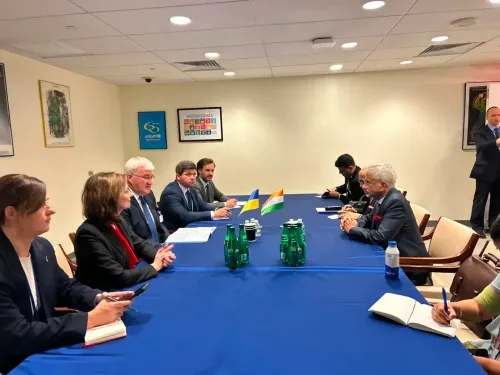
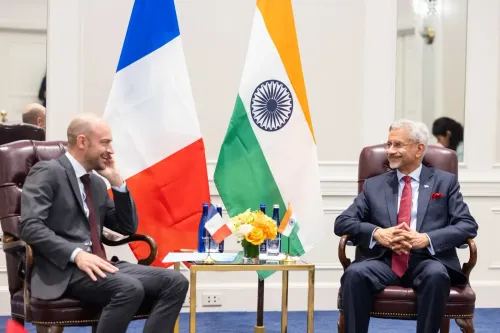
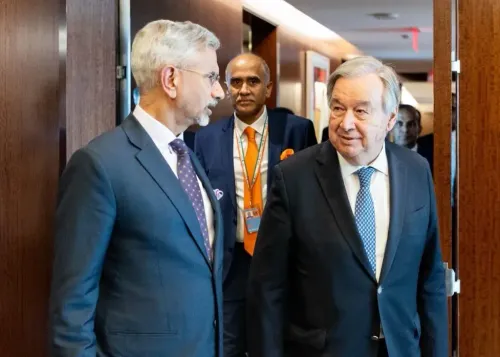
Jaishankar, Italy's Tajani discuss IMEC, Gulf and Ukraine at UN
Synopsis
On the sidelines of the UN General Assembly, EAM Jaishankar and Italy's Deputy PM Tajani brought the India-Middle East-Europe Economic Corridor back into focus — backed now by the EU-India Free Trade Agreement sealed in January. With Italy setting a €20 billion trade target by 2029 and both sides naming the Gulf situation and Ukraine as live concerns, this meeting signals that IMEC is moving from blueprint to live diplomatic priority.
Key Takeaways
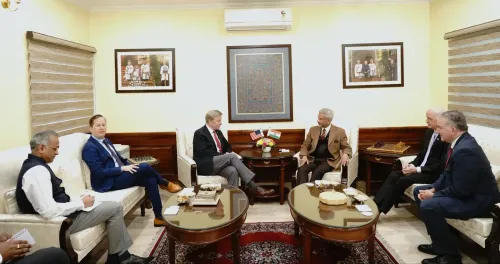
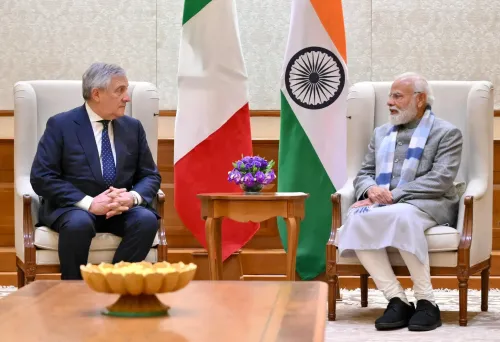
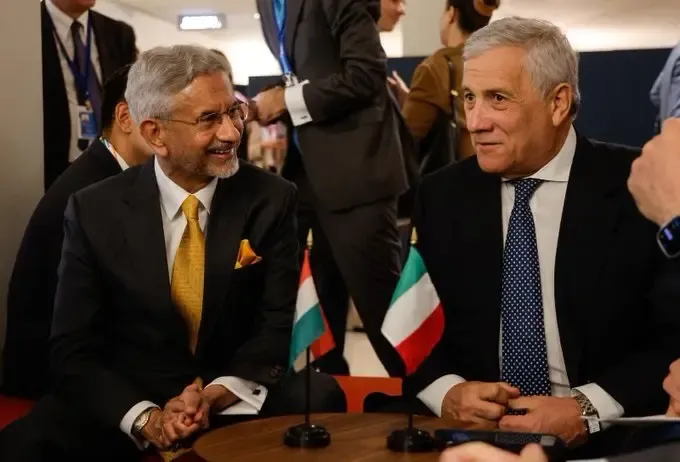
Jaishankar and Italy's Deputy PM Antonio Tajani met at the United Nations on 23 September 2026 .
Talks covered the Gulf situation , IMEC , and the Ukraine conflict , per Jaishankar's own post on X.
Tajani described IMEC as a 'strategic development' and set a bilateral trade target of €20 billion by 2029 .
The EU-India Free Trade Agreement , reached in January 2026 , was cited as a framework that makes IMEC commercially more viable.
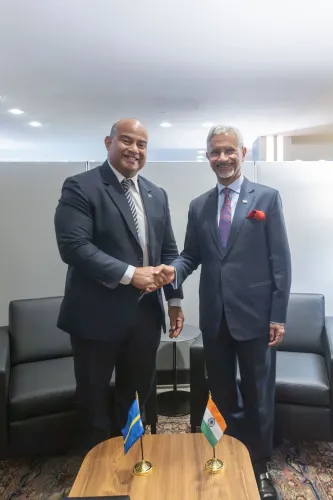
Jaishankar also met Uganda's Foreign Minister Adonia Ayebare , agreeing to deepen ties in development, defence training, and agriculture.
Both sides reaffirmed commitment to freedom of navigation amid ongoing Red Sea shipping disruptions.
External Affairs Minister S. Jaishankar and Italy's Deputy Prime Minister Antonio Tajani held talks on the sidelines of the United Nations on 23 September 2026, covering the India-Middle East-Europe Economic Corridor (IMEC), the Gulf situation, and the Ukraine conflict. The meeting underscored the deepening India-Italy Strategic Partnership across defence, technology, and trade.
What Was Discussed
Jaishankar confirmed the breadth of the meeting in a post on X, writing: 'Our conversation focused on the Gulf situation, IMEC, and the Ukraine conflict.' The two sides addressed the importance of maritime security, with Tajani stressing that Italy and India share a commitment to freedom of navigation — a matter of direct consequence for global trade routes traversed by both nations.
Tajani said in his post on X that the two countries are 'bound by a special Strategic Partnership', which he described as being strengthened 'through ever broader collaboration, from defence and security to artificial intelligence, from space to critical technologies and energy.'
IMEC: A Corridor Both Sides Want to Advance
The India-Middle East-Europe Economic Corridor, proposed at the 2023 G20 summit, envisions a sea-and-land trade route connecting India to Europe via Saudi Arabia, Jordan, Israel, Greece, and Italy. Tajani called IMEC a 'strategic development' that would spur trade between the two blocs.
Italy's interest in the corridor is both geographic and economic. Rome sits at the European terminus of the proposed route, making it a natural gateway for Indian exports into the continent. Tajani noted that Italy wants to 'work together to achieve the goal of 20 billion euros in trade exchange by 2029', citing India as a 'key country' for Italy's Export Action Plan.
The EU-India Free Trade Agreement, concluded in January 2026, adds a fresh policy layer: IMEC now has a legal and institutional framework to work alongside, making its realisation more commercially viable than when it was first announced.
India-Italy Ties: From Trade to Technology
The bilateral agenda has expanded well beyond commerce. According to Tajani, collaboration now spans artificial intelligence, space, critical technologies, and energy — sectors where both countries have complementary strengths. This comes amid a broader European push to deepen ties with India as geopolitical alignments shift following the Russia-Ukraine war and volatility in the Middle East.
Notably, freedom of navigation — a recurring concern since Houthi disruptions to Red Sea shipping — was explicitly flagged by Tajani as 'essential for the security of trade routes, for connectivity, and for the growth of our economies.' Both Italy and India are major maritime trading nations with direct stakes in keeping those corridors open.
Jaishankar Also Meets Uganda's Foreign Minister
On the same day, Jaishankar met Uganda's Foreign Minister Adonia Ayebare, who participated in the High-level Meeting of Like-Minded Global South Countries and Friends convened by India. Jaishankar said the two sides 'agreed to cooperate closely to strengthen our bilateral relations, focusing on development partnership, capacity building, defence training and agriculture.'
The Uganda meeting reflects India's parallel diplomatic push to consolidate its leadership role among Global South nations even as it deepens engagements with European partners.
What Comes Next
The UN General Assembly session provides a rare concentration of diplomatic activity, and Jaishankar's back-to-back engagements signal India's intent to use the platform to advance both the IMEC agenda and its Global South positioning simultaneously. Whether the Gulf situation — whose details were not publicly elaborated — results in any coordinated India-Italy statement remains to be seen.
Point of View
Sealed in January, gives IMEC a commercial backbone it previously lacked, but the Gulf volatility Jaishankar flagged is precisely the variable that could stall physical infrastructure progress. India is simultaneously courting Europe through IMEC and consolidating Global South leadership through forums like the Like-Minded Countries meeting — a dual-track diplomacy that risks being stretched thin if either front demands hard choices.
NationPress
23 Sept 2026
Frequently Asked Questions
What is the India-Middle East-Europe Economic Corridor (IMEC)?
IMEC is a proposed sea-and-land trade route connecting India to Europe via Saudi Arabia, Jordan, Israel, Greece, and Italy, first announced at the 2023 G20 summit. It aims to reduce shipping time and costs between Asia and Europe while creating new infrastructure and investment opportunities along the route.
What did Jaishankar and Tajani agree on at the UN?
The two ministers discussed IMEC, the Gulf situation, and the Ukraine conflict. Tajani reaffirmed Italy's Strategic Partnership with India spanning defence, AI, space, and energy, while both sides backed freedom of navigation as essential to trade security.
What is Italy's trade target with India?
Italy aims to reach €20 billion in bilateral trade exchange with India by 2029, with Tajani identifying India as a key priority in Italy's Export Action Plan. The EU-India Free Trade Agreement finalised in January 2026 is expected to support this goal.
How does the EU-India Free Trade Agreement relate to IMEC?
The EU-India FTA, concluded in January 2026, provides a legal and institutional framework that makes IMEC commercially more viable. Tajani noted that the corridor would create fresh opportunities to achieve the bilateral €20 billion trade target alongside the FTA.
Who else did Jaishankar meet at the UN session?
Jaishankar also met Uganda's Foreign Minister Adonia Ayebare on the sidelines of the High-level Meeting of Like-Minded Global South Countries and Friends convened by India. Both sides agreed to strengthen ties in development partnership, capacity building, defence training, and agriculture.