CM Yogi calls UP to join Run for Unity on Patel Jayanti
Synopsis
Uttar Pradesh Chief Minister Yogi Adityanath on National Unity Day, 31 October 2026 called citizens to participate in the Run for Unity, honouring Sardar Patel's integration legacy and contrasting BJP's post-2017 governance in UP with earlier politics of appeasement and caste division.
Key Takeaways
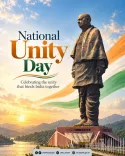
National Unity Day , observed every 31 October , marks the birth anniversary of Sardar Vallabhbhai Patel , India's first Deputy Prime Minister.
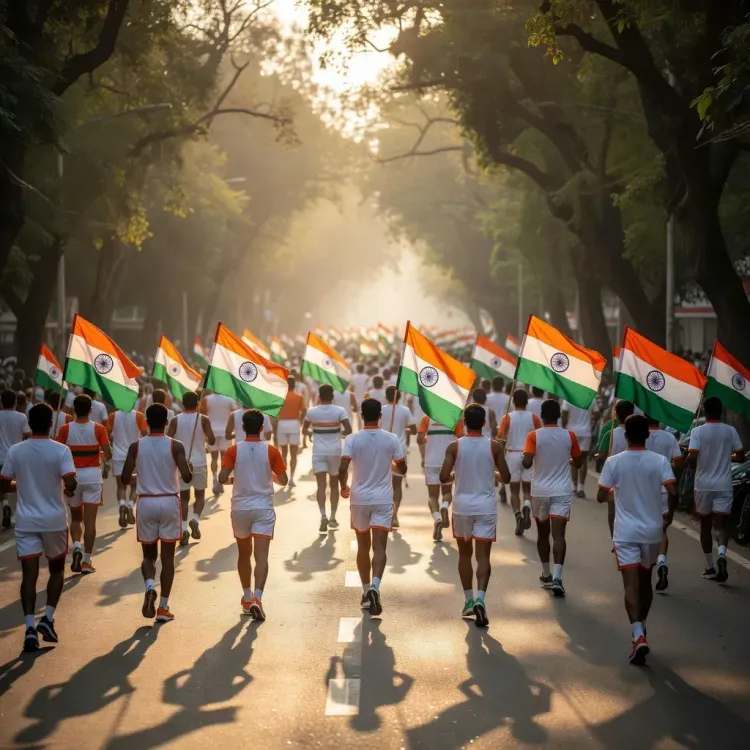
CM Yogi Adityanath called on citizens to join the Run for Unity as a symbolic act of dedication to India's integrity.
He criticised pre- 2017 UP governance as driven by appeasement, casteism and dynastic politics that weakened social harmony.
Patel integrated more than 500 princely states into India by 1950 , a feat CM Yogi linked to the Ek Bharat Shreshtha Bharat programme launched in 2015 .
The 'double engine' government narrative ties state-level BJP rule in UP to PM Modi 's central vision of 'Nation First'.
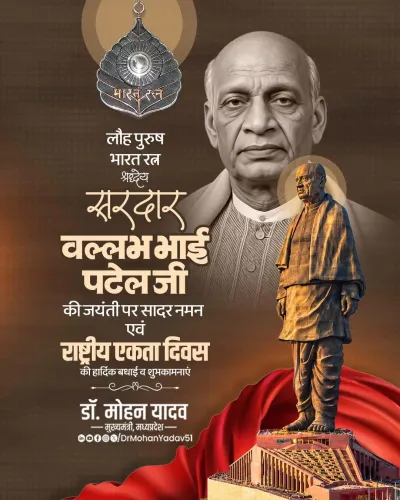
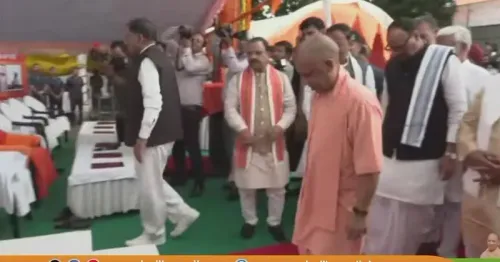
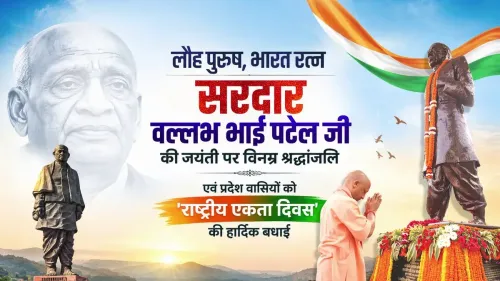
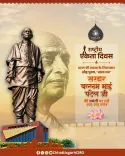
On National Unity Day, 31 October 2026 — the birth anniversary of Sardar Vallabhbhai Patel — Uttar Pradesh Chief Minister Yogi Adityanath issued a pointed call to action, urging every citizen to lace up for the 'Run for Unity' and carry forward the iron man's legacy of an indivisible India.
Posting in Hindi on the morning of Patel's jayanti, CM Yogi framed the run not merely as a fitness event but as a collective moral act — 'hara kadam raashtra ki akhandaata ke prati samarpan' ('every step a dedication to the nation's integrity'). He invoked Patel's Bharat Ratna honour and described preserving national unity as a 'paavan kartavya' — a sacred duty — of every Indian.
A deliberate contrast with pre-2017 Uttar Pradesh
The post carries an unmistakably political edge alongside its tribute. CM Yogi drew a direct line between what he called the politics of appeasement, casteism and dynastic rule that prevailed in Uttar Pradesh before 2017 and the erosion of social harmony. In his reading, those years weakened the very spirit of national integration that Patel had spent his life building.
Since the BJP formed the state government in 2017, he argued, the 'double engine' government — state and Centre aligned under Prime Minister Narendra Modi — reversed that trajectory. The governing philosophy he cited: 'Rashtra Pratham' ('Nation First') and Modi's signature mantra 'Sabka Saath, Sabka Vikas, Sabka Vishwas' ('Together with all, development for all, trust of all').
Sardar Patel's legacy and the Ek Bharat vision
Patel's achievement remains one of modern India's most consequential feats of statecraft. As the country's first Deputy Prime Minister, he oversaw the integration of more than 500 princely states into the Indian Union by 1950, giving a fragmented subcontinent a single sovereign form.
The Central government institutionalised his birth anniversary as National Unity Day in 2014, the same year the Ek Bharat Shreshtha Bharat programme was launched to weave inter-state cultural linkages across the country. CM Yogi explicitly tied his government's work to that 'Ek Bharat-Shreshtha Bharat' resolve, casting the Run for Unity as the moment that vision moves from policy to lived practice.
What the Run for Unity represents
The Run for Unity is the signature public event of National Unity Day, held in cities and towns across India every 31 October. In Uttar Pradesh — India's most populous state — the scale of participation carries symbolic weight that extends well beyond a morning jog. CM Yogi's post closes with the salute 'Jai Hind', the call to unity that Patel himself favoured.
The message is clear: every stride on this day is meant to echo an 87-year-old promise — that India, however diverse, remains one.
Point of View
The message elevates a state-level event into a nationally resonant ideological statement. The invocation of 'Rashtra Pratham' and 'Sabka Saath, Sabka Vikas, Sabka Vishwas' signals that the BJP intends Patel's legacy to remain a mobilising symbol for its broader integration narrative heading into future electoral cycles in India's largest state.
NationPress
31 Oct 2026
Frequently Asked Questions
When is National Unity Day observed in India?
National Unity Day is observed every year on 31 October , the birth anniversary of Sardar Vallabhbhai Patel. It was instituted by the Central government in 2014 .
What is the Run for Unity?
The Run for Unity is the flagship public event of National Unity Day , held across Indian cities and towns every 31 October to honour Sardar Patel's role in unifying the nation.
What did Sardar Patel do for India's unity?
As India's first Deputy Prime Minister , Sardar Vallabhbhai Patel led the integration of more than 500 princely states into the Indian Union, completing the process by 1950 and earning him the title 'Iron Man of India'.
What is Ek Bharat Shreshtha Bharat?
Ek Bharat Shreshtha Bharat is a Central government programme launched in 2015 to strengthen national and cultural integration by fostering linkages between different states of India.
Why does CM Yogi contrast BJP's rule with pre-2017 UP governance?
CM Yogi argues that the politics of appeasement, casteism and dynastic rule before 2017 divided UP society and weakened national unity. He credits the BJP's 'double engine government' with reversing that trend through the 'Nation First' governance philosophy.