Jaishankar at G20: Energy politicisation hurting Global South, India urges action
Synopsis
At the G20 Foreign Ministers' Meeting in Atlanta, External Affairs Minister Jaishankar put energy politicisation squarely on the table, arguing that developing nations are absorbing the heaviest costs of disrupted energy flows. India also called for diplomatic pathways to the world's two major conflicts and pushed for diversified supply chains — positioning itself as a bridge-builder in a polarised global order.
Key Takeaways
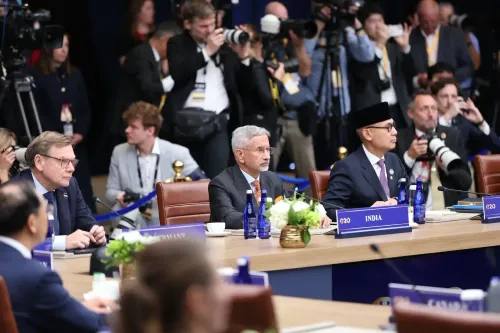
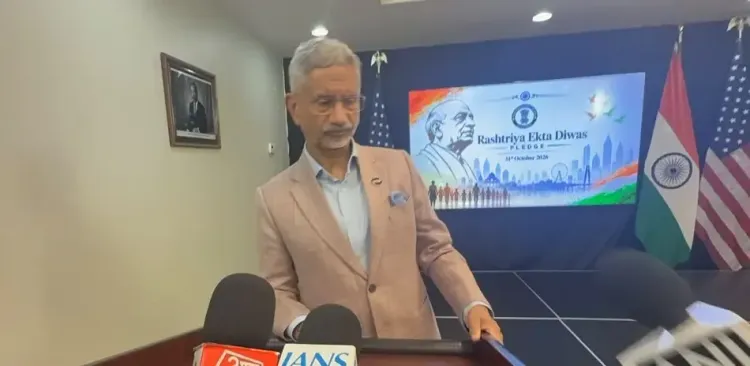
EAM S Jaishankar spoke to reporters in Atlanta after the G20 Foreign Ministers' Meeting on 1 November .
India told the G20 that 'politicisation of energy flows' is 'very harmful' and that the Global South is bearing the brunt of energy shortages.
Jaishankar flagged fertiliser shortages linked to Black Sea and Gulf-Red Sea disruptions, and grain supply risks tied to the Black Sea.
On geopolitics, India called for 'diplomacy, shanti, dialogue' — rejecting military solutions to the world's two major active conflicts.
India advocated for diversified global supply chains to reduce dependence on any single geography.
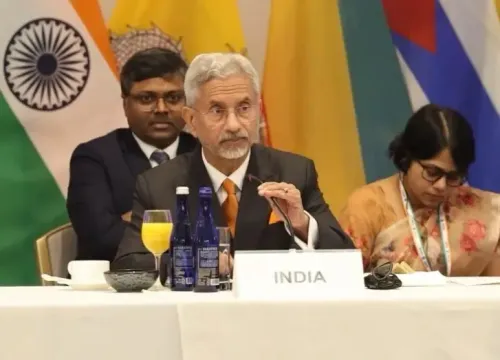
Jaishankar said India held bilaterals with 'pretty much everybody' and described India as 'bridging' and 'communicating' across a polarised world.
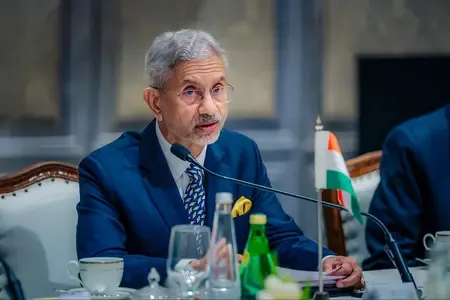
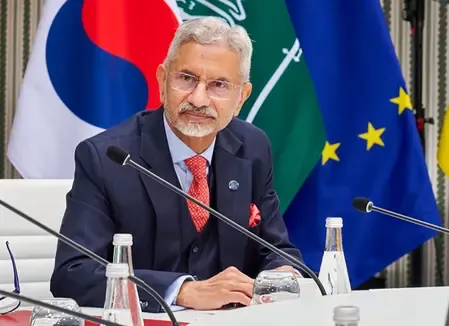
External Affairs Minister S Jaishankar on 1 November called on the G20 to formally acknowledge that the 'politicisation of energy flows' was causing serious harm to developing nations, warning that the Global South was bearing a disproportionate burden of current energy shortages. He made the remarks in Atlanta after the G20 Foreign Ministers' Meeting.
Key Developments at the Meeting
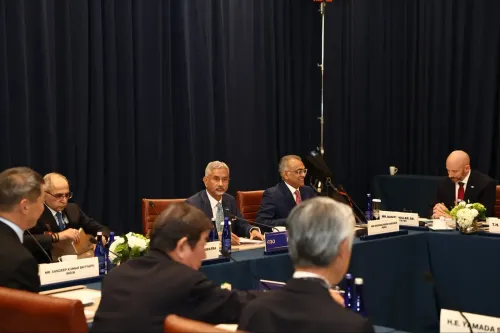
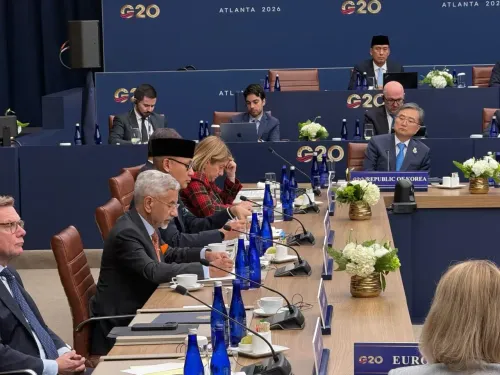
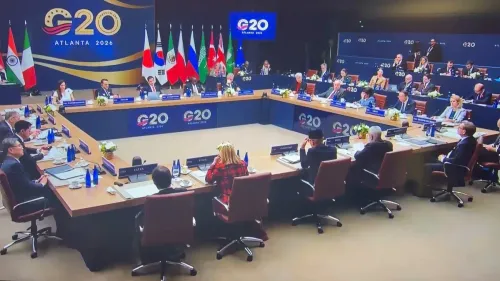
Jaishankar described the gathering as 'a very productive, very open, very animated G20.' The meeting was structured around three sessions — covering the geopolitical situation, energy and food security, and global supply chains.
On energy, he said India's position was unambiguous: 'This distortion of the energy markets, the politicization of energy flows, this is something which is very harmful. The global South was bearing the brunt of the energy shortages, and that something needs to be done, and that this issue itself must be recognized by the G20.'
Food Security and Fertiliser Concerns
India also raised alarm over global food security, flagging both grain shipment disruptions and the cascading impact of fertiliser shortages. Jaishankar attributed the fertiliser crisis partly to Black Sea and partly to Gulf-Red Sea disruptions, while characterising the grain supply problem as 'much more a Black Sea issue.' He confirmed that member nations held discussions on potential remedies within the G20 framework.
India's Stand on Geopolitics and Conflicts
On the geopolitical session, Jaishankar articulated India's message as a call for de-escalation. He said the country's position was that 'there are big conflicts today — two major conflicts — which are having global ramifications, and there are no military solutions.' India's prescription, he said, was rooted in 'diplomacy, shanti, dialogue.'
Diversified Supply Chains: India's Pitch
India made an assertive case for rethinking global supply chain architecture, arguing that the world must move away from dependence on 'a single geography.' Jaishankar cited the COVID-19 pandemic, active conflicts, and climate events as evidence that concentration risk in manufacturing is no longer acceptable. 'We should avoid the temptation to weaponize, and the best way of dealing with that weaponization temptation is actually to diversify, to have multiple production centers,' he said.
India's Diplomatic Role and Bilateral Meetings
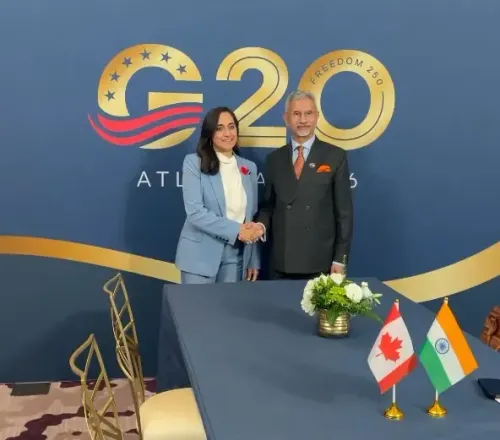
Jaishankar said India conducted bilateral meetings with 'pretty much everybody' on the sidelines, with ministers displaying 'a general appreciation' of India's positioning. He framed India as a bridge-builder in an increasingly divided world: 'India was a country in a somewhat polarized world today. We have the ability to talk to all sides. We are contributing. We are bridging. We are communicating.' He said the meeting was 'productive from our point of view, able to get our viewpoint across.'
Point of View
Food, supply chains, geopolitical conflicts — all tied together by a single thread of multipolarity. Whether the G20 framework, increasingly fractured by the same conflicts Jaishankar referenced, can actually deliver on any of these fronts is the harder question the minister left unanswered.
NationPress
1 Nov 2026
Frequently Asked Questions
What did EAM Jaishankar say about energy at the G20 Foreign Ministers' Meeting?
Jaishankar said India urged the G20 to recognise that 'politicisation of energy flows' is 'very harmful' and that the Global South is disproportionately bearing the costs of current energy shortages. He called on the grouping to formally acknowledge and act on the problem.
Where was the G20 Foreign Ministers' Meeting held?
The G20 Foreign Ministers' Meeting was held in Atlanta, where Jaishankar also addressed a group of Indian reporters on 1 November after the sessions concluded.
What did India say about global food security at the G20 meeting?
India expressed concern over food security on two fronts — disruptions to grain shipments, which Jaishankar characterised as primarily a Black Sea issue, and fertiliser shortages linked to both Black Sea and Gulf-Red Sea disruptions. He said G20 members discussed possible responses.
What is India's position on the major global conflicts discussed at the meeting?
India's position, as articulated by Jaishankar, is that both major ongoing conflicts have global ramifications and no military solutions. India called for a diplomatic pathway, summarising its message as 'diplomacy, shanti, dialogue.'
Why did Jaishankar call for diversified supply chains at the G20?
Jaishankar argued that the COVID-19 pandemic, active conflicts, and climate events have exposed the risks of over-concentration in global manufacturing. India's message was that the world must build multiple production centres to resist the 'weaponization temptation' that comes from supply chain dependence on a single geography.