Jaishankar at G20: World faces energy crisis of unpredictability, not production
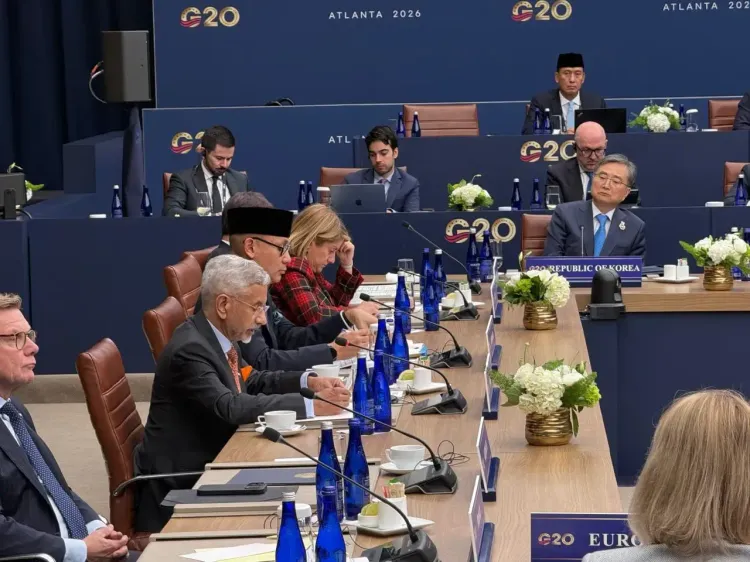
Synopsis
At the G20 Foreign Ministers' Meeting in Atlanta, External Affairs Minister Jaishankar reframed the world's energy problem — not a production failure, but a deliberate crisis engineered through sanctions, infrastructure attacks, and market distortions. His pointed remark about 'convenient distinctions between oil and gas' and 'selective carveouts,' made without naming any country, was arguably the sharpest diplomatic signal India has sent on energy geopolitics in this forum.
Key Takeaways
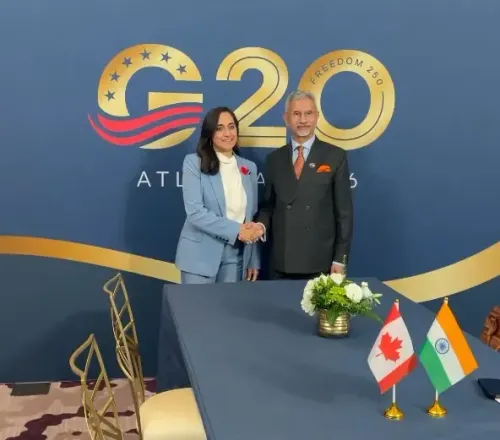
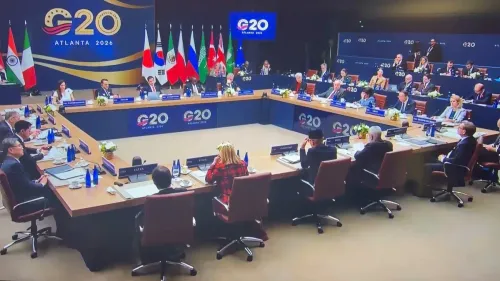
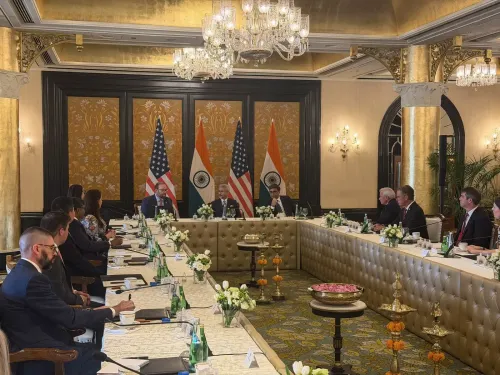
Jaishankar spoke at the G20 Foreign Ministers' Meeting in Atlanta on 31 October 2026 .
He argued the global energy crisis is driven by 'unpredictability, disruption, unaffordable costs and challenges of access' — not a production shortfall.
Jaishankar described deliberate attacks on energy infrastructure as a 'calculated strategy to hold energy prices hostage.' He criticised 'selective carveouts' between oil and gas without naming any specific country.
India reaffirmed its need for reliable LPG supplies and proposed a G20 Critical Minerals Circularity Initiative .
The two-day meeting, hosted by US Secretary of State Marco Rubio , concludes on 1 November 2026 .
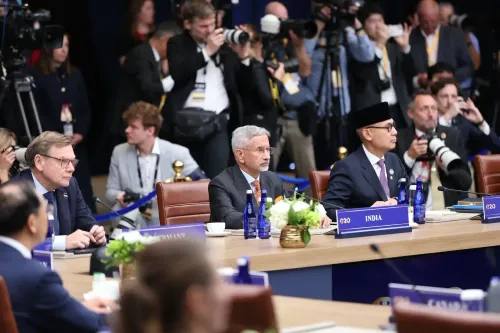
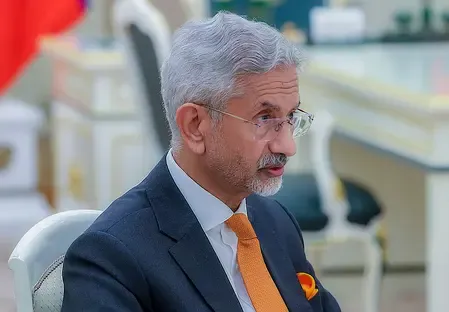
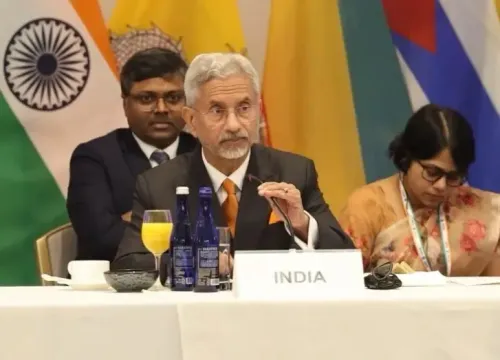
External Affairs Minister S. Jaishankar on 31 October 2026 told the second plenary session of the G20 Foreign Ministers' Meeting in Atlanta that the world confronts an energy crisis rooted not in a shortfall of production but in disruption, unaffordable costs, and barriers to access — a framing that placed deliberate geopolitical interference at the centre of the global energy problem.
Key Remarks on the Energy Crisis
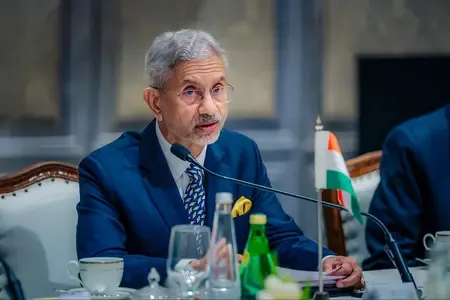
In a post on X after the session, Jaishankar said he had 'underlined that the world today stares at an energy crisis, not of production, but of unpredictability and disruption, unaffordable costs, and challenges of access.' He further stressed that 'deliberate attacks on energy trade and energy infrastructure are a calculated strategy to hold energy prices hostage,' characterising such acts as wilful rather than incidental.
The minister also flagged what he called a pattern of market manipulation, emphasising that 'continuous distortions of energy markets through obstacles, sanctions and chokepoints are happening with increasing frequency, greater complexity and wider impact.' Without naming any specific country, he delivered one of his sharpest remarks of the session: 'Convenient distinctions are being drawn between oil and gas. Selective carveouts speak for themselves.'
India's Own Energy Priorities
Turning to India's domestic needs, Jaishankar reaffirmed that India requires 'reliable and predictable LPG supplies for its clean cooking needs,' signalling that energy affordability remains a non-negotiable domestic priority. He also reiterated India's national mission on critical minerals, which spans the full chain from exploration to recycling, and proposed a G20 Critical Minerals Circularity Initiative as a multilateral framework to manage supply security.
Call for G20 Leadership on Open Markets
The minister urged the grouping to step up, saying the 'G20 must display both understanding and leadership to keep energy markets open and predictable.' He called on member nations to widen access to finance and to accelerate technologies including storage, small modular reactors, green hydrogen, and biofuels — a broad technology basket that reflects India's preference for multi-pathway energy transitions rather than a single-source approach.
Wider Remarks from the Opening Session
Earlier in the day, at the opening plenary, Jaishankar separately 'emphasised that in the face of global challenges, military solutions will not work and diplomacy must be given a chance.' He also highlighted that the Global South is 'disproportionately bearing the consequences of attacks on civilian shipping and seafarers, jeopardising the availability and cost of fuel, food and fertilizers' — connecting energy access directly to food security and supply-chain vulnerability for developing nations.
This comes amid continuing global instability in shipping lanes and energy infrastructure, which has kept commodity prices elevated and disproportionately burdened import-dependent low-income economies. The two-day G20 Foreign Ministers' Meeting, hosted by US Secretary of State Marco Rubio, is scheduled to conclude on Saturday, 1 November 2026. Whether the meeting produces a consensus communiqué on energy market rules will be closely watched.
Point of View
A double standard India has long resisted. What is striking is the venue: a G20 Foreign Ministers' Meeting chaired by the United States. By framing the energy crisis as a product of deliberate market distortion rather than supply failure, Jaishankar is, in effect, placing partial responsibility at the door of Western sanctions regimes — in the West's own backyard. The broader message on the Global South bearing the cost of disruptions it did not cause is consistent with India's G20 presidency legacy, and suggests New Delhi intends to keep that framing alive regardless of who holds the chair.
NationPress
31 Oct 2026
Frequently Asked Questions
What did Jaishankar say about the global energy crisis at the G20 meeting?
Jaishankar said the world faces an energy crisis of 'unpredictability and disruption, unaffordable costs, and challenges of access' — not a shortfall in production. He argued that deliberate attacks on energy infrastructure and continuous market distortions through sanctions and chokepoints are the primary drivers of the crisis.
What did Jaishankar mean by 'selective carveouts' between oil and gas?
Without naming any country, Jaishankar remarked that 'convenient distinctions are being drawn between oil and gas' and that 'selective carveouts speak for themselves.' The comment is widely interpreted as a reference to inconsistencies in Western sanctions frameworks that treat different energy commodities differently, a position India has previously flagged.
What did India propose at the G20 Foreign Ministers' Meeting?
India proposed a G20 Critical Minerals Circularity Initiative, building on its national mission that spans exploration to recycling. Jaishankar also called for the G20 to widen access to finance and advance technologies including storage, small modular reactors, green hydrogen, and biofuels.
What did Jaishankar say about the Global South and energy access?
Jaishankar underscored that low-income countries have received 'little regard' for their predicament. He also said the Global South is disproportionately bearing the consequences of attacks on civilian shipping and seafarers, which is jeopardising the cost and availability of fuel, food, and fertilizers.
Where and when is the G20 Foreign Ministers' Meeting being held?
The two-day G20 Foreign Ministers' Meeting is being held in Atlanta, hosted by US Secretary of State Marco Rubio. It began on 31 October 2026 and is scheduled to conclude on 1 November 2026.