Jaishankar in New York: 'Diplomacy has become an extreme sport'
Synopsis
Jaishankar's New York address was more than a diplomatic speech — it was a diagnosis. By calling diplomacy 'an extreme sport' and naming interdependence itself as a weapon, India's top diplomat signalled that New Delhi sees the current global disorder not as a passing turbulence but as the new baseline, and is calibrating its multi-alignment strategy accordingly.
Key Takeaways
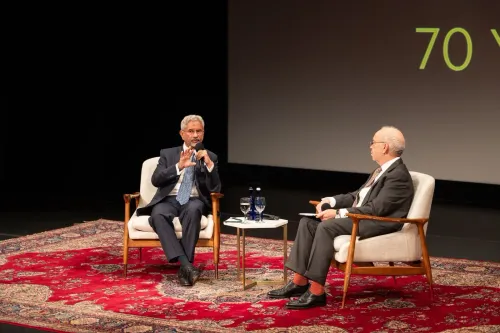
Jaishankar spoke at an event in New York on 29 September , warning of a more dangerous and uncertain global order.
He cited two major ongoing conflicts , turmoil in West Asia and fighting in parts of Africa as evidence of simultaneous global stress.
Jaishankar described 'the paradox of our times': deep economic interdependence being weaponised as a tool of geopolitical pressure.
He warned of a 'use it or lose it' mindset among states with new military or technological capabilities, eroding traditional deterrence.
He questioned whether the UN , founded in 1945 with 51 members , can adapt to present-day power realities.
India is actively diversifying partnerships through the G20 , BRICS and the Quad to reduce strategic vulnerability.
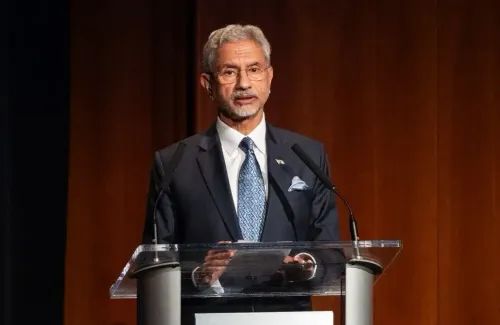
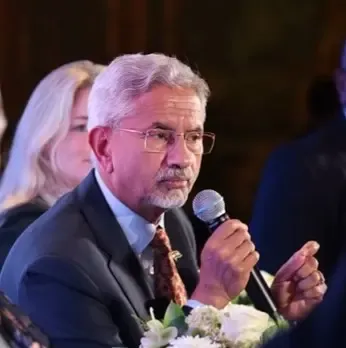
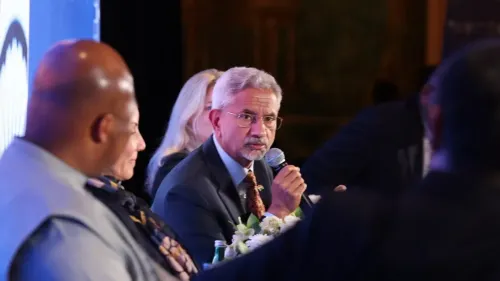
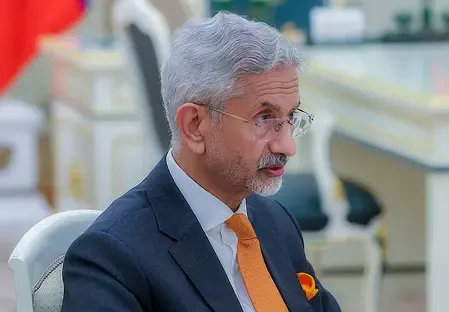
External Affairs Minister S. Jaishankar on 29 September painted a stark picture of a world destabilised by wars, economic coercion and weaponised interdependence, warning that diplomats today operate in an environment of 'unusually high risk' as nations scramble for strategic advantage. Speaking at an event in New York, Jaishankar offered one of his most candid assessments yet of the fracturing global order.
Wars, Choke Points and Economic Pressure
Jaishankar pointed to two major ongoing conflicts, turmoil across West Asia, active fighting in parts of Africa and mounting financial strain on developing nations as evidence of a world under simultaneous stress. Food, fuel, fertilisers and finance were all under pressure, he said, while global supply chains were growing more fragile by the month.
He identified what he called 'choke points' — geographical corridors, sanctions regimes, travel restrictions and market access — as tools that powerful countries were increasingly willing to deploy against rivals. Energy disruptions in major producing regions had already forced price adjustments worldwide, he noted, while advances in military technology were lowering the threshold for risk-taking among governments.
The Paradox of Interdependence
At the heart of Jaishankar's argument was what he described as 'the paradox of our times': nations remain deeply economically intertwined, yet are growing more tempted to exploit those very connections as instruments of leverage. 'The interdependence is the reality, the competition is the sentiment,' he said. When one country depends on another for a critical resource or supply, intense rivalry creates an incentive to convert that dependence into a pressure point, he argued.
This dynamic, he said, had produced a more hazardous environment for governments trying to protect national interests without severing essential relationships. The world had also grown more impatient — where deterrence once served as a stabilising force, countries with new military or technological capabilities now faced a temptation to use them before rivals could close the gap. He characterised this as a 'use it or lose it' mindset.
'Diplomacy Has Become an Extreme Sport'
Jaishankar reserved his sharpest formulation for the profession of diplomacy itself. 'Diplomacy has become an extreme sport,' he said, describing how envoys must navigate high-stakes decisions and their cascading consequences while retaining the patience required for protracted negotiations. The remark underscored his view that traditional diplomatic tools are being stress-tested by a pace and complexity of crises unlike anything in recent memory.
Institutions Under Strain
The minister also questioned whether multilateral institutions designed under a previous balance of power could remain relevant. He noted that the United Nations was founded in 1945 with just 51 members, in a world fundamentally different from today's. Its future credibility, he suggested, depended on how effectively it adapted to present-day realities — a pointed remark given India's long-standing push for reform of the UN Security Council and greater representation for developing nations.
Jaishankar noted that rising economies and those experiencing relative decline were both adjusting to a shift in global power, generating uncertainty that was spilling into domestic politics across multiple countries. India, he said, was among those actively seeking new partnerships and diversifying its strategic relationships to reduce exposure to single points of failure — a posture reflected in its simultaneous engagement through the G20, BRICS and the Quad.
A Cautious Optimism
Despite the sombre diagnosis, Jaishankar stopped short of outright pessimism. 'I'm not pessimistic about the world,' he said during the discussion that followed his remarks. Countries retained a shared interest in reaching stable and reliable arrangements, even as competition intensified. New understandings could emerge, he said, though he expected the path to them to be difficult. The remarks signal that New Delhi is preparing for a prolonged period of geopolitical turbulence — and positioning itself to navigate it on its own terms.
Point of View
Not a think-tank analyst — it signals that India's diplomatic establishment is internalising prolonged disorder as the operating norm, not an aberration. The pointed reference to the UN's 1945 founding and its 51 original members is a well-worn Indian argument for Security Council reform, but its placement in this context gives it fresh urgency. What mainstream coverage often misses is the self-referential edge in his remarks: India itself straddles the very interdependencies he describes, relying on Russia for defence hardware, the West for technology, and the Gulf for energy. His optimism about 'new understandings' is real but carefully hedged — it is the optimism of a country that has decided multi-alignment is not a transitional posture but a permanent strategy.
NationPress
29 Sept 2026
Frequently Asked Questions
What did Jaishankar say about the global order in New York?
External Affairs Minister S. Jaishankar said the world was being shaken by wars, economic pressure and the growing use of trade and other dependencies as weapons, calling the current environment one of unusually high risk for diplomats. He described the tension between global interdependence and intensifying competition as 'the paradox of our times.'
What did Jaishankar mean by 'diplomacy has become an extreme sport'?
Jaishankar used the phrase to describe the heightened stakes facing diplomats today — navigating high-risk decisions and their consequences while maintaining the patience needed for long-term negotiations. It reflects his view that traditional diplomatic tools are being stress-tested by the speed and complexity of simultaneous global crises.
What are the 'choke points' Jaishankar referred to?
Jaishankar identified choke points as geographical routes, sanctions regimes, travel restrictions and access to markets — tools that countries with leverage over them are increasingly willing to use against rivals. He argued that energy disruptions and advances in military technology had further complicated these calculations.
What did Jaishankar say about the United Nations?
He questioned whether the UN, founded in 1945 with just 51 member states, could adapt to today's very different balance of power. Its future relevance, he said, depended on how effectively it responded to present-day realities — consistent with India's long-standing call for UN Security Council reform.
Is Jaishankar pessimistic about the future of global relations?
No — Jaishankar said he was 'not pessimistic about the world,' noting that countries retain a shared interest in reaching stable arrangements even as competition intensifies. However, he cautioned that new understandings would be difficult to negotiate given the current geopolitical climate.