Jaishankar at ICWA: India must constantly adapt to complex global landscape
Synopsis
At ICWA's 25th anniversary, EAM Jaishankar delivered a frank strategic reckoning: India must stop seeking comfort in binary positions and start building its own intellectual framework for foreign policy — because balancing ties with all Gulf and Ukraine belligerents simultaneously, while the global economy turns into a weapon, is unprecedented territory with no borrowed playbook.
Key Takeaways
Jaishankar addressed the 25th anniversary of the Indian Council of World Affairs (ICWA) in New Delhi on 15 September 2026 .
He flagged two major ongoing conflicts — in the Gulf and in Ukraine — where India maintains ties with all parties, making a clear-cut position difficult.
Jaishankar warned of the weaponisation of the global economy , rising tariff volatility, and increased dumping as fresh strategic challenges.
He called for nuance over binary positions , saying India must optimise and customise its strategy rather than replicate foreign frameworks.
He urged ICWA to lead informed debate from an Indian perspective as the country's global responsibilities and expectations grow.
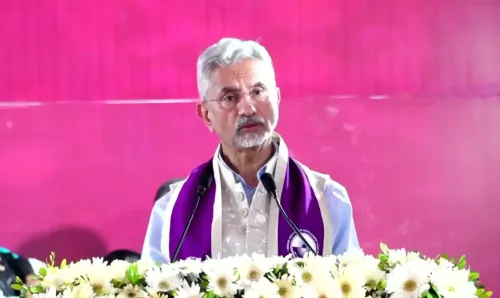
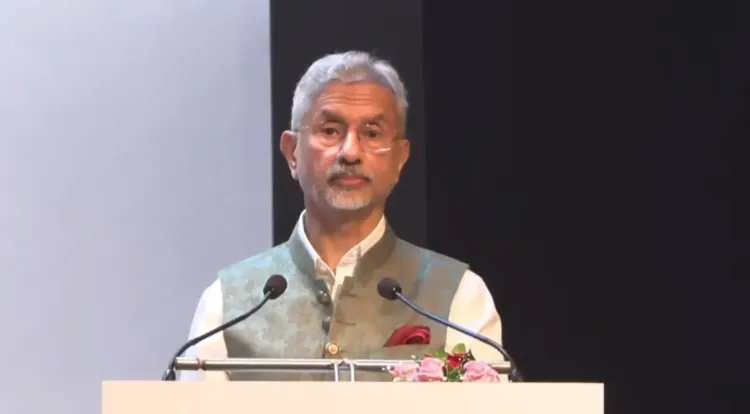
External Affairs Minister S. Jaishankar on Tuesday, 15 September 2026, said that India — with its expanding interests, wider global exposure, and a growing network of partners — must constantly adapt and re-adapt its strategies to navigate an increasingly complex international environment. He was speaking at the inaugural session of the 25th anniversary celebration of the Indian Council of World Affairs (ICWA) in New Delhi.
Two Major Conflicts, Multiple Equities
Jaishankar pointed to the two major ongoing conflicts — in the Gulf and in Ukraine — as illustrations of the strategic tightrope India must walk. “In each case, India has good ties with all the parties involved. Forging an approach is therefore not easy,” he said. He acknowledged that balancing these competing relationships is a “legitimate subject of conversation.”
The minister also flagged the weaponisation of the global economy, rising tariff volatility, and increased dumping in third markets as fresh pressure points requiring strategic responses. “How could that be best countered? Another subject for discussion,” he remarked, pointing to the heightened risks emerging from intensified geopolitical competition with “less restraint.”
Nuance Over Binary Positions
Jaishankar was emphatic that India's growing global footprint demands a more sophisticated diplomatic posture. “Often, the answers are in optimising strategy and responses rather than taking black-and-white positions,” he said. He stressed that diplomacy is “very much an exercise in nuance” and that India must not merely replicate foreign frameworks but develop its own distinctive approach.
“We can draw lessons from the experiences of others, but ultimately the fact is that we are unique. It is therefore all the more important for us to have those debates amongst ourselves,” he added, flagging ICWA's potential role in shaping that intellectual ecosystem.
India's Rising Global Role and ICWA's Mandate
Highlighting India's expanding international engagement, Jaishankar said the country today interacts with a “much wider range of countries and regions,” with interests that have become “increasingly global.” He noted that expectations of India have risen correspondingly, including on issues concerning the Global South.
He argued that as India's global role grows, its intellectual engagement with international affairs must keep pace. “While much of the established discourse on international relations has been shaped by concepts and experiences developed elsewhere, a rising India must increasingly bring its own history, experience, interests, concepts, and even terminology to the way it approaches the world,” he said.
Jaishankar noted that ICWA, established as an institution of national importance by the Indian parliament, has a critical part to play in this endeavour — by encouraging informed debate from an Indian perspective and contributing to a more confident articulation of India's worldview.
Marking 25 Years of ICWA
The minister recalled that ICWA's 25th anniversary is not just a moment to reflect on the institution's journey but also to chart the role it must play going forward. He underscored that as India rises as a global power, ICWA must “play an active part in the debates that always accompany the rise of any power.”
With India's foreign policy increasingly tested by simultaneous pressures across geographies and domains, Jaishankar's address signals that New Delhi's strategic community is being called upon to think harder, faster, and more originally.
Point of View
The pipeline of original strategic thinkers — and the funding for think-tanks like ICWA to produce them — must grow far faster than it currently is.
NationPress
15 Sept 2026
Frequently Asked Questions
What did EAM Jaishankar say at the ICWA 25th anniversary event?
Jaishankar said India must constantly apply and re-apply itself to a changing global dynamic, given its expanding interests and a growing number of partners. He cited the Gulf and Ukraine conflicts and the weaponisation of the global economy as key challenges requiring nuanced, customised responses rather than rigid positions.
Why does India find it difficult to take sides in the Gulf and Ukraine conflicts?
According to Jaishankar, India maintains good ties with all the parties involved in both conflicts, making a definitive alignment politically and diplomatically complex. He described balancing these 'various equities' as a legitimate and ongoing subject of strategic debate.
What is the Indian Council of World Affairs (ICWA) and why does it matter?
ICWA is an institution of national importance designated by the Indian parliament for its contribution to India's intellectual engagement with international affairs. It has been studying and promoting international relations since its establishment, and Jaishankar called on it to lead India-centric debate on global challenges as the country's global role expands.
What did Jaishankar mean by the 'weaponisation of the global economy'?
He was referring to the use of trade tools — tariffs, sanctions, and market dumping — as instruments of geopolitical pressure rather than purely economic policy. Jaishankar flagged greater tariff volatility and increased dumping in third markets as challenges India must strategically counter.
What is India's broader diplomatic strategy according to Jaishankar?
Jaishankar emphasised that India must move beyond borrowed foreign-policy concepts and develop its own frameworks rooted in its history, interests, and unique position. He stressed that optimising strategy and avoiding binary black-and-white positions is essential as India's global responsibilities grow.