Jaishankar at Jeju Forum 2026: India calls for global cooperation, cites Vasudhaiva Kutumbakam
Synopsis
At the Jeju Forum in South Korea, EAM Jaishankar did not just invoke ancient Indian philosophy — he issued a pointed challenge to the emerging multipolar order, asking aloud whether multipolarity will actually deliver for the many. His five-point cooperation framework, paired with a direct push to deepen India-South Korea ties in defence, shipbuilding, and digital tech, signals that India is positioning itself as a rule-shaper, not just a rule-taker.
Key Takeaways
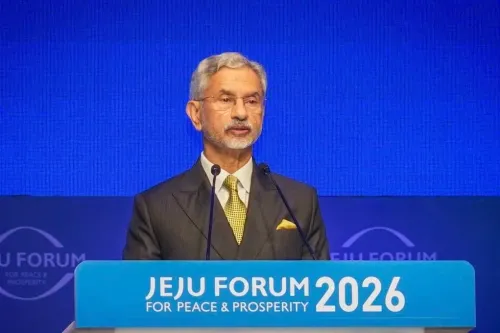
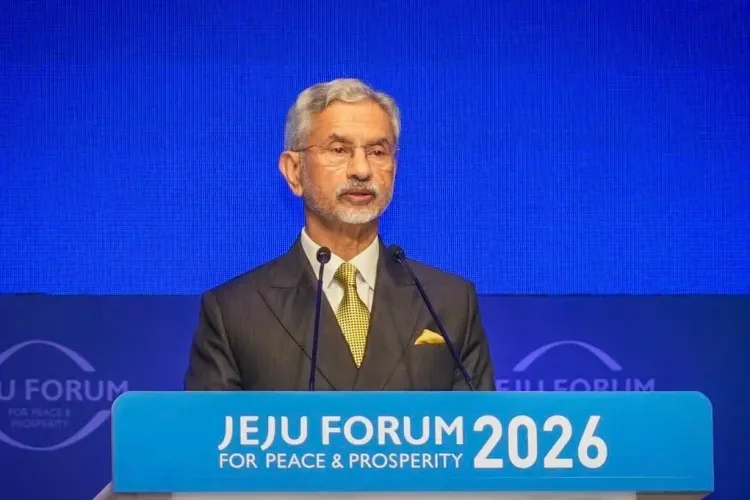
Jaishankar addressed the Jeju Forum for Peace and Prosperity 2026 in South Korea on 25 June 2026 .
He invoked 'Vasudhaiva Kutumbakam' — the world is a family — as India's guiding principle for international cooperation.
Jaishankar outlined a five-point framework : de-risking supply chains, forging new partnerships, protecting international law, empowering the Global South , and delivering global public goods.
He cited UNCLOS as a model for protecting international legal regimes amid growing weaponisation and assertive power deployment.
Jaishankar identified shipbuilding, digital, health, infrastructure, and defence as key areas for deeper India-South Korea cooperation.
He questioned openly whether multipolarity will genuinely deliver for the many, not just the few.
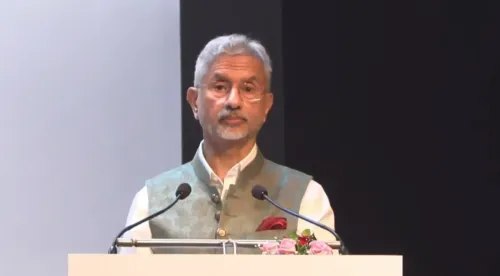
External Affairs Minister S. Jaishankar on Thursday, 25 June 2026 made a strong pitch for reinventing international cooperation at the Jeju Forum for Peace and Prosperity 2026 in South Korea, invoking India's ancient philosophy of 'Vasudhaiva Kutumbakam' — the world is a family — as the moral foundation for a more collaborative global order.
The Core Argument
Addressing delegates at the Jeju Forum, Jaishankar argued that the very crises fragmenting the world — from pandemics to terrorism and climate disasters — are proof that no nation can go it alone. 'Whether it is pandemics like Covid, acts of terrorism, or the impact of extreme climate events, these cannot be contained within political jurisdictions. International cooperation is a must,' he said.
He acknowledged the inherent tension: that national identity and decision-making instincts work against multilateral reflex. 'Cultivating an openness towards the world is therefore essential,' he added, warning that much of today's global turbulence stems from societies that resist precisely that openness.
Five Steps to Reinvent Cooperation
Jaishankar laid out a five-point framework for rebuilding international cooperation in a fragmented world. First, he called for de-risking the global economy by diversifying production and supply chains to limit the scope for economic coercion. Second, he advocated forging closer ties among influential nations through agenda-specific partnerships to stabilise the international order.
Third, he stressed the need to build collective awareness of the costs of narrow thinking, including stronger protection of international law — citing UNCLOS (United Nations Convention on the Law of the Sea) as a model framework. Fourth, he urged the global community to empower the Global South through greater capacity and opportunity, arguing this would also generate new engines of global growth.
Fifth and finally, Jaishankar called for delivering global public goods through shared endeavours. 'We cannot rely on a few to uphold rules and norms. The world must take more control over its own future. This, amongst others, must be expressed in reformed multilateralism,' he stated.
The Multipolarity Question
Jaishankar also struck a candid note on the limits of the current world order, warning that as the interests of a few nations are openly prioritised, the costs borne by the many go unacknowledged. 'This can only be countered by cooperation on more issues with greater players. At the end of the day, we will see whether multipolarity really delivers,' he said — a pointed remark that signals India's watchful stance on the emerging multipolar order rather than uncritical endorsement of it.
India-South Korea Ties in Focus
Jaishankar linked his five-point global framework directly to the India-South Korea bilateral relationship, identifying untapped complementarities in shipbuilding, digital technology, health, infrastructure, and defence. He noted that his bilateral meetings in Seoul the previous day had covered economic and technology partnerships, political and strategic cooperation, and people-to-people ties. This comes amid both countries deepening engagement under India's Act East Policy and South Korea's own Indo-Pacific strategy.
The Jeju Forum, one of Asia's premier multilateral dialogue platforms, provided a high-visibility stage for India to articulate its vision of reformed multilateralism at a moment when global institutions face mounting credibility pressure.
Point of View
UNCLOS protection, and Global South empowerment are all areas where India has concrete interests at stake. The bilateral pivot to South Korea on defence and shipbuilding, tucked into the closing paragraph, is arguably the most actionable element of the speech and deserves more scrutiny than the philosophical framing tends to attract.
NationPress
23 Sept 2026
Frequently Asked Questions
What did EAM Jaishankar say at the Jeju Forum 2026?
EAM S. Jaishankar called for reinvented international cooperation at the Jeju Forum for Peace and Prosperity 2026 in South Korea on 25 June 2026, invoking India's philosophy of 'Vasudhaiva Kutumbakam' and outlining a five-point framework to address global fragmentation. He also pushed for deeper India-South Korea ties in defence, shipbuilding, digital technology, health, and infrastructure.
What is Vasudhaiva Kutumbakam and why did Jaishankar invoke it?
Vasudhaiva Kutumbakam is an ancient Indian Sanskrit phrase meaning 'the world is a family,' drawn from the Maha Upanishad. Jaishankar invoked it to argue that cross-border challenges like pandemics, terrorism, and climate change cannot be solved within national boundaries alone, making international cooperation not optional but essential.
What are the five steps Jaishankar outlined for global cooperation?
Jaishankar's five-point framework includes: de-risking the global economy through supply chain diversification; forging closer ties among influential nations; building awareness of the costs of confrontation while protecting international law; empowering the Global South with capacity and opportunity; and delivering global public goods through shared endeavours.
What did Jaishankar say about India-South Korea relations?
Jaishankar said India and South Korea have untapped complementarities in shipbuilding, digital technology, health, infrastructure, and defence. He noted that his bilateral meetings in Seoul the previous day covered economic, technology, political, strategic, and people-to-people cooperation.
What is the Jeju Forum for Peace and Prosperity?
The Jeju Forum for Peace and Prosperity is one of Asia's leading multilateral dialogue platforms, held on Jeju Island in South Korea. It brings together government officials, academics, and civil society leaders to discuss regional and global security, economic, and governance challenges.