Jaishankar meets Ban Ki-moon, Mongolia ex-PM at Jeju Forum
Synopsis
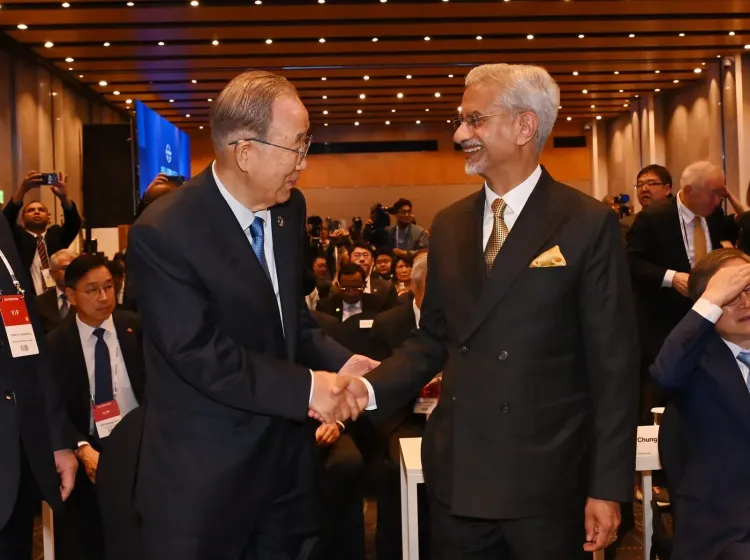
External Affairs Minister Dr. S. Jaishankar met former UN Secretary-General Ban Ki-moon and former Mongolian Prime Minister Gombojav Zandanshatar at the Jeju Forum in South Korea on 25 June 2026, reinforcing India's multilateral and Asia-Pacific diplomatic outreach.
Key Takeaways
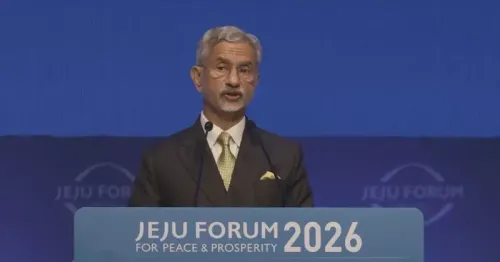
Jaishankar attended the Jeju Forum in Jeju, South Korea on 25 June 2026 .
He met former UN Secretary-General Ban Ki-moon , who led the UN from 2007 to 2016 .
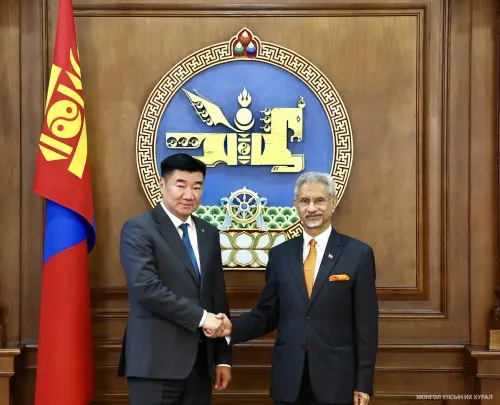
He also met former Mongolian Prime Minister Gombojav Zandanshatar , who served as PM in 2009 .
The Jeju Forum , founded in 2001 , is a Track 1.5 platform for Asia-Pacific peace and security dialogue.
India and Mongolia share a Strategic Partnership declared in 2015 , covering defence, civil nuclear and cultural ties.
The visit aligns with India's Act East Policy and its strategy of engaging Northeast Asian diplomatic forums.
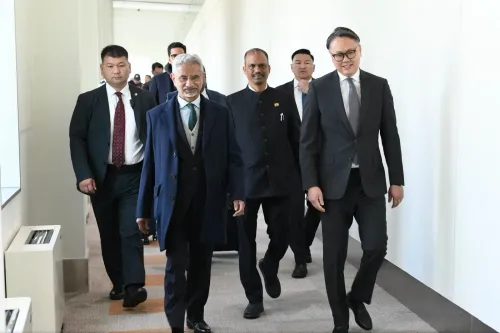
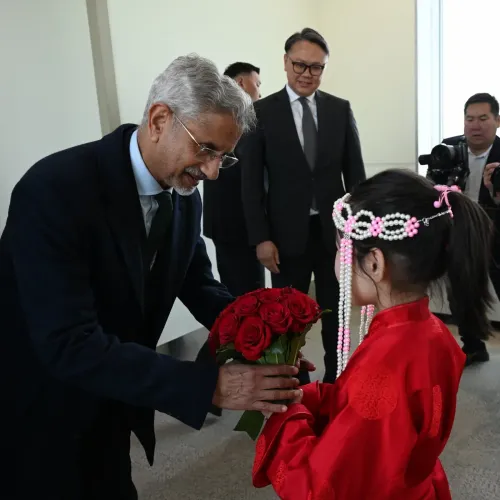
Union External Affairs Minister Dr. S. Jaishankar met former United Nations Secretary-General Ban Ki-moon and former Mongolian Prime Minister Gombojav Zandanshatar on the sidelines of the Jeju Forum on Thursday, 25 June 2026, signalling India's continued engagement with multilateral Track 1.5 diplomacy in the Asia-Pacific.
Context
Dr. Jaishankar posted on X: 'Good to see former UNSG Ban Ki-moon and former PM Mongolia Gombojav Zandanshatar at Jeju Forum today.' The brief but pointed acknowledgement underlines the minister's presence at one of Northeast Asia's most prominent annual dialogue platforms, held in Jeju, South Korea.
The Jeju Forum, launched in 2001 by South Korea, is a Track 1.5 platform that brings together serving and retired statesmen, academics and business leaders to discuss peace, security and economic cooperation across the Asia-Pacific. Its informal format allows candid exchanges that formal bilateral meetings often do not permit.
Policy Backdrop
Ban Ki-moon served as the 8th UN Secretary-General from 2007 to 2016, during which he championed climate diplomacy, the Sustainable Development Goals and peacekeeping reform — all areas where India has been an active multilateral stakeholder. An encounter with him at a forum of this nature reinforces India's commitment to the rules-based international order.
Gombojav Zandanshatar served as Prime Minister of Mongolia in 2009 and later as Chairman of the State Great Khural, Mongolia's parliament. His presence at Jeju reflects Mongolia's own outreach within the Asia-Pacific architecture. India and Mongolia share a Strategic Partnership declared in 2015 during Prime Minister Narendra Modi's visit to Ulaanbaatar, covering defence cooperation, civil nuclear energy and Buddhist heritage — a relationship that New Delhi has steadily deepened.
South Korea itself is a key partner under India's Act East Policy, with growing collaboration in technology, defence manufacturing and regional security frameworks. Dr. Jaishankar's attendance at the Jeju Forum is consistent with India's strategy of diversifying diplomatic engagement beyond traditional SAARC and ASEAN mechanisms to include Northeast and Central Asian interlocutors.
Stakeholders and Impact
For Indian diplomacy, the Jeju encounter carries layered significance. Informal dialogue with figures of Ban Ki-moon's stature can feed into India's multilateral positioning at the UN and in climate negotiations. Engagement with Zandanshatar keeps the India-Mongolia channel active at a senior level ahead of any future high-level bilateral visits or joint working group meetings.
Regional policymakers across Northeast and Central Asia watch India's presence at forums like Jeju as a barometer of New Delhi's intent to play a larger role in Asia-Pacific security conversations — a space traditionally dominated by the United States, China, Japan and South Korea.
What's Next
The next round of India-Mongolia joint working group meetings on defence and economic cooperation will be closely watched to see whether the Jeju interaction translates into tangible bilateral momentum. More broadly, India's continued participation in Track 1.5 forums signals that Dr. Jaishankar's foreign-policy playbook will keep seeking out informal but strategically valuable multilateral touchpoints across the Indo-Pacific arc.
Point of View
Active voice in Asia-Pacific multilateral spaces — not merely a peripheral observer. The choice to highlight a former UN Secretary-General alongside a former Mongolian leader in the same post reflects India's effort to project simultaneous relevance at the global and sub-regional levels. It fits a well-established pattern under the current foreign-policy doctrine: accumulate diplomatic capital through informal Track 1.5 engagements that complement formal bilateral mechanisms. Over time, these touchpoints build the relational infrastructure that enables faster high-level coordination when strategic needs arise.
NationPress
23 Sept 2026
Frequently Asked Questions
What is the Jeju Forum and why does India attend it?
The Jeju Forum is an annual Track 1.5 international dialogue held in Jeju, South Korea, since 2001, focusing on peace, security and economic cooperation in the Asia-Pacific. India attends to engage Northeast Asian partners and signal its commitment to the regional security architecture under the Act East Policy.
Who is Ban Ki-moon and what is his connection to India?
Ban Ki-moon served as the 8th Secretary-General of the United Nations from 2007 to 2016, leading global efforts on climate change, the SDGs and peacekeeping. India was an active multilateral partner during his tenure, and meetings with him at forums like Jeju reinforce India's engagement with the rules-based international order.
What is the India-Mongolia strategic partnership?
India and Mongolia declared a Strategic Partnership in 2015 during Prime Minister Modi's visit to Ulaanbaatar, covering defence cooperation, civil nuclear energy and Buddhist heritage ties. It represents India's effort to deepen ties with landlocked Central and East Asian nations beyond its immediate neighbourhood.
Who is Gombojav Zandanshatar?
Gombojav Zandanshatar is a senior Mongolian politician who served as Prime Minister of Mongolia in 2009 and later as Chairman of the State Great Khural, Mongolia's parliament. He is a prominent figure in Mongolia's diplomatic and legislative landscape.
What does Jaishankar's Jeju Forum visit mean for India's foreign policy?
It signals India's intent to diversify diplomacy beyond SAARC and ASEAN by engaging Northeast Asian Track 1.5 platforms. Such visits build informal channels with key global figures and regional leaders, complementing formal bilateral mechanisms under India's Act East Policy.