Jaishankar Meets Mongolia FM in Ulaanbaatar, Reviews Strategic Partnership
Synopsis
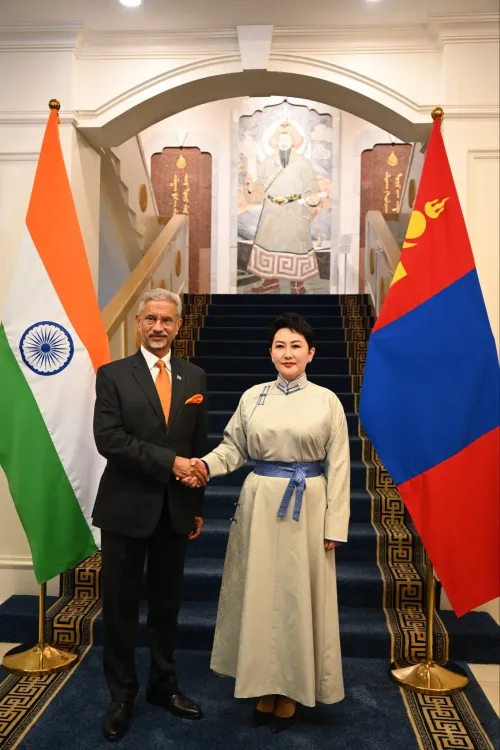
EAM Dr. S. Jaishankar met Mongolian FM Battsetseg Batmunkh in Ulaanbaatar on 22 June 2026, reviewing the India-Mongolia Strategic Partnership with a new focus on mining, clean energy, and agri-processing alongside traditional development and security cooperation.
Key Takeaways
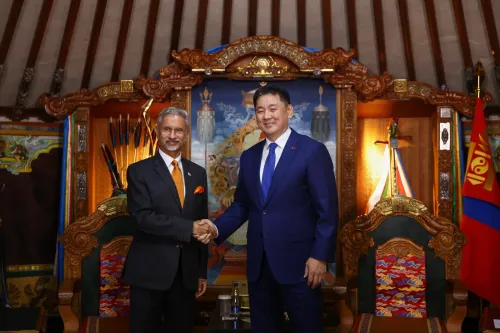
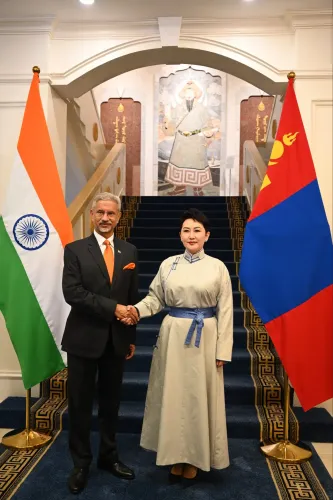
Jaishankar met Mongolian FM Battsetseg Batmunkh in Ulaanbaatar on 22 June 2026 .
Discussions covered development projects, capacity building, culture, education, security, and multilateral forums under the India-Mongolia Strategic Partnership .
New economic sectors — mining , clean energy , and agri-processing — were explicitly raised as areas of opportunity.
India reaffirmed its identity as Mongolia's 'third neighbour' and 'spiritual partner' , rooted in Buddhist and civilisational ties.
The Strategic Partnership was elevated during PM Modi's May 2015 visit to Ulaanbaatar, forming the policy foundation for current engagement.
Mongolia's third-neighbour policy seeks partnerships beyond Russia and China, creating strategic space for Indian involvement in resources and capacity building.
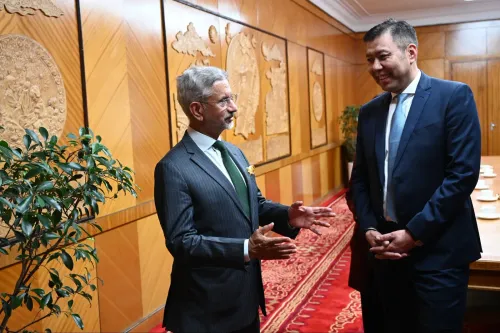
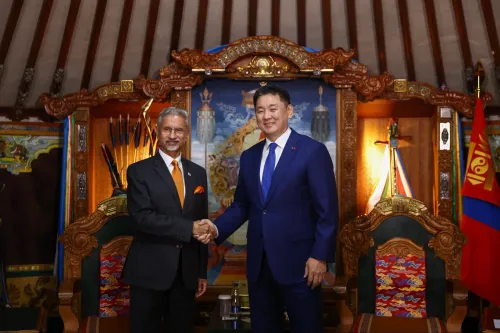
Union External Affairs Minister Dr. S. Jaishankar met Mongolian Foreign Minister Battsetseg Batmunkh in Ulaanbaatar on Monday, 22 June 2026, holding wide-ranging discussions that spanned development cooperation, security, cultural ties, and emerging economic opportunities in mining and clean energy.
Context
Describing the meeting as a reflection of 'the warmth, strength and promise' of the bilateral relationship, Dr. Jaishankar said both sides reviewed progress across development projects, capacity building, culture, education, security, and multilateral forums. The visit to the Mongolian capital marks a high-level engagement under the India-Mongolia Strategic Partnership, which has governed ties between the two countries since it was elevated during Prime Minister Narendra Modi's landmark visit to Ulaanbaatar in May 2015.
India occupies a unique position in Mongolia's foreign-policy calculus, describing itself as both a 'third neighbour' and a 'spiritual partner' — language that draws on longstanding Buddhist and civilisational links between the two nations. Dr. Jaishankar reiterated that framing in his post, stating that 'as a third neighbour and a spiritual partner, India stands ready to advance its close and cordial ties with Mongolia.'
Policy Backdrop
Mongolia is a landlocked state bordered by Russia and China, and its 'third-neighbour policy' is a deliberate diplomatic strategy to cultivate partnerships with countries beyond its immediate geographic neighbourhood. India has been a consistent participant in that framework, extending ITEC capacity-building slots, Lines of Credit, and technical assistance for IT, mining, and infrastructure projects since the early 2000s.
The 2015 Modi visit gave the relationship a strategic dimension, adding defence and security cooperation to the existing cultural and development pillars. Since then, joint committees on economic and defence cooperation have met periodically to track implementation of agreed projects. The current engagement by Dr. Jaishankar builds on that architecture, with new sectors — particularly mining, clean energy, and agri-processing — now explicitly on the agenda.
Stakeholders and Impact
Mongolian students and professionals stand to benefit from expanded ITEC and capacity-building programmes, while investors in critical minerals and the mining sector will watch closely for any project-level announcements. Mongolia holds significant reserves of coal, copper, and rare earth elements — resources of growing strategic interest to India as it seeks to diversify critical-mineral supply chains away from dependence on a single source.
The clean energy and agri-processing sectors flagged in the discussions also point to a broadening of the commercial relationship beyond traditional development assistance. For Mongolia, deeper Indian engagement offers economic diversification and a counterbalance to the overwhelming trade and investment presence of its two immediate neighbours.
What's Next
Attention will now turn to follow-up meetings of the India-Mongolia Joint Committee on economic and defence cooperation, where the sectoral discussions held in Ulaanbaatar are expected to be translated into concrete project commitments. Any fresh Lines of Credit or partnership agreements in mining and clean energy would represent a tangible step-up in the bilateral relationship.
India's engagement with Mongolia fits within a broader pattern of New Delhi deepening ties across Central and East Asia, using cultural diplomacy, development finance, and strategic partnerships to build durable influence in a region where geopolitical competition is intensifying.
Point of View
Moving beyond cultural diplomacy into commercially significant sectors like critical minerals and clean energy. The explicit mention of mining and agri-processing alongside traditional capacity-building suggests New Delhi is recalibrating the relationship to serve strategic supply-chain interests, not just goodwill. This mirrors India's broader pattern of leveraging historical and civilisational ties — Buddhist links in Mongolia's case — as an entry point for harder economic and security engagement. The timing also reflects India's awareness that geopolitical competition in the region is intensifying, making durable partnerships with smaller states like Mongolia increasingly valuable.
NationPress
21 Sept 2026
Frequently Asked Questions
What did Jaishankar discuss with Mongolia's Foreign Minister in Ulaanbaatar?
Dr. S. Jaishankar and Mongolian FM Battsetseg Batmunkh reviewed the India-Mongolia Strategic Partnership, covering development projects, capacity building, culture, education, security, multilateral cooperation, and new opportunities in mining, clean energy, and agri-processing.
What is India's 'third neighbour' relationship with Mongolia?
India describes itself as Mongolia's 'third neighbour' — a diplomatic concept recognising that while Mongolia is physically bordered by Russia and China, India serves as a close partner offering an alternative relationship, reinforced by shared Buddhist and civilisational heritage.
When was the India-Mongolia Strategic Partnership established?
The India-Mongolia Strategic Partnership was elevated to its current level during Prime Minister Narendra Modi's visit to Ulaanbaatar in May 2015, which added defence and security cooperation to existing cultural and development ties.
Why is Mongolia important for India's foreign policy?
Mongolia's third-neighbour policy creates space for Indian engagement in a region dominated by Russia and China. Mongolia's reserves of critical minerals, including coal, copper, and rare earths, also make it strategically relevant to India's supply-chain diversification goals.
What is ITEC and how does India use it with Mongolia?
ITEC — the Indian Technical and Economic Cooperation programme — provides training and capacity-building slots to partner countries. India has regularly extended ITEC opportunities to Mongolian students and professionals as part of its development assistance to Ulaanbaatar.