Jaishankar Meets Gandan Monastery Chief Abbot in Mongolia
Synopsis
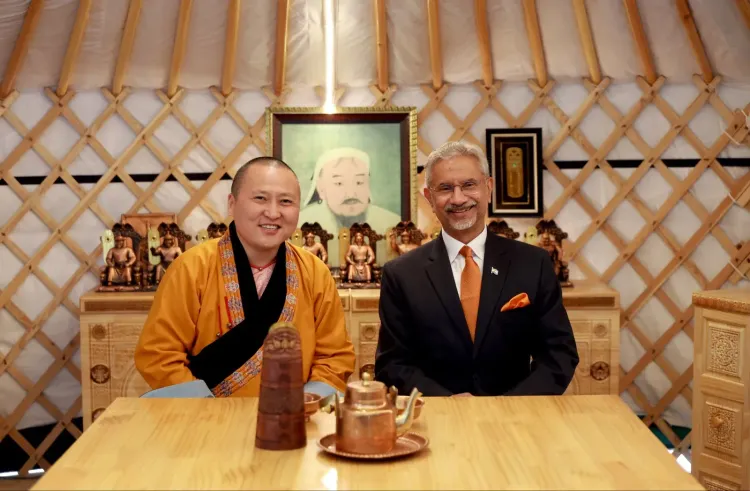
External Affairs Minister Dr. S. Jaishankar met Gandan Monastery Chief Abbot Khamba Nomun Khan Geshe Lharampa D Javzandorj in Mongolia on 22 June 2026, calling the senior Buddhist leader's blessings for deepening cultural and people-to-people ties 'deeply cherished,' in a meeting that reinforces India's Buddhist-heritage diplomacy in Asia.
Key Takeaways
Jaishankar met Khamba Nomun Khan Geshe Lharampa D Javzandorj , Chief Abbot of Gandan Monastery , on 22 June 2026 .
Gandan Monastery in Ulaanbaatar is the principal centre of the Gelugpa Buddhist tradition in Mongolia .
The Chief Abbot holds the Geshe Lharampa degree, the highest academic distinction in Tibetan Buddhist scholarship.
India and Mongolia renewed their Cultural Cooperation Agreement in 2019 to expand monastic and academic exchanges.
Prime Minister Modi visited Mongolia in 2015 and addressed its parliament on civilisational Buddhist links, establishing a precedent for high-level cultural outreach.
The meeting is part of India's broader engagement with Buddhist-heritage states across Asia as a soft-power and strategic tool.
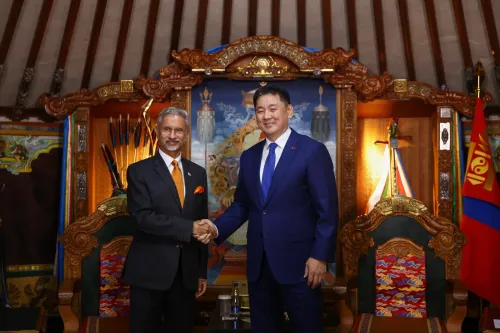
Union External Affairs Minister Dr. S. Jaishankar met His Eminence Khamba Nomun Khan Geshe Lharampa D Javzandorj, Chief Abbot of Gandan Monastery in Mongolia, on Monday, 22 June 2026, expressing that the senior Buddhist leader's blessings for deepening cultural ties and people-to-people goodwill were 'deeply cherished.'
Context
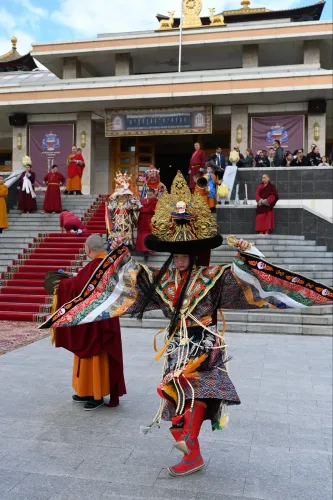
Gandan Monastery, located in Ulaanbaatar, is the principal centre of the Gelugpa Buddhist tradition in Mongolia and one of the most significant monastic institutions in the region. The Chief Abbot holds the Geshe Lharampa degree, the highest academic distinction in Tibetan Buddhist scholarship, lending the meeting considerable religious and diplomatic weight. Dr. Jaishankar's visit to the monastery underscores New Delhi's longstanding practice of pairing formal diplomatic engagements with outreach to Buddhist religious leadership in Mongolia.
Policy Backdrop
India and Mongolia share a strategic partnership anchored substantially in their common Buddhist heritage. In 2015, Prime Minister Narendra Modi visited Mongolia and addressed its parliament, invoking civilisational Buddhist links as a cornerstone of the bilateral relationship. India and Mongolia renewed their Cultural Cooperation Agreement in 2019 to expand monastic and academic exchanges, providing an institutional framework for exactly the kind of engagement Dr. Jaishankar's meeting represents.
New Delhi has consistently used high-level interactions with Mongolian Buddhist leaders to reinforce people-to-people ties that complement practical areas of cooperation such as defence training and mining. This approach forms part of India's wider engagement with Buddhist-majority and Buddhist-heritage states across Asia, sustaining long-standing cultural corridors that carry both soft-power and strategic value.
Stakeholders and Impact
Buddhist monastic communities and cultural exchange participants on both sides stand to benefit most directly from the goodwill generated by such meetings. For Mongolia, engagement with a senior Indian minister at a revered religious site reinforces the country's identity as a hub of living Buddhist scholarship and practice. For India, the meeting strengthens its image as the civilisational home of Buddhism and a natural partner for Buddhist-heritage nations.
Scholars, students, and monks participating in ongoing bilateral exchange programmes — including those enabled by the 2019 Cultural Cooperation Agreement — are among the stakeholders most likely to see tangible outcomes if the meeting generates fresh proposals for monastic scholarships or academic exchanges.
What's Next
Observers will watch for outcomes from the next India-Mongolia Joint Committee on Cultural and Buddhist Exchanges, where proposals discussed during Dr. Jaishankar's visit could be formalised. Any new announcements on monastic scholarships or institutional partnerships between Indian and Mongolian Buddhist centres would be a direct follow-through from the spirit of the meeting. The visit also sets the tone for broader diplomatic engagement between the two countries in the months ahead.
Point of View
Not a ceremonial aside. India has long used Buddhist heritage as a connective tissue with Mongolia, and a minister-level visit to the country's foremost monastery signals that New Delhi views this corridor as strategically worth tending. The engagement fits a broader pattern in which India's external affairs architecture deploys civilisational links — Buddhist, Vedic, and Indic — to build durable people-to-people foundations that outlast transactional diplomacy. With competition for influence in Mongolia intensifying from neighbouring powers, India's soft-power investments through religious and cultural channels carry growing strategic weight.
NationPress
21 Sept 2026
Frequently Asked Questions
Why did Jaishankar visit Gandan Monastery in Mongolia?
Dr. Jaishankar met the Chief Abbot of Gandan Monastery to reinforce India-Mongolia cultural and people-to-people ties, continuing a pattern of high-level Indian outreach to Mongolian Buddhist leadership that dates back at least to PM Modi's 2015 visit.
Who is the Chief Abbot of Gandan Monastery?
The Chief Abbot is His Eminence Khamba Nomun Khan Geshe Lharampa D Javzandorj, a senior Mongolian Buddhist leader holding the Geshe Lharampa degree, the highest academic distinction in Tibetan Buddhist scholarship.
What is Gandan Monastery?
Gandan Monastery in Ulaanbaatar is the principal Buddhist monastery in Mongolia and the historic centre of the Gelugpa tradition in the country, making it the most important religious institution for Mongolian Buddhism.
What is the basis of India-Mongolia relations?
India and Mongolia share a strategic partnership centred significantly on shared Buddhist heritage, complemented by defence training cooperation and mining sector ties; the two countries renewed their Cultural Cooperation Agreement in 2019.
What could follow from Jaishankar's meeting at Gandan Monastery?
Possible outcomes include new proposals for monastic scholarships and academic exchanges, which could be formalised at the next India-Mongolia Joint Committee on Cultural and Buddhist Exchanges.