Sitharaman Dissects Licence Raj's Failure at CD Deshmukh Lecture
Synopsis
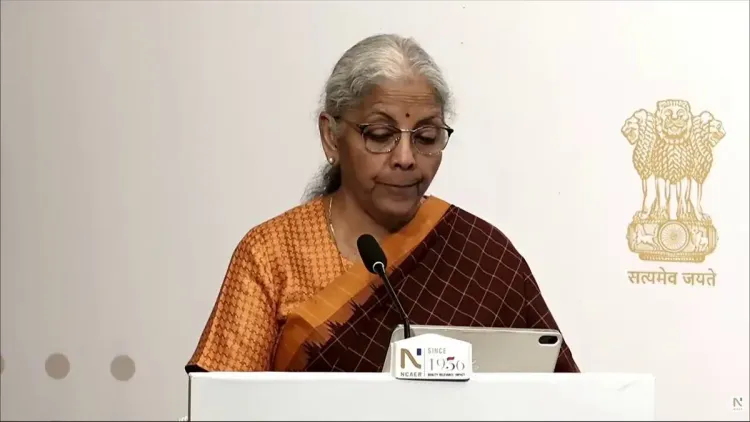
At the CD Deshmukh Lecture 2026 in New Delhi, Finance Minister Nirmala Sitharaman argued that India's Soviet-influenced centralised planning model degenerated into the Licence-Quota-Permit Raj, concentrating discretionary power among a few and breeding inefficiency, cronyism, and corruption at the expense of genuine enterprise.
Key Takeaways
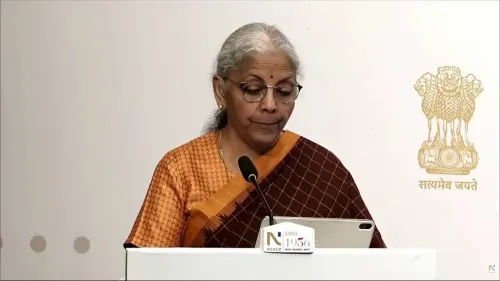
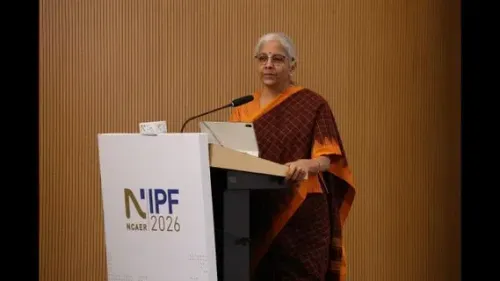
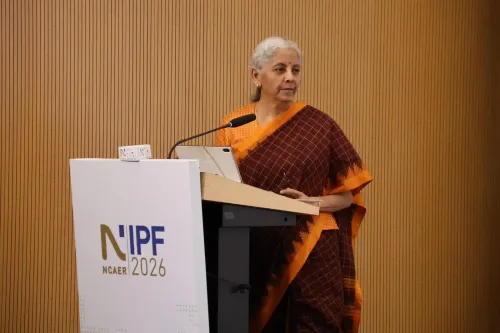
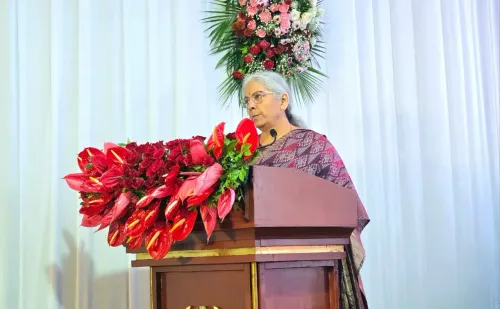
Finance Minister Nirmala Sitharaman delivered the CD Deshmukh Lecture 2026 in New Delhi on 6 August 2026 .
She argued the Soviet centralised planning model 'did not well retrofit to India's conditions' and degenerated into excessive concentration of authority.
The Licence-Quota-Permit Raj shifted investment decisions from markets to bureaucrats and political executives, rewarding a favoured few.
Centrally funded state-run projects, she said, 'bred inefficiency, cronyism and corruption.' India's Planning Commission was established in 1950 ; industrial licensing was largely dismantled in the 1991 liberalisation under Narasimha Rao and Manmohan Singh .
The lecture was posted as the first in a series ( 1/n ), with further instalments expected.
The Licence Raj did not just slow India down — it handed the keys of the economy to a select few and locked everyone else out. At the CD Deshmukh Lecture 2026 in New Delhi on 6 August 2026, Union Finance Minister Nirmala Sitharaman delivered a pointed historical reckoning with the choices India made at independence, and the costs those choices extracted over decades.
Sitharaman argued that India's early economic architecture must be evaluated against the backdrop of 'scarcity and insecurity' that defined the post-independence moment. But that context, she said, does not absolve the model. The Soviet-style centralised planning framework, she contended, 'did not well retrofit to India's conditions' — a measured but damning verdict on the Planning Commission era that shaped the country's first four decades.
How the Licence Raj Concentrated Power — and Stifled Enterprise
The Finance Minister's sharpest critique was structural. The Licence-Quota-Permit Raj did not merely create red tape; it fundamentally relocated economic decision-making. Investment choices migrated, in her words, 'from the market to the bureaucrats and political executives.' The result was a system where proximity to power mattered more than productivity — where a favoured few thrived and genuine Indian enterprise was squeezed out. Centrally funded, gigantic state-run projects, she argued, 'eventually bred inefficiency, cronyism and corruption.' It is a diagnosis that echoes the consensus view among economists who have studied the pre-1991 era: that industrial licensing created artificial scarcity, entrenched incumbents, and insulated connected businesses from competition.The Planning Commission's Soviet Blueprint — and Its Indian Misfit
India established the Planning Commission in 1950 to implement Soviet-influenced Five Year Plans. The model carried an internal logic suited to a command economy — but India was a democracy with a vast, diverse private sector and a federal structure that resisted top-down directives. Sitharaman's framing — that the model 'degenerated into excessive concentration of authority amongst a select few' — captures the political economy of that misfit precisely. The reckoning came in 1991, when a balance-of-payments crisis forced the government of P.V. Narasimha Rao and Finance Minister Manmohan Singh to dismantle industrial licensing across most sectors. That liberalisation is now widely credited with unleashing the growth that brought hundreds of millions out of poverty over the following three decades.Why Sitharaman Is Revisiting This History Now
The CD Deshmukh Lecture series — named for the former Reserve Bank of India Governor and Finance Minister who played a foundational role in India's early economic institutions — is a natural forum for this kind of long-view assessment. Deshmukh himself navigated the tensions between state direction and market forces in the 1950s. Sitharaman's remarks are part of a consistent pattern from the present administration: using historical critique of the Licence Raj to frame its own reform agenda as a corrective arc. The lecture was posted as the first in a thread (1/n), signalling that more substantive policy argument is to follow. The real question is not whether the Licence Raj failed — that verdict is settled — but what specific reforms Sitharaman will argue are needed now to ensure discretionary authority does not quietly reconcentrate in new forms.Point of View
She lends it institutional gravitas beyond a political speech. The 1/n thread format suggests a sequenced, substantive argument is being built — likely aimed at justifying current or forthcoming regulatory changes. The sharper analytical question is whether the lecture will grapple with the risk of discretionary authority reconcentrating in new, less visible forms under any administration.
NationPress
6 Aug 2026
Frequently Asked Questions
What did Nirmala Sitharaman say at the CD Deshmukh Lecture 2026?
Sitharaman argued that India's early Soviet-influenced centralised planning model did not suit Indian conditions and degenerated into the Licence-Quota-Permit Raj, which concentrated discretionary authority among a few, shifted investment decisions from markets to bureaucrats, and bred inefficiency, cronyism, and corruption.
What was the Licence-Quota-Permit Raj in India?
The Licence-Quota-Permit Raj was a pre-1991 regulatory regime in which businesses required government licences, quotas, and permits for most economic activities. It gave bureaucrats and political executives enormous discretionary power over investment and production decisions, widely blamed for slowing growth and entrenching connected interests.
Who was CD Deshmukh and why is the lecture named after him?
Chintaman Dwarkanath Deshmukh was the first Indian Governor of the Reserve Bank of India and later served as Finance Minister. The lecture series bearing his name honours his foundational role in shaping India's early economic and monetary institutions.
When did India end the Licence Raj?
Industrial licensing was largely dismantled during the landmark 1991 economic liberalisation under Prime Minister P.V. Narasimha Rao and Finance Minister Manmohan Singh, triggered by a severe balance-of-payments crisis.
Why is Sitharaman criticising the Licence Raj now?
The critique is part of a consistent pattern from the present administration of using the failures of the pre-1991 model to frame its own reform agenda. Delivering the argument at the prestigious CD Deshmukh Lecture gives it historical and institutional weight beyond routine political messaging.