Sitharaman Delivers CD Deshmukh Lecture at NCAER
Synopsis
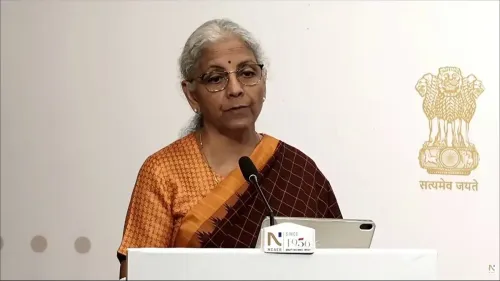
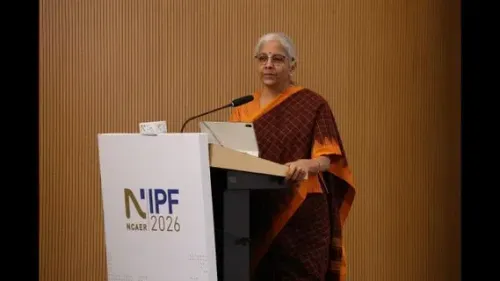
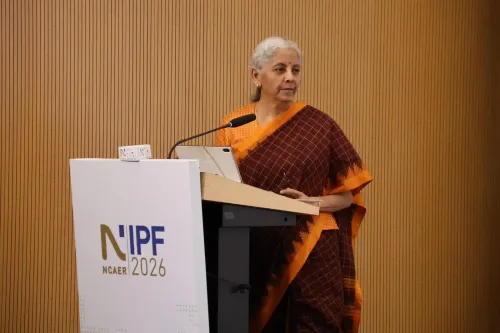
Union Finance Minister Nirmala Sitharaman delivered the CD Deshmukh Lecture at NCAER in New Delhi on August 6, 2026. The annual lecture honours India's first Indian RBI Governor and Finance Minister, C.D. Deshmukh, and serves as a key forum for government-research engagement on economic policy.
Key Takeaways
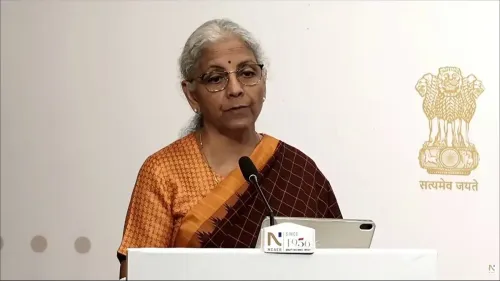
Union Finance Minister Nirmala Sitharaman delivered the CD Deshmukh Lecture at NCAER, New Delhi on August 6, 2026 .
The lecture series is named after C.D.
Deshmukh , India's first Indian RBI Governor (1943-1949) and later Finance Minister .
NCAER , founded in 1956 , is one of India's oldest independent economic think tanks.
Finance ministers have historically used NCAER events to signal perspectives on growth, fiscal policy, and structural reforms.
The published lecture text is expected to reflect themes relevant to current government economic priorities.
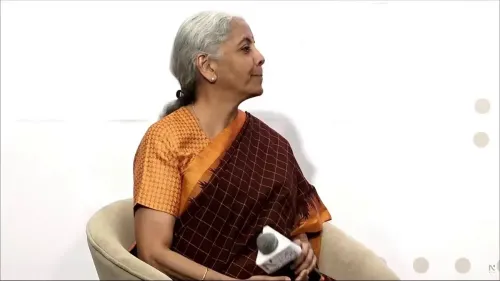
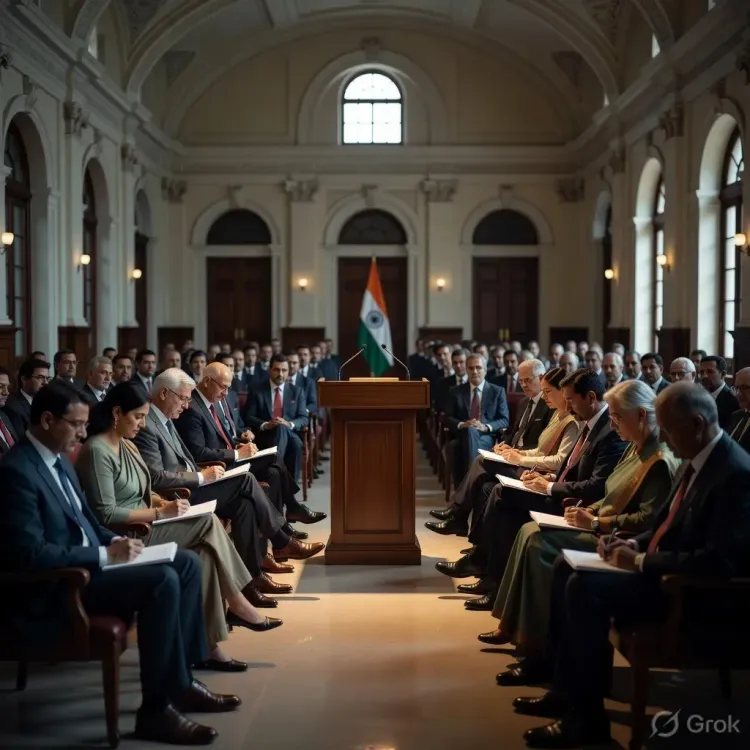
One of India's most storied economic institutions provided the backdrop on Thursday, August 6, 2026, as Union Finance Minister Nirmala Sitharaman took the podium at the National Council of Applied Economic Research (NCAER) in New Delhi to deliver the prestigious CD Deshmukh Lecture — a forum that has long served as a bridge between government economic thinking and independent research.
A lecture named for a trailblazer
The lecture series honours C.D. Deshmukh, a figure of singular importance in India's economic history. Deshmukh became India's first Indian Governor of the Reserve Bank of India, serving from 1943 to 1949, and later served as Finance Minister — a lineage that lends the lecture its weight. For a sitting Finance Minister to address an audience in his name is more than ceremonial; it is a deliberate signal of continuity between institution-building and contemporary policymaking.
NCAER's role as a policy sounding board
NCAER, established in 1956, is one of India's oldest and most respected independent economic think tanks. Finance ministers have periodically used its platform to present perspectives on growth, fiscal consolidation, and structural reforms — making it one of the few non-governmental spaces where the government's economic worldview gets a sustained, analytical airing. The audience of economists and policymakers is not a passive one; it pushes back, benchmarks, and scrutinises.
Sitharaman has been at the helm of India's finances since 2019, navigating the economy through a pandemic, a global inflationary surge, and an ambitious capital expenditure push. Bringing that record to an NCAER audience — one trained to weigh data over rhetoric — underscores the government's appetite for engagement with the applied research community.
What the lecture signals
The full text of the address, when published, is worth watching closely. Historically, remarks made at NCAER events have foreshadowed or reinforced themes that later appear in budget documents, economic surveys, and policy white papers. A Finance Minister's choice of framing — on growth drivers, fiscal space, or reform priorities — at a platform like this rarely happens without intent.
The CD Deshmukh Lecture, in that sense, is not just a speech. It is a policy conversation with India's economic establishment, conducted in public.
Point of View
Non-partisan platforms to frame its economic narrative — particularly as the administration approaches a period of heightened scrutiny over fiscal consolidation and growth sustainability. Choosing an audience of applied economists rather than a party forum signals confidence in the government's economic record. Remarks made here often ripple into subsequent policy documents, making the full lecture text a leading indicator worth tracking. The invocation of C.D. Deshmukh — a bureaucrat-turned-policymaker who built institutions — also carries an implicit message about the current government's self-image as an institution-builder.
NationPress
21 Sept 2026
Frequently Asked Questions
What is the CD Deshmukh Lecture at NCAER?
The CD Deshmukh Lecture is an annual lecture series organised by the National Council of Applied Economic Research (NCAER) to honour C.D. Deshmukh, India's first Indian RBI Governor and a former Finance Minister. It brings together senior policymakers and economists for substantive discussion on economic issues.
Who was C.D. Deshmukh?
C.D. Deshmukh was India's first Indian Governor of the Reserve Bank of India, serving from 1943 to 1949, and later served as Finance Minister of India. He is regarded as a foundational figure in India's post-independence economic architecture.
Why did Nirmala Sitharaman deliver the CD Deshmukh Lecture in 2026?
As Union Finance Minister, Sitharaman was invited to deliver the lecture as part of NCAER's tradition of engaging senior government economic officials. The event provides a platform for the Finance Minister to present perspectives on growth, fiscal policy, and reform to an audience of economists and policymakers.
Where was the CD Deshmukh Lecture 2026 held?
The lecture was held at the NCAER premises in New Delhi on August 6, 2026.