Nvidia Draws the Line Between Network Automation and Autonomous Networks

Synopsis
Nvidia posted a video on 6 August 2026 in which expert Amogh Dendukuri explains the distinction between network automation and autonomous networks, spotlighting agentic AI and closed-loop operations as the technologies that bridge the gap — built on Nvidia's expanding telco platform ecosystem.
Key Takeaways
Nvidia posted a video on 6 August 2026 drawing a clear distinction between network automation and autonomous networks.
Amogh Dendukuri is featured explaining the role of agentic AI and closed-loop operations in next-generation telco infrastructure.
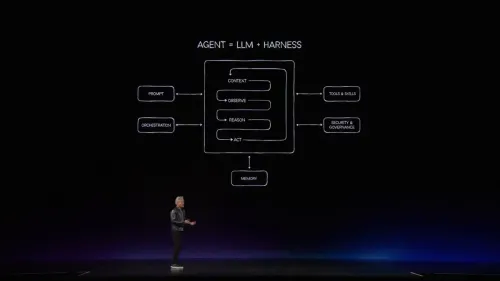
Agentic AI systems perceive, reason, and act across multi-step problems without fixed human-authored rules — a step beyond conventional automation.
Nvidia has been expanding its GPU and AI platforms into telecom and networking since 2022 , targeting 5G and future 6G use cases.
The closed-loop model collects telemetry, runs inference, issues corrective action, and measures results — continuously, at machine speed.
Future Nvidia GTC events and industry standards meetings are expected venues for more specific tooling and architecture announcements.
The telco industry has been automating networks for years — but automation and autonomy are not the same animal. Chip giant Nvidia drew that distinction sharply on 6 August 2026, posting a video that frames the gap between the two concepts as precisely where the next generation of telecom operations will be built.
In the post, Nvidia highlights a breakdown by Amogh Dendukuri, who walks through what it actually takes to cross that gap: agentic AI, closed-loop operations, and an ecosystem of partners building on Nvidia's platforms. The framing is deliberate — network automation follows rules someone else wrote; autonomous networks write and rewrite their own rules in real time.
Why 'Agentic AI' Changes the Telco Equation
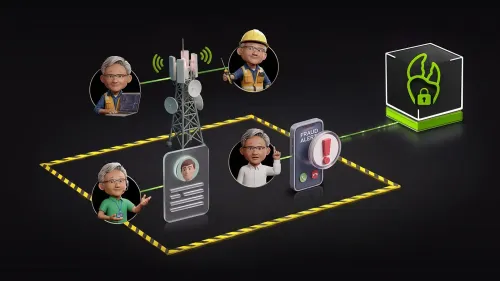
The term 'agentic AI' is doing real work here. Where conventional automation executes a fixed playbook — reroute traffic if latency crosses a threshold, restart a process if it fails — agentic AI systems perceive, reason, and act across multi-step problems without waiting for a human to define each step. Applied to a telco network, that means a system that can detect a degraded cell, diagnose whether the cause is hardware, software, or interference, and reconfigure the network, all inside a closed loop that never surfaces to a human operator. Closed-loop operations are the structural backbone of that vision. The loop collects telemetry, runs inference, issues a corrective action, and then measures whether the action worked — continuously, at machine speed. The promise is a network that heals, optimises, and scales itself.Nvidia's Telco Push, From 5G to the AI-Native Era
Nvidia's move into telecom infrastructure is not new. The company began expanding its GPU and AI platforms into networking and telco from 2022 onward, positioning accelerated computing as the engine for both 5G radio access networks and the data-heavy operations layers above them. The emphasis on partner ecosystems — operators, systems integrators, software vendors building on Nvidia platforms — reflects a strategy of making the GPU stack the common substrate across the industry. The 5G and emerging 6G landscape gives that strategy urgency. As networks grow denser and more software-defined, the operational complexity outpaces what human-managed automation can handle. That is the opening Nvidia is pointing at: the moment when the sheer volume of network events makes autonomous, AI-driven management not a luxury but a necessity.What Telcos and Engineers Are Watching
For network engineers and telco operators, the practical question is integration — how do agentic AI systems sit alongside existing OSS/BSS stacks, and who owns the liability when a closed loop makes a wrong call at scale. Nvidia's platform approach places the answer partly in the ecosystem: partners who build the domain-specific applications on top of the GPU and AI infrastructure. Future Nvidia GTC events and industry standards forums are the venues where the specifics — which tools, which APIs, which reference architectures — are expected to take shape. The video Dendukuri anchors is a signal of direction, not a product launch. But in a sector where the gap between automation and autonomy has been the subject of standards debates for years, naming that gap this clearly is itself a move.Point of View
GPU-accelerated platforms can credibly claim to solve it. This mirrors a broader pattern in enterprise tech where incumbents redefine the ceiling of a market they already partially own, making the next upgrade cycle look inevitable. For telcos, the stakes are real: as networks grow more software-defined and event-dense, human-managed automation genuinely does hit a ceiling. The question the industry will press is whether Nvidia's ecosystem model can deliver interoperable, accountable autonomous systems — or whether 'agentic AI for telco' remains a compelling demo longer than it should.
NationPress
21 Sept 2026
Frequently Asked Questions
What is the difference between network automation and autonomous networks?
Network automation follows pre-written rules to handle specific events; autonomous networks use agentic AI and closed-loop systems to perceive conditions, reason about them, and act without human-defined scripts for each scenario.
What is agentic AI in telecom?
Agentic AI refers to systems that can carry out multi-step reasoning and action on their own — in telecom, this means diagnosing and fixing network issues end-to-end without waiting for human operators to intervene at each step.
What are closed-loop operations in a network?
Closed-loop operations are automated cycles where a system collects network telemetry, runs AI inference, issues a corrective action, and then measures the result — all continuously and at machine speed, without manual intervention.
What is Nvidia doing in the telecom industry?
Since 2022, Nvidia has been expanding its GPU and AI platforms into telecom, supporting 5G and emerging 6G infrastructure and building a partner ecosystem that develops telco-specific applications on top of its compute stack.
Who is Amogh Dendukuri at Nvidia?
Amogh Dendukuri is an expert featured in Nvidia's video explaining AI applications for telecommunications operations, specifically the path from network automation to fully autonomous network management.