Nvidia Backs Agentic AI to Unify EC Design Workflows

Synopsis
Nvidia on June 11, 2026 declared that EC workflows are now defined by tool connections, not individual tools, and positioned agentic AI as the force that will orchestrate design and visualisation pipelines — reducing friction from early exploration to final output.
Key Takeaways
Nvidia posted on June 11, 2026 that EC workflows are 'increasingly defined by the connections between tools, not the tools themselves.' The company identified agentic AI as capable of orchestrating work across applications from early design exploration to visualisation.
Nvidia has built toward this position since introducing the CUDA programming model in 2006 , shifting focus from hardware to software platforms.
Primary beneficiaries include chip designers and software developers who face friction from fragmented tool ecosystems.
The move places Nvidia in direct competition to become the orchestration layer of choice across enterprise AI workflows globally.
Future GTC conferences are expected to detail specific agentic AI integrations within design software ecosystems.
Chip giant Nvidia on Thursday, June 11, 2026, signalled a strategic push toward agentic artificial intelligence as the defining force in engineering and creative (EC) workflows, arguing that the connections between tools — not the tools themselves — now drive productivity.
Context
In its post, Nvidia stated: 'EC workflows are increasingly defined by the connections between tools, not the tools themselves. Agentic AI has the potential to streamline everything from early design exploration to visualisation by orchestrating work across applications, reducing friction and accelerating' outcomes.
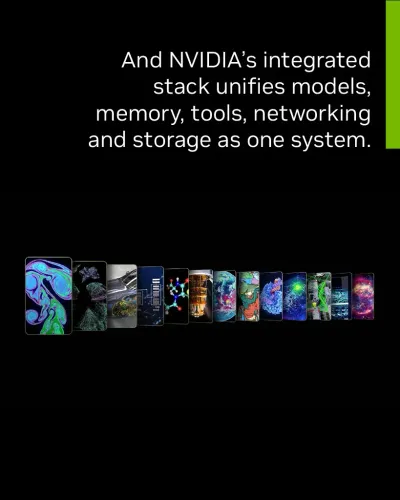
The framing marks a deliberate shift in how the company positions its technology: away from discrete hardware or software products and toward an orchestration layer that ties disparate design applications together through AI agents.
Policy Backdrop
Nvidia has long invested in the infrastructure underpinning AI-driven workflows. The company introduced the CUDA programming model in 2006, which established GPU-accelerated computing as the bedrock for later AI and machine-learning toolchains.
Over the past several years, Nvidia has progressively pivoted from standalone hardware sales toward interconnected software platforms. The latest post extends that trajectory into agent-based automation — systems where AI models independently orchestrate tasks across multiple applications without constant human intervention.
Stakeholders and Impact
Chip designers and software developers stand to be most immediately affected. Fragmented tool ecosystems — where engineers must manually transfer data between design, simulation, and visualisation software — represent a persistent source of delay and error in product pipelines.
Agentic AI, as described by Nvidia, promises to reduce that friction by automating handoffs between applications. For Indian technology firms and chip-design startups — a sector that has grown significantly under government-backed semiconductor incentive schemes — such orchestration tools could lower the operational overhead of complex design cycles.
The broader semiconductor industry has been moving in this direction, with multiple platform vendors competing to become the orchestration layer of choice for enterprise AI workflows. Nvidia's positioning here places it squarely in that contest.
What's Next
Nvidia's annual GTC conference has historically served as the primary venue for announcing new AI agent integrations and software ecosystem partnerships. Future editions are expected to carry further detail on how agentic capabilities will be embedded into design software pipelines.
As global enterprises and Indian technology companies deepen investment in AI-assisted engineering, the race to standardise agentic orchestration layers will likely intensify — making Nvidia's early positioning in this space a strategic variable worth tracking.
Point of View
This signals a longer-term bet that software orchestration will be the durable moat. In the Indian context, where government-backed semiconductor and AI initiatives are seeding a new generation of chip-design firms, Nvidia's push into agentic workflows could shape which platforms those firms standardise on. The post is brief, but the strategic implication is significant: Nvidia is bidding to be the connective tissue of the AI-era design stack.
NationPress
26 Oct 2026
Frequently Asked Questions
What is agentic AI in design workflows?
Agentic AI refers to systems where AI models autonomously orchestrate tasks across multiple software applications — for example, moving data between design, simulation, and visualisation tools — without requiring manual intervention at each step.
What did Nvidia say about EC workflows on June 11 2026?
Nvidia posted that EC workflows are 'increasingly defined by the connections between tools, not the tools themselves,' and that agentic AI can streamline everything from early design exploration to visualisation by reducing friction across applications.
How does Nvidia's agentic AI push affect Indian tech companies?
Indian chip-design startups and technology firms operating under government semiconductor incentive schemes could benefit from reduced operational overhead in complex design cycles if agentic orchestration tools lower the cost of managing fragmented software pipelines.
What is Nvidia CUDA and why does it matter here?
CUDA is a GPU programming model Nvidia introduced in 2006 that made GPU-accelerated computing mainstream; it forms the foundational infrastructure on which later AI workflow and orchestration tools — including agentic AI systems — are built.
Where can I follow Nvidia's agentic AI announcements?
Nvidia's annual GTC conference is the primary venue where the company details new AI agent integrations and software ecosystem partnerships relevant to design and engineering workflows.