Sitharaman: Every Rupee Borrowed Must Build an Asset
Synopsis
At the CD Deshmukh Lecture 2026 in New Delhi, Finance Minister Nirmala Sitharaman said PM Modi's consistent directive — borrow only to build assets — has anchored India's capital expenditure drive since 2020, with public spending channelled into infrastructure and connectivity to generate long-term economic multipliers.
Key Takeaways
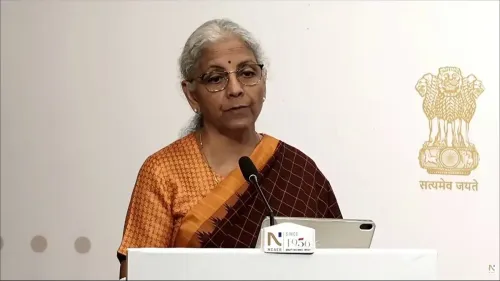
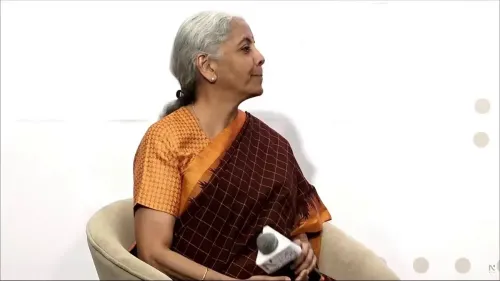
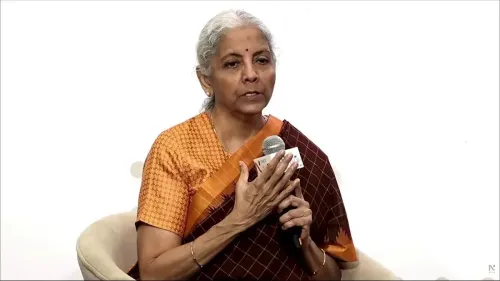
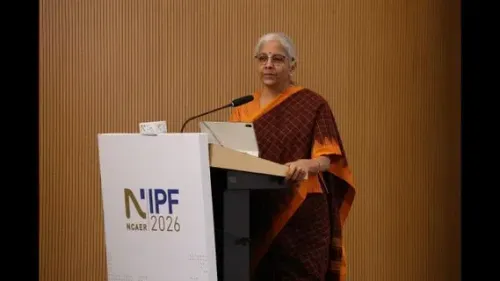
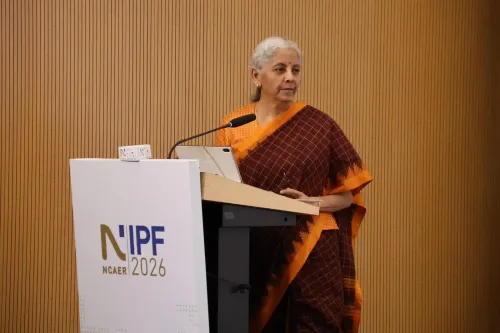
Finance Minister Nirmala Sitharaman delivered remarks at the CD Deshmukh Lecture 2026 in New Delhi on 6 August 2026 .
She quoted PM Narendra Modi 's standing instruction: 'Be absolutely conscious of what you are spending the money that you are borrowing.' India's capital expenditure drive has been directed at building physical assets and infrastructure connectivity since 2020-21 .
The National Infrastructure Pipeline , launched in 2019 , targets Rs 111 lakh crore in infrastructure investment over five years.
The capex-first approach was accelerated in the Union Budget 2021-22 as part of a post-pandemic recovery strategy.
Sitharaman framed the policy as a deliberate, PM-guided fiscal doctrine — not a one-off budget decision.
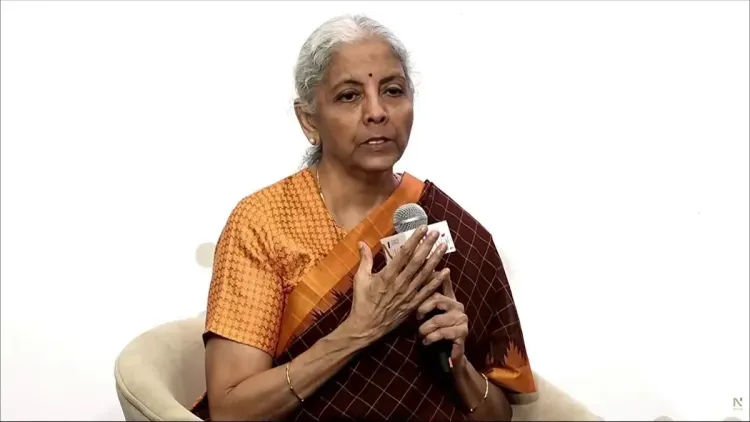
Every rupee borrowed by the government must create something lasting. That is the discipline Union Finance Minister Nirmala Sitharaman says has driven Indian fiscal policy since 2020 — and she credits Prime Minister Narendra Modi as the force holding the line.
Speaking at the CD Deshmukh Lecture 2026 in New Delhi on 6 August 2026, Sitharaman quoted Modi's standing instruction to her team: 'Be absolutely conscious of what you are spending the money that you are borrowing.' It is a deceptively simple directive. Behind it sits a fundamental shift in how India uses public debt.
Capital Expenditure as a Deliberate, PM-Guided Strategy
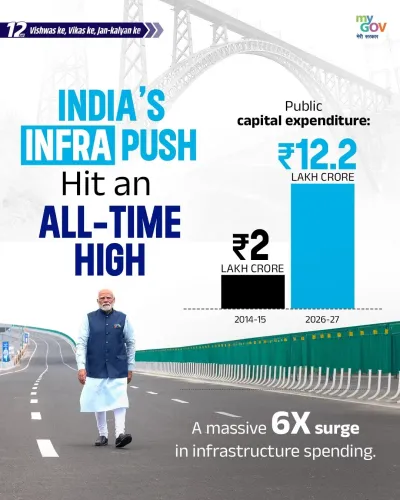
For much of India's post-independence fiscal history, government borrowing went heavily toward salaries, subsidies, and recurring costs — spending that leaves no physical trace once it is consumed. The pivot that began around 2020-21, accelerated sharply in the Union Budget 2021-22, flipped that logic. Capital expenditure — spending on roads, railways, ports, digital backbone — was pushed to the front of the queue as part of a post-pandemic recovery strategy designed to generate multiplier effects across the economy. Sitharaman described this as a 'conscious effort,' not an accidental outcome of budget arithmetic. The framing is significant: it positions capex growth not as a political talking point but as a standing fiscal doctrine endorsed at the highest level.The National Infrastructure Pipeline and the Connectivity Bet
The institutional scaffold for this doctrine is the National Infrastructure Pipeline (NIP), launched in 2019 with a target of Rs 111 lakh crore in infrastructure investment over five years. Roads, urban infrastructure, energy, and logistics form the core of the pipeline. The underlying wager is that better physical connectivity lowers the cost of doing business, moves goods faster, and ultimately widens the tax base — making the borrowing self-liquidating over time. Sitharaman made the logic explicit: 'Public expenditure creates infrastructure and the economy will be able to benefit from the connectivity.' That sentence is the entire theory of the capex push in one breath.Debt Sustainability in the Frame
The Finance Minister's remarks carry a subtext that fiscal hawks will notice. Emphasising that borrowed money must build assets is also a response to a persistent critique — that rising government debt, if spent on consumption rather than investment, inflates deficits without improving productive capacity. By anchoring the capex narrative to PM Modi's personal oversight, Sitharaman is signalling that the discipline is structural, not contingent on any single budget cycle. What to watch next: whether capital expenditure targets in the upcoming Union Budget hold their ground relative to revenue spending, and how project completion rates under PM Gati Shakti and allied connectivity programmes track against the NIP's original timelines. The lecture was introduced as part one of a series — the full argument is still unfolding.Point of View
She insulates the capex doctrine from being read as a technocratic choice — it becomes a political commitment at the top. The framing also pre-empts fiscal-deficit criticism by arguing that borrowed money invested in infrastructure is self-justifying through future growth dividends. The real test of this doctrine, however, lies in project execution rates and whether capital expenditure allocations survive the annual competition with revenue spending pressures in future budgets.
NationPress
21 Sept 2026
Frequently Asked Questions
What did Nirmala Sitharaman say at the CD Deshmukh Lecture 2026?
She said India's capital expenditure drive since 2020 is guided by PM Modi's directive to ensure every rupee borrowed is spent on building productive assets rather than on consumption spending.
What is India's capital expenditure policy since 2020?
Since 2020-21, the Indian government has significantly increased capital expenditure — spending on roads, railways, ports, and other infrastructure — to generate economic multiplier effects and long-term growth, a shift accelerated in the Union Budget 2021-22.
What is the National Infrastructure Pipeline?
The National Infrastructure Pipeline is a central government plan launched in 2019 targeting Rs 111 lakh crore in infrastructure investment over five years, covering roads, urban infrastructure, energy, and logistics.
Why does the government emphasise borrowing only for asset creation?
Borrowing for assets — roads, railways, ports — creates physical infrastructure that improves economic efficiency and can expand the tax base over time, making the debt more sustainable than borrowing for recurring expenditure.
What is PM Gati Shakti and how does it relate to the capex drive?
PM Gati Shakti is a national master plan for multimodal connectivity that aligns infrastructure projects across ministries and is one of the key programmes through which India's capital expenditure drive is being implemented on the ground.