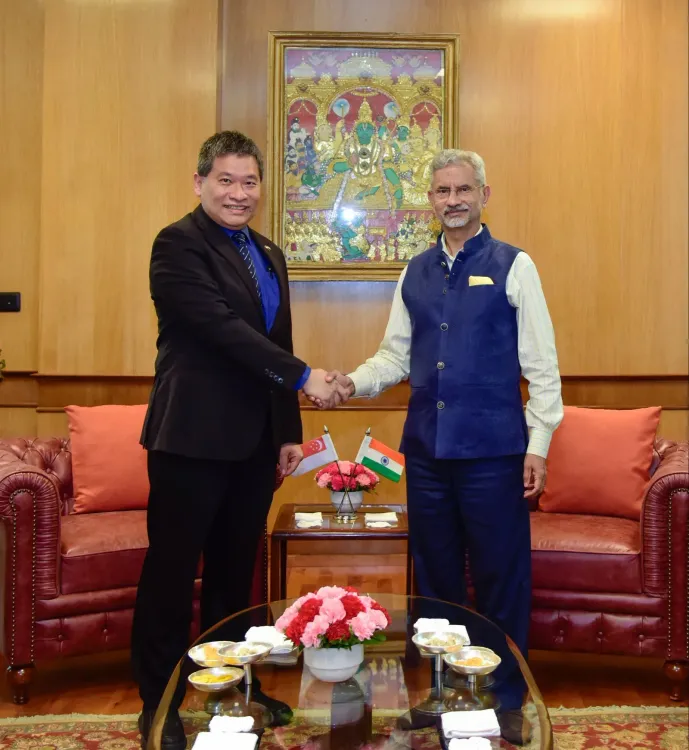
Jaishankar meets Singapore's Permanent Secretary in New Delhi
Synopsis
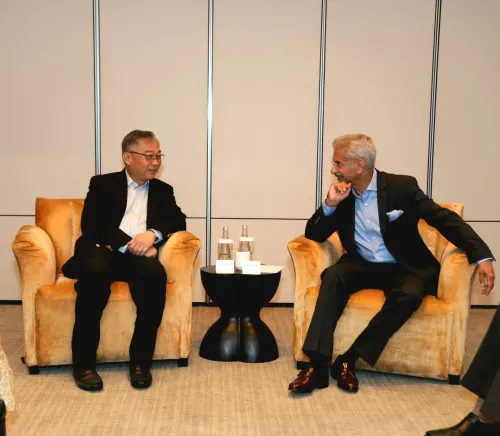
External Affairs Minister Dr. S. Jaishankar met Singapore Permanent Secretary Luke Goh in New Delhi on August 6, 2026, focusing on manufacturing, technology, food security and energy — signalling a strategic broadening of the India-Singapore partnership beyond its traditional services base.
Key Takeaways
Jaishankar met Singapore Permanent Secretary Luke Goh in New Delhi on August 6, 2026 .
Talks covered new opportunities in manufacturing, technology, food security and energy flows .
The meeting builds on the India-Singapore CECA , signed in 2005 , which established the bilateral trade and investment framework.
India's Act East Policy (upgraded 2014 ) frames Singapore as a priority ASEAN partner for supply-chain and economic diversification.
Jaishankar previously served as India's Ambassador to Singapore , giving the engagement an added layer of institutional familiarity.
Possible follow-ups include review of CECA provisions and coordination around upcoming ASEAN-India summits.
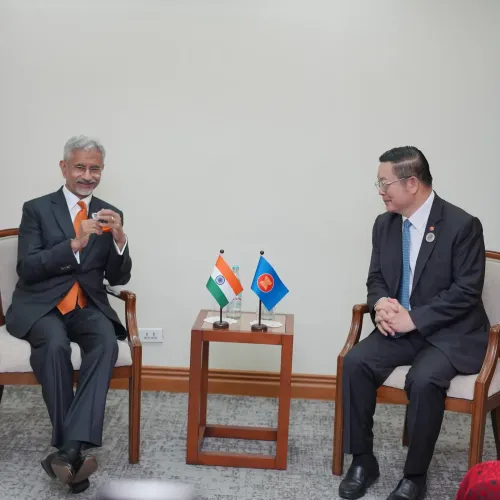
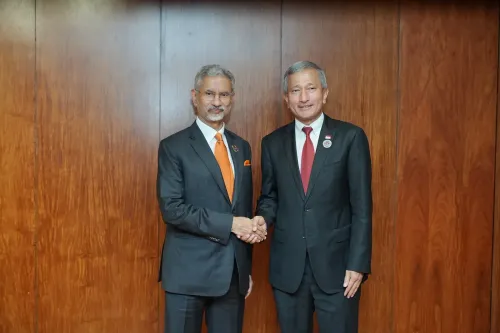
Manufacturing corridors, food security, and the future of clean energy — Union External Affairs Minister Dr. S. Jaishankar sat down with Singapore's Permanent Secretary Luke Goh in New Delhi on Thursday, August 6, 2026, to map out the next chapter of one of Asia's most quietly productive bilateral relationships.
Jaishankar described the meeting as an opportunity to discuss 'close engagement, especially new opportunities in manufacturing, technology, food security and energy flows' — a phrase that signals both sides are looking well beyond the services-dominated trade that has historically defined the partnership.
From services to supply chains: what's shifting
The India-Singapore Comprehensive Economic Cooperation Agreement (CECA), signed in 2005, built the legal scaffolding for deep bilateral trade and investment. For two decades it delivered — but the conversation in New Delhi on Thursday suggests both governments now see a wider canvas. Manufacturing and technology cooperation, once peripheral, are moving to the centre. India's push to become a global production hub, accelerated under its Act East Policy (upgraded in 2014), makes Singapore — a logistics and finance powerhouse at the heart of ASEAN — a natural partner for supply-chain diversification. Food security and energy flows are the newer threads. Singapore, which imports the vast majority of its food, and India, which is expanding its agricultural export ambitions, have mutual interest in stable supply arrangements. On energy, both sides have been exploring trade in cleaner fuels and power as the region transitions away from fossil dependence.Why Luke Goh's visit to Delhi matters
A Permanent Secretary-level visit — the top tier of a country's civil service — signals institutional seriousness, not a courtesy call. Jaishankar brings particular weight to any Singapore engagement: he served as India's Ambassador to Singapore, giving him a granular understanding of the bilateral architecture that few ministers can match. That personal history tends to accelerate trust and compress the usual diplomatic formalities. The meeting fits a well-established pattern of regular high-level India-Singapore contacts that have intensified in recent years, with both sides probing how to expand cooperation into emerging sectors. Possible follow-up mechanisms — including a review of CECA provisions or outcomes tied to upcoming ASEAN-India or East Asia Summit engagements — will be worth watching in the months ahead. For India's broader Southeast Asia strategy, every deepening with Singapore carries a multiplier effect: the city-state's connectivity, capital markets, and convening power make it a gateway to the wider region. One productive meeting in New Delhi can ripple far beyond the bilateral ledger.Point of View
Clean energy and food supply chains — precisely the sectors where India is seeking global credibility. For New Delhi, Singapore is not just a bilateral partner but a strategic node into ASEAN capital and connectivity networks. Jaishankar's own ambassadorial tenure in Singapore gives this engagement an unusual depth of institutional memory. If CECA provisions are revisited or new sectoral frameworks emerge, this meeting will likely be cited as a catalyst.
NationPress
6 Aug 2026
Frequently Asked Questions
Why did Singapore's Permanent Secretary Luke Goh visit New Delhi?
Luke Goh, Singapore's Permanent Secretary, visited New Delhi for high-level bilateral talks with EAM Dr. S. Jaishankar, focusing on expanding cooperation in manufacturing, technology, food security and energy flows between India and Singapore.
What is the India-Singapore CECA?
The Comprehensive Economic Cooperation Agreement (CECA) between India and Singapore was signed in 2005 . It established the legal framework for bilateral trade, investment and services, and remains the backbone of the economic relationship.
What is India's Act East Policy and how does Singapore fit in?
India's Act East Policy, upgraded in 2014 , prioritises deeper economic and strategic engagement with ASEAN nations. Singapore, as a financial and logistics hub at the heart of ASEAN, is a key partner under this framework.
Has Jaishankar had prior diplomatic experience with Singapore?
Yes. Before becoming External Affairs Minister, Dr. S. Jaishankar served as India's Ambassador to Singapore , giving him first-hand familiarity with the bilateral relationship and its institutions.
What could follow from the Jaishankar-Goh meeting?
Potential follow-ups include a review of CECA provisions, new sectoral cooperation mechanisms in manufacturing and energy, and coordinated positions ahead of upcoming ASEAN-India or East Asia Summit engagements.