CM Hemant Soren Urges Students: Govt Ready to Listen
Synopsis
Chief Minister Hemant Soren, through the Jharkhand CMO's official X account on 9 August 2026, appealed to students not to be misled by provocateurs, affirming the government's readiness to listen and resolve their legitimate demands with an open mind.
Key Takeaways
Chief Minister Hemant Soren issued a direct appeal to students via the Jharkhand CMO's official X account on 9 August 2026 .
Soren declared: 'The future of the youth is our responsibility,' signalling personal ownership of the issue.
He urged students not to be misled by outside agitators while validating their 'legitimate demands.' The government stated it is ready 'with an open mind' to hear student concerns and work toward resolution.
No specific student demands, scheduled meetings, or policy responses have been announced alongside the appeal.
The statement fits a broader pattern of Indian state governments using public appeals to de-escalate youth unrest before it intensifies.
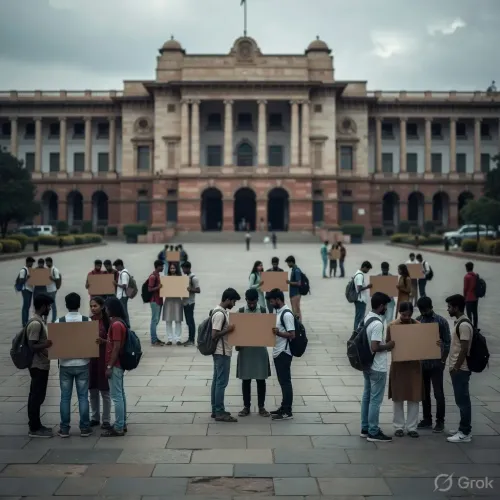
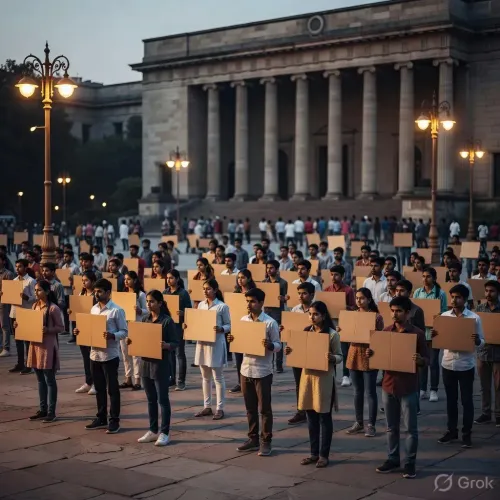
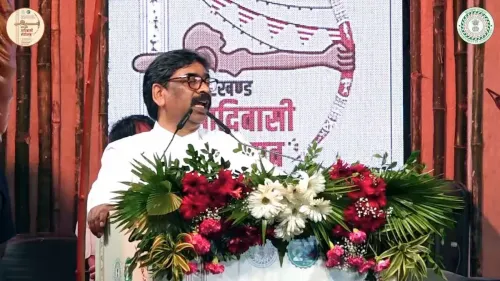
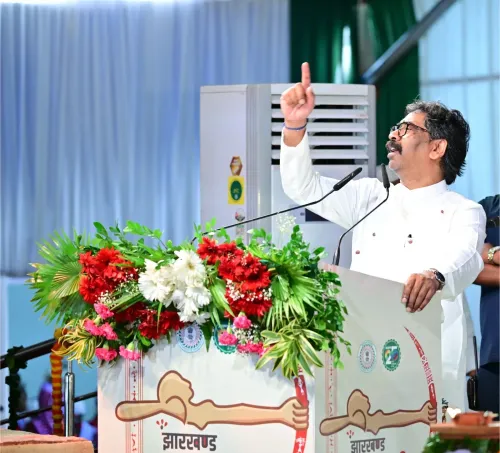
A government that calls itself ready to listen — but is it ready to act? On Sunday, 9 August 2026, the Chief Minister's Office of Jharkhand posted a direct appeal from Chief Minister Hemant Soren to the state's students, asking them not to be misled by outside voices while assuring them that the administration stands open to dialogue on their legitimate demands.
The statement, attributed to Soren personally, reads: 'युवाओं का भविष्य हमारी ज़िम्मेदारी है' — 'The future of the youth is our responsibility.' He urged students to refrain from being swayed by provocateurs and affirmed that the government is 'ready with an open mind to hear your concerns and resolve them.'
A familiar playbook, a real pressure point
The appeal follows a pattern common to Indian state administrations facing student or youth unrest: a public signal of goodwill designed to de-escalate tension before it hardens into organised agitation. The language is deliberate — 'legitimate demands' (जायज़ मांगें) implicitly validates student grievances while the warning against being 'misled' (बहकावे में न आएं) frames outside agitators as the problem, not the students themselves.
Soren, who leads the Jharkhand Mukti Morcha and heads the ruling coalition in the state, has built much of his political identity around tribal and youth welfare. An appeal of this nature carries both a governing and an electoral weight — Jharkhand's youth unemployment and education access remain persistent pressure points for any administration in Ranchi.
What the government's next move will reveal
The real test of this statement is what follows it. Public appeals for calm are commonplace; scheduled meetings with student representatives, concrete policy responses, or formal grievance mechanisms are not. Whether the Jharkhand government follows this message with institutional action — a dialogue date, a committee, a policy announcement — will determine how students and opposition parties read the sincerity behind it.
For now, Soren's office has drawn a clear line: the door is open, but the onus is on students to walk through it without outside interference. Whether that framing holds depends on what is waiting on the other side of that door.
Point of View
A framing that insulates the government from the unrest's political fallout. For a CM who has anchored his brand on tribal and youth welfare, the statement is as much about narrative control as governance. The appeal's credibility, however, will be tested quickly: in Indian state politics, open-door rhetoric without a follow-up institutional mechanism tends to deepen distrust rather than dissolve it. Opposition parties will watch for whether a concrete dialogue mechanism materialises, or whether this remains a one-way broadcast.
NationPress
23 Sept 2026
Frequently Asked Questions
What did Hemant Soren say to students in Jharkhand?
Soren urged students not to be misled by outside voices and assured them the government is ready with an open mind to hear and resolve their legitimate demands. He stated that 'the future of the youth is our responsibility.'
Why did the Jharkhand CMO issue an appeal to students?
The appeal appears to be a response to student unrest or agitation in the state, though the specific demands or triggering incident have not been officially detailed in the statement.
What does 'bahkawe mein na aayen' mean in Soren's statement?
The Hindi phrase means 'do not be misled or swayed' — Soren used it to warn students against being influenced by outside agitators or provocateurs who may be fuelling unrest.
Is the Jharkhand government open to talks with students?
According to the Chief Minister's Office, yes — Soren explicitly said the government is 'ready with an open mind' to listen and find solutions. No formal meeting date has been announced yet.
Who is Hemant Soren?
Hemant Soren is the Chief Minister of Jharkhand and the national president of the Jharkhand Mukti Morcha, a regional party that leads the ruling coalition in the state with a focus on tribal and youth welfare.