Jharkhand CM Hemant Soren, Governor View Chhau Masks at Adivasi Mahotsav

Synopsis
On 9 August 2026, Jharkhand Governor Santosh Gangwar and Chief Minister Hemant Soren observed Chhau mask-making and local handicrafts at Adivasi Mahotsav, reaffirming the state's commitment to global recognition of its UNESCO-listed tribal art traditions.
Key Takeaways
Governor Santosh Gangwar and CM Hemant Soren jointly attended Adivasi Mahotsav on 9 August 2026 .
Both leaders observed Chhau dance mask-making and local handicraft demonstrations at the festival.
Chhau dance was inscribed on UNESCO's Representative List of the Intangible Cultural Heritage of Humanity in 2010 .
The state government reaffirmed its commitment to securing global recognition for Jharkhand's tribal art forms.
Possible follow-ups include GI tag applications and international showcases for Chhau and other Jharkhand crafts.
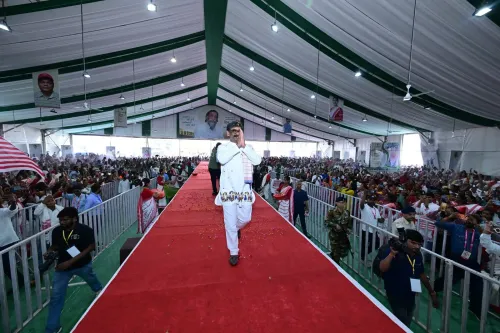
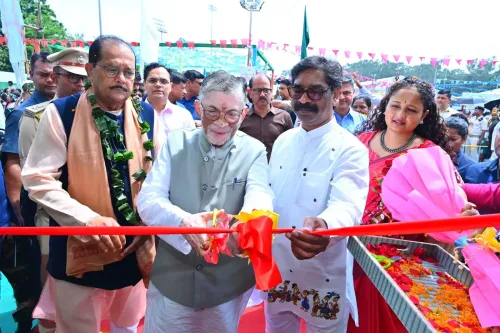
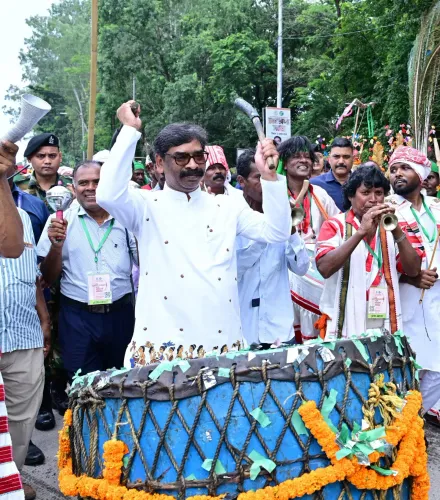
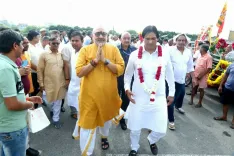
A UNESCO-inscribed dance form and the hands that keep it alive took centre stage in Jharkhand on Sunday, 9 August 2026, as the state marked Adivasi Mahotsav with a close-up look at the craft behind the performance. The Chief Minister's Office of Jharkhand announced that Governor Santosh Gangwar and Chief Minister Hemant Soren together observed Chhau mask-making and local handicrafts at the festival, reaffirming the state government's commitment to winning global recognition for its tribal art traditions.
The CMO posted in Hindi: 'झारखण्ड की समृद्ध जनजातीय कला को वैश्विक पहचान दिलाने के लिए राज्य सरकार प्रतिबद्ध है' — 'The state government is committed to giving global recognition to Jharkhand's rich tribal art.'Chhau's UNESCO status and the artisans behind the mask
Chhau dance is not a routine folk performance. In 2010, UNESCO inscribed it on the Representative List of the Intangible Cultural Heritage of Humanity — one of the most prestigious recognitions a living cultural tradition can receive. The dance is defined as much by its elaborate painted masks as by its acrobatic movement, and the mask-makers themselves are a distinct community of craftspeople whose skills have been passed down across generations.
Governor Gangwar and CM Soren's hands-on observation of the mask-making process at Adivasi Mahotsav signals that the state intends to place these artisans — not just the performance — at the centre of its cultural strategy. Jharkhand's tribal population is one of the largest in the country, and festivals like this one have historically served as both a visibility platform and a potential commercial gateway for indigenous crafts.
Adivasi Mahotsav as a policy instrument
Jharkhand governments have periodically used cultural festivals to spotlight the state's indigenous dance, mask-making, and handicraft traditions. The pattern is deliberate: concentrated public attention at a festival can translate into demand, GI tag pushes, and invitations to national or international showcases. CM Hemant Soren, whose Jharkhand Mukti Morcha has consistently foregrounded tribal welfare as a political identity, has made cultural promotion a visible plank of that agenda.
The hashtag #JharkhandSeJohar — 'Johar from Jharkhand', johar being the traditional tribal greeting — frames the event not merely as a state function but as an assertion of cultural pride directed outward, toward a national and global audience.
Whether Adivasi Mahotsav 2026 produces concrete follow-through — new GI tags, international performance invitations, or enhanced artisan support schemes — will determine whether this visibility converts into livelihood for the craftspeople at the heart of it.
Point of View
However, lies downstream: past Jharkhand administrations have staged similar festivals without converting visibility into durable artisan livelihoods or international market access. If this cycle produces concrete policy outputs — GI tags, export linkages, or UNESCO follow-through — it marks a maturation of the cultural agenda; if not, it remains a well-photographed gesture.
NationPress
9 Aug 2026
Frequently Asked Questions
What is Adivasi Mahotsav in Jharkhand?
Adivasi Mahotsav is a festival organised in Jharkhand to showcase the state's indigenous tribal arts, crafts, and performances, providing artisans a platform for visibility and potential commercial opportunities.
Is Chhau dance a UNESCO heritage art form?
Yes. Chhau dance was inscribed on UNESCO's Representative List of the Intangible Cultural Heritage of Humanity in 2010, recognising it as a living tradition of global cultural significance.
What did CM Hemant Soren do at Adivasi Mahotsav 2026?
On 9 August 2026, CM Hemant Soren, alongside Governor Santosh Gangwar, observed Chhau dance mask-making and local handicraft displays at Adivasi Mahotsav as part of the state's tribal cultural promotion drive.
What is the significance of Chhau masks in Jharkhand?
Chhau masks are an integral part of the Chhau dance tradition — elaborate, hand-painted creations made by specialist craftspeople. The masks define the characters and energy of the performance and represent a distinct artisan heritage within Jharkhand's tribal culture.
What is 'Johar' and why does Jharkhand use it?
'Johar' is the traditional greeting used among tribal communities in Jharkhand. The state government uses it — as in the hashtag #JharkhandSeJohar — as a symbol of indigenous identity and cultural pride.