Jaishankar in New York: World shifting to multipolarity as US, China reshape global order
Synopsis
Jaishankar's New York address wasn't diplomatic small talk — it was a candid map of a fracturing world order. Calling diplomacy an 'extreme sport' and comparing India's foreign policy to 'portfolio management', he signalled that New Delhi is actively designing for a world where the old US-led rules no longer hold and everyone, including India, is hedging.
Key Takeaways
Jaishankar declared in New York on 29 September 2026 that the world is shifting toward a more multipolar order.
He described diplomacy as an 'extreme sport', citing financial, geographic, and market-access 'choke points' as modern pressure tools.
Jaishankar framed India's foreign policy as 'portfolio management' — balancing ties with the US , Europe , Japan , China , Russia , Gulf , ASEAN , and the Global South .
He argued that US-China competition limits what the two powers can collectively offer the rest of the world.
Jaishankar pushed back on the view that the US alone had eroded international economic rules, saying market principles were undermined well before current American trade policies.
He expressed cautious optimism, saying new bargains among nations would emerge from the current period of uncertainty.
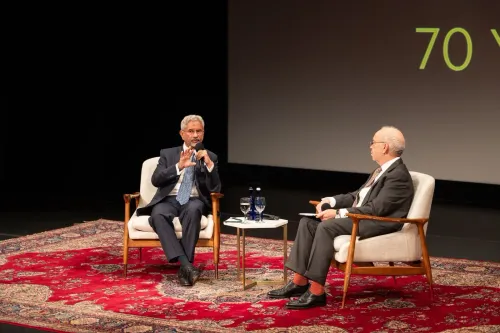
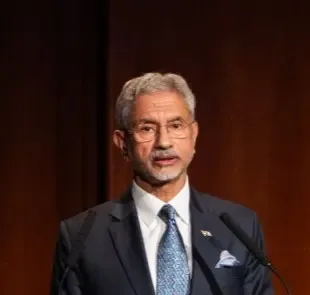
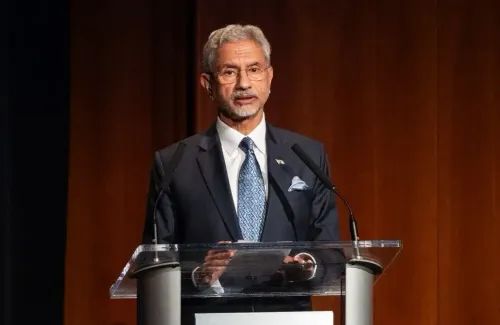
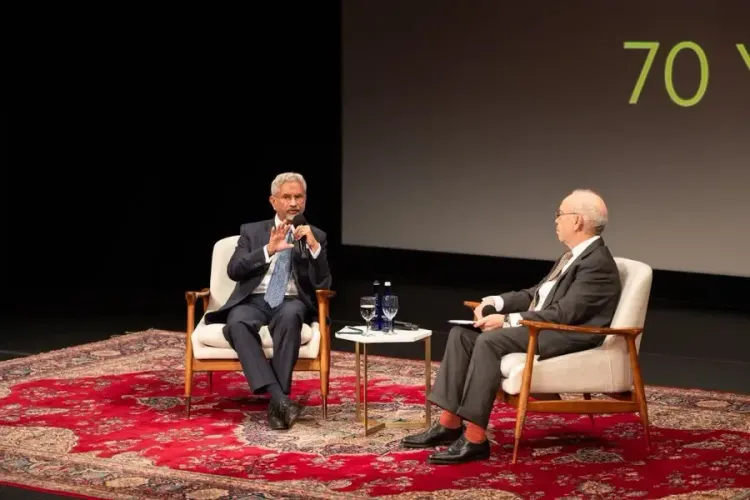
External Affairs Minister S. Jaishankar on 29 September 2026 said the world is moving towards a more multipolar order as nations recalibrate their relationships in response to a shifting United States, its evolving ties with China, and the erosion of long-held trading assumptions. Speaking in New York, Jaishankar described the moment as a structural adjustment to a more competitive international environment.
The Core Diagnosis: Competition and Interdependence
Jaishankar pointed to a central paradox shaping contemporary diplomacy — intense geopolitical competition existing alongside deep economic interdependence. When one country gains leverage through that interdependence, he argued, there is a growing temptation to weaponise it against rivals.
'Diplomacy has become an extreme sport,' Jaishankar said, noting that governments must now respond swiftly to high-stakes decisions while simultaneously maintaining the patience required for protracted negotiations. He cited geographical, financial, travel, and market-access 'choke points' as instruments of pressure that states increasingly deploy against one another.
US-China Rivalry and the Space in Between
The minister assessed the US-China relationship as the defining axis of global competition, while noting that competition between the two powers limits what they can collectively offer the rest of the world. He also flagged the erosion of traditional alliances and a greater tendency by the most powerful country — the United States — to act unilaterally.
Jaishankar noted that countries outside the US-China rivalry are actively seeking their own arrangements — exploring new partners, reassessing existing ties, and building buffers against external disruptions. 'The rest of the world is busy making its arrangements,' he said.
He also pushed back on the narrative that the United States alone had weakened international economic rules, arguing that market principles had been eroded long before current American trade policies took hold. That said, he acknowledged that Washington's shift towards bilateral trade deals was now reshaping how countries negotiate with each other — and could, over time, produce new bargains and relationships.
India's 'Portfolio Management' Approach
For India, Jaishankar outlined a strategy of deliberate balance across its relationships — encompassing the United States, Europe, Japan, China, Russia, the Gulf, ASEAN, and parts of the Global South. He compared this approach to 'portfolio management' — spreading engagement to reduce exposure to any single disruption.
He was clear, however, that this did not mean accepting perpetual instability. Major trading nations, he argued, have strong incentives to seek dependable partners and predictable conditions, even when a particular arrangement offers smaller near-term gains.
India participates in multiple overlapping groupings — G20, BRICS, and the Quad — giving it several simultaneous channels for advancing its diplomatic and economic interests. This multi-alignment architecture has been a consistent feature of Indian foreign policy under the current government.
Reforming Global Institutions
Jaishankar also raised the long-running debate over the reform of international institutions, noting that the United Nations was founded in 1945 under a very different distribution of economic and political power. That gap between institutional design and present-day realities, he indicated, remains unresolved and continues to fuel calls for restructuring.
Despite the turbulence, Jaishankar offered a measured note of optimism. 'I'm not pessimistic about the world,' he said, expressing confidence that countries would find new arrangements as they navigated the current period of competition and uncertainty. Whether the emerging multipolar order stabilises into predictable patterns or deepens into fragmentation remains the central question for global diplomacy ahead.
Point of View
Or when BRICS and Quad obligations pull in opposite directions, a portfolio can become a liability. His optimism about new global bargains is warranted only if institutional reform keeps pace with power shifts — a process that has stalled for decades. The United Nations was redesigned for a 1945 world; Jaishankar knows this, which is why his remarks carry the subtext of a country that wants a bigger seat at the table it helps to maintain.
NationPress
29 Sept 2026
Frequently Asked Questions
What did EAM Jaishankar say about multipolarity in New York?
Jaishankar said the world is moving toward a more multipolar order as countries adjust to a shifting United States, the evolving US-China relationship, and the erosion of old trading assumptions. He described the process as an adjustment to a more competitive international environment, made during a speech in New York on 29 September 2026.
What did Jaishankar mean by calling diplomacy an 'extreme sport'?
Jaishankar used the phrase to describe the pressure on governments to respond rapidly to high-risk decisions while also maintaining patience for longer-term negotiations. He pointed to geographic, financial, travel, and market-access 'choke points' as tools countries use to exert pressure on one another.
How did Jaishankar describe India's foreign policy approach?
He likened it to 'portfolio management' — seeking a balance across India's relationships with the US, Europe, Japan, China, Russia, the Gulf, ASEAN, and the Global South. The approach is designed to reduce exposure to disruptions from any single relationship or bloc.
What did Jaishankar say about the US-China rivalry and its impact on other nations?
He argued that intense competition between the US and China limits what the two powers can collectively agree on for the rest of the world. Countries outside that rivalry, he said, are actively seeking their own arrangements — exploring new partners and building buffers against external shocks.
Did Jaishankar blame the US for weakening global trade rules?
No. He explicitly pushed back on that framing, arguing that market principles had been eroded well before current American trade policies. He acknowledged, however, that Washington's shift toward bilateral trade deals was now changing how countries negotiate with one another globally.